
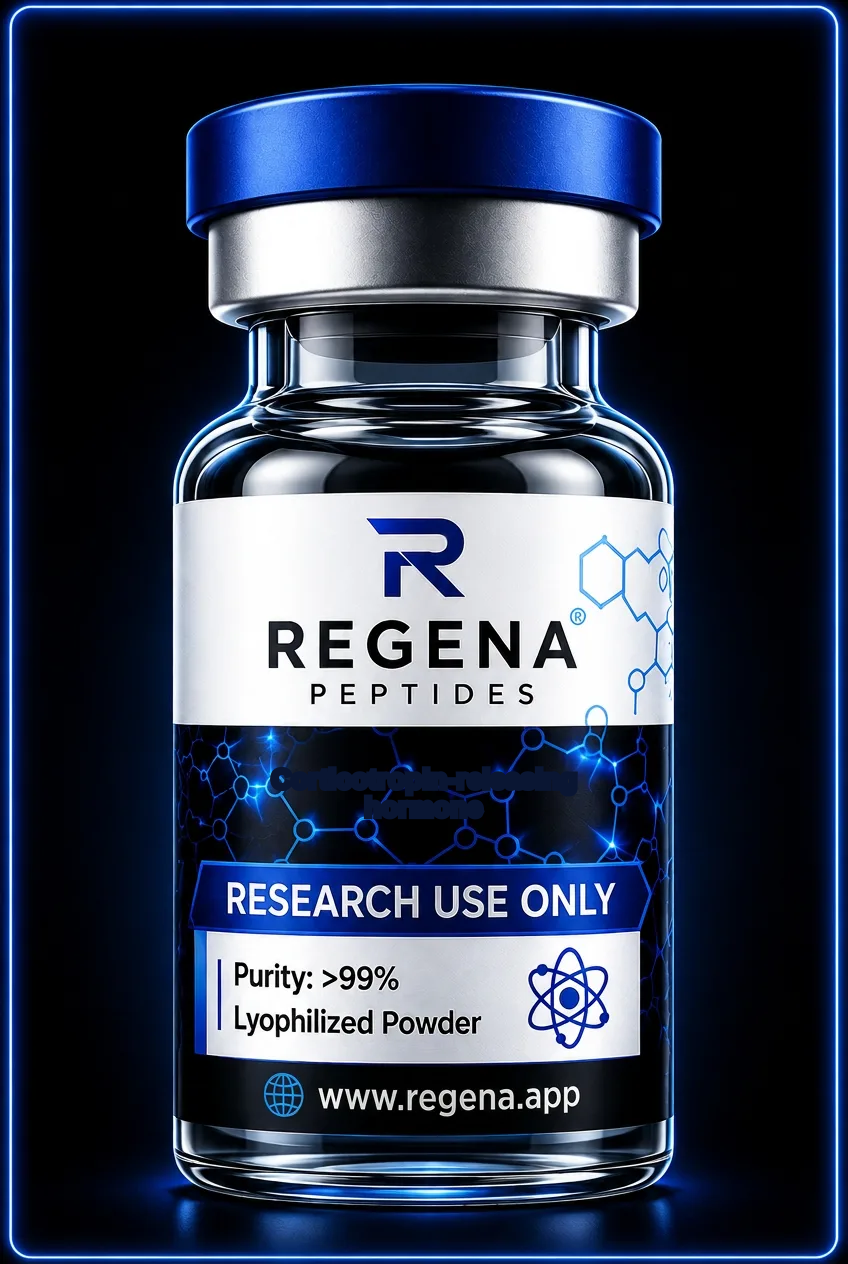
Hormone · Hormone Peptide
Corticotropin-releasing hormone (CRH)
Also known as Corticorelin, Corticotropin-releasing factor (CRF)
A 41-amino-acid hypothalamic hormone that initiates the stress response by stimulating ACTH release from the pituitary via CRH receptors.
- Length
- 41 amino acids
- Half-life
- ~60 minutes (initial phase)
- Mechanism
- A hypothalamic peptide that stimulates the synthesis and secretion of adrenocorticotropic hormone (ACTH) from the pituitary gland by binding to CRH receptors.
- Studied in
- Used as a primary tool in laboratory models to investigate the hypothalamic-pituitary-adrenal (HPA) axis and the physiological responses to stress.
About Corticotropin-releasing hormone (CRH)
Corticotropin-releasing hormone (CRH) is a 41-amino-acid peptide hormone and neurotransmitter central to the endocrine response to stress. It is synthesized and released from the paraventricular nucleus of the hypothalamus. Its release triggers a cascade of hormonal events collectively known as the hypothalamic-pituitary-adrenal (HPA) axis.
The principal action of CRH is to bind to CRH receptor type 1 (CRH-R1) on the anterior pituitary gland, stimulating the production and release of adrenocorticotropic hormone (ACTH). This makes CRH an indispensable reagent for in-vitro and in-vivo studies of HPA axis function and dysregulation. Research applications extend to investigating its role as a neurotransmitter in extra-hypothalamic brain circuits involved in anxiety-like behaviors and stress adaptation. This molecule is a reference compound with a clinical history.
Laboratory notes
- Human and rat/mouse CRH sequences are identical.
- CRH-binding protein (CRH-BP) is an endogenous protein that binds CRH in circulation and modulates its bioavailability to receptors.
- CRH belongs to a larger family of related peptides, including urocortins, which also bind to CRH receptors.
Storage and reconstitution basics: storage guide.
Questions about Corticotropin-releasing hormone (CRH)
What is CRH?
CRH, or Corticotropin-releasing hormone, is a hypothalamic peptide that plays a central role in initiating the body's physiological response to stress.
What is the HPA axis?
The Hypothalamic-Pituitary-Adrenal (HPA) axis is a hormonal cascade initiated by CRH from the hypothalamus, which stimulates ACTH from the pituitary, which in turn stimulates cortisol/corticosterone release from the adrenal glands.
Is CRH the same as CRF?
Yes, the terms Corticotropin-releasing hormone (CRH) and Corticotropin-releasing factor (CRF) are used interchangeably to refer to the same 41-amino-acid peptide.
Is Corticotropin-releasing hormone (CRH) for human use?
No. It is supplied strictly for in-vitro laboratory research and is not for human or animal consumption.
Related research peptides
All products are sold for laboratory research use only. Not for human consumption, not a medicine, not for diagnosing, treating or preventing any condition.