
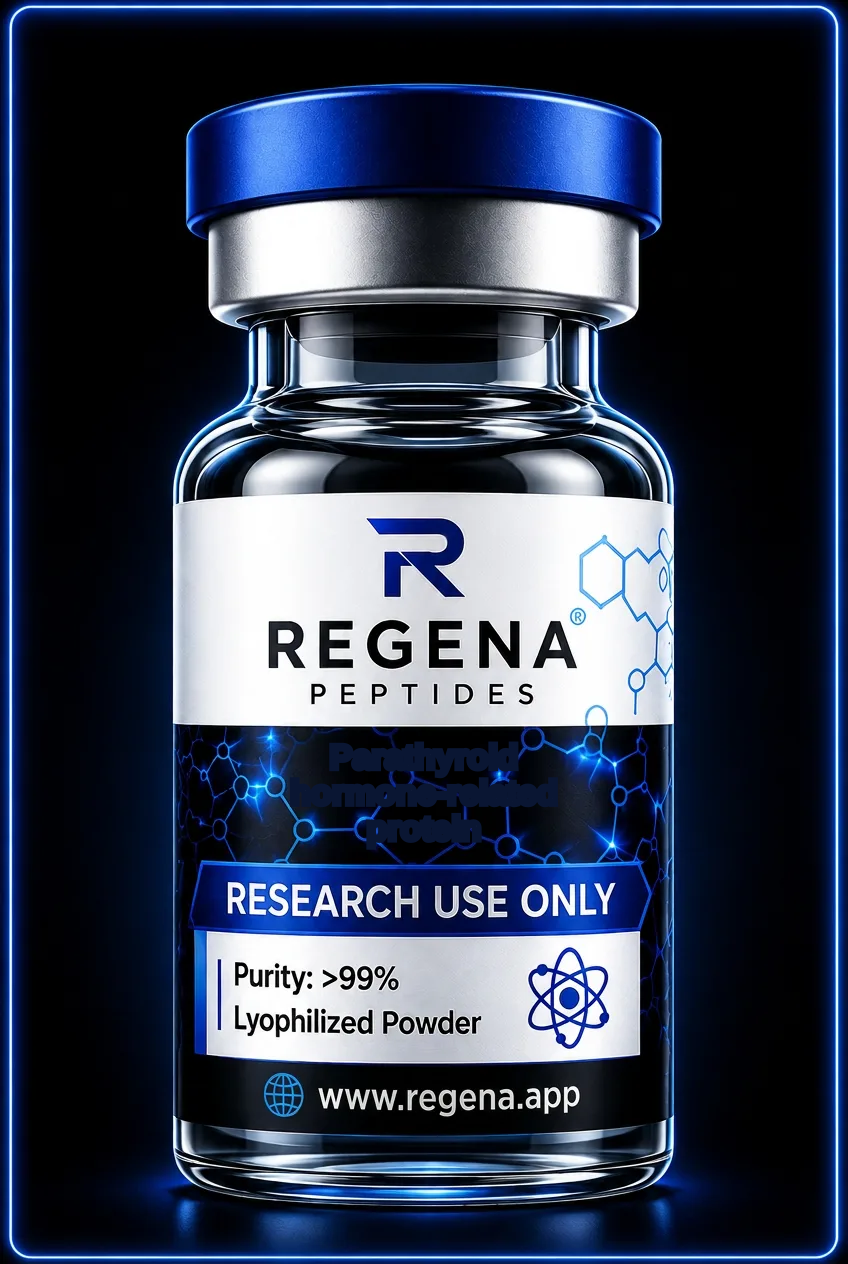
Other · N-terminally truncated PTHrP fragment; PTH1 receptor antagonist probe
Parathyroid hormone-related protein (7-34)
Also known as PTHrP(7–34)
A truncated PTHrP fragment used to examine PTH1 receptor binding and distinguish receptor occupancy from activation.
- Length
- 28 amino acids
- Half-life
- Not well characterised
- Mechanism
- PTHrP(7–34) retains determinants for binding to the parathyroid hormone 1 receptor (PTH1R) but lacks the extreme N-terminal residues required for efficient canonical activation. It is commonly investigated as an antagonist, although residual or pathway-dependent activity can vary with the peptide preparation and experimental system.
- Studied in
- Recombinant PTH1R assays, osteoblast-lineage cultures and renal cell models use this fragment to examine ligand binding, cyclic AMP signalling and receptor-dependent responses.
About Parathyroid hormone-related protein (7-34)
Parathyroid hormone-related protein was identified through investigations of tumour-associated calcium-regulating activity. Its N-terminal region shares functional features with parathyroid hormone, allowing both ligands to engage PTH1R. The 7–34 fragment contains 28 residues from this receptor-interacting region. Removing residues 1–6 substantially changes signalling behaviour without eliminating all binding determinants, making the fragment useful for investigating how different portions of a peptide ligand contribute to receptor recognition and activation.
PTH1R is a class B G protein-coupled receptor that can couple to cyclic AMP and phospholipase C signalling pathways. Experiments with PTHrP fragments have helped separate extracellular-domain binding from interactions needed to activate the receptor core. PTHrP(7–34) should not automatically be treated as a universally silent antagonist: receptor abundance, measured pathway, terminal chemistry and sequence modifications can influence its apparent pharmacology in cell-based experiments and membrane preparations.
Laboratory notes
- Verify species origin, terminal chemistry and any substitutions on the certificate of analysis; modified PTHrP antagonists are not interchangeable with the unmodified fragment.
- Include peptide-alone wells alongside agonist competition experiments to detect residual intrinsic activity.
- Prepare small aliquots using a validated solvent and assess peptide recovery after storage, particularly at low working concentrations.
Storage and reconstitution basics: storage guide.
Questions about Parathyroid hormone-related protein (7-34)
Is PTHrP(7–34) equivalent to PTHrP(1–34)?
No. The missing N-terminal residues are important for efficient PTH1R activation, so the two fragments have different functional profiles.
Which receptor should be prioritised in binding experiments?
PTH1R is the principal receptor target. Activity at other receptors should be measured rather than inferred from structural similarity to parathyroid hormone.
Why might antagonism differ between assays?
Receptor expression, agonist identity, incubation conditions and signalling readout can all affect the observed inhibition. Terminal modifications can also change the result.
Is Parathyroid hormone-related protein (7-34) for human use?
No. It is supplied strictly for in-vitro laboratory research and is not for human or animal consumption.
Related research peptides
All products are sold for laboratory research use only. Not for human consumption, not a medicine, not for diagnosing, treating or preventing any condition.