
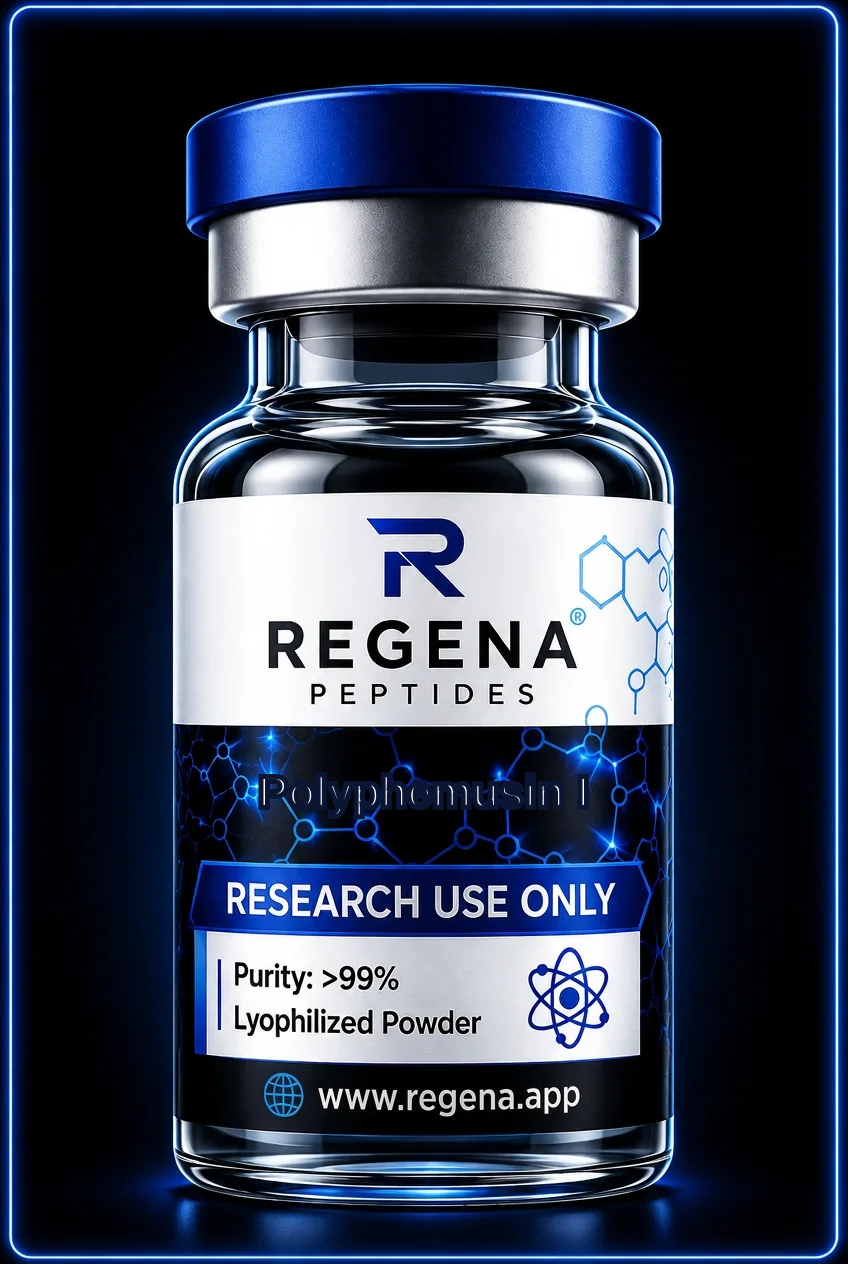
Antimicrobial · Disulphide-stabilised β-hairpin antimicrobial peptide
Polyphemusin I
Also known as PM-I
A horseshoe crab β-hairpin peptide used to investigate microbial membrane interactions and disulphide-dependent antimicrobial activity.
- Length
- 18 amino acids
- Half-life
- Not well characterised
- Mechanism
- This cationic peptide associates with anionic microbial membrane components, including lipopolysaccharide, and can disrupt membrane organisation and permeability. Its activity is primarily membrane-directed rather than dependent on a single defined receptor.
- Studied in
- Bacterial cultures, fungal cultures and model lipid membranes are used to investigate antimicrobial activity, membrane permeabilisation and lipid-dependent selectivity.
About Polyphemusin I
Polyphemusin I was originally isolated from haemocytes of the horseshoe crab Limulus polyphemus during investigations of invertebrate innate defence. The mature peptide contains 18 amino acids, a C-terminal amide and four cysteine residues arranged into two intramolecular disulphide bonds. These bonds stabilise a compact β-hairpin, while multiple arginine residues confer a strong positive charge. Its combination of basic and hydrophobic residues supports association with negatively charged microbial surfaces and subsequent interactions with membrane lipids.
Laboratory studies use Polyphemusin I to examine how peptide charge, folding and lipid composition influence membrane binding and antimicrobial activity. Lipopolysaccharide-binding assays, fluorescent permeability measurements and synthetic vesicle systems help distinguish initial surface association from membrane disruption. Comparisons with reduced, substituted or otherwise modified analogues probe the contribution of the disulphide-stabilised scaffold. The peptide has no universally established receptor target; membrane composition and experimental conditions strongly influence the observed responses in these systems.
Laboratory notes
- For research use only; verify molecular mass, C-terminal amidation and disulphide connectivity against the analytical specification.
- Record ionic strength and divalent-cation content, since these can alter electrostatic binding and apparent antimicrobial activity.
- Include peptide-only fluorescence controls and an appropriate membrane-lysis reference when interpreting dye-based permeability assays.
Storage and reconstitution basics: storage guide.
Questions about Polyphemusin I
What maintains the β-hairpin structure?
Two intramolecular disulphide bonds constrain the cysteine-rich sequence. Reducing conditions can change its conformation and alter the behaviour measured in membrane assays.
Does Polyphemusin I have a specific receptor?
A single obligatory receptor has not been established. Anionic lipids and microbial surface components, including lipopolysaccharide, are important interaction partners.
Why can results differ between broth and vesicle experiments?
Broth contains components that can bind or screen cationic peptides, whereas vesicles provide a simplified lipid environment. Neither assay alone captures every step of interaction with an intact microorganism.
Is Polyphemusin I for human use?
No. It is supplied strictly for in-vitro laboratory research and is not for human or animal consumption.
Related research peptides
All products are sold for laboratory research use only. Not for human consumption, not a medicine, not for diagnosing, treating or preventing any condition.