
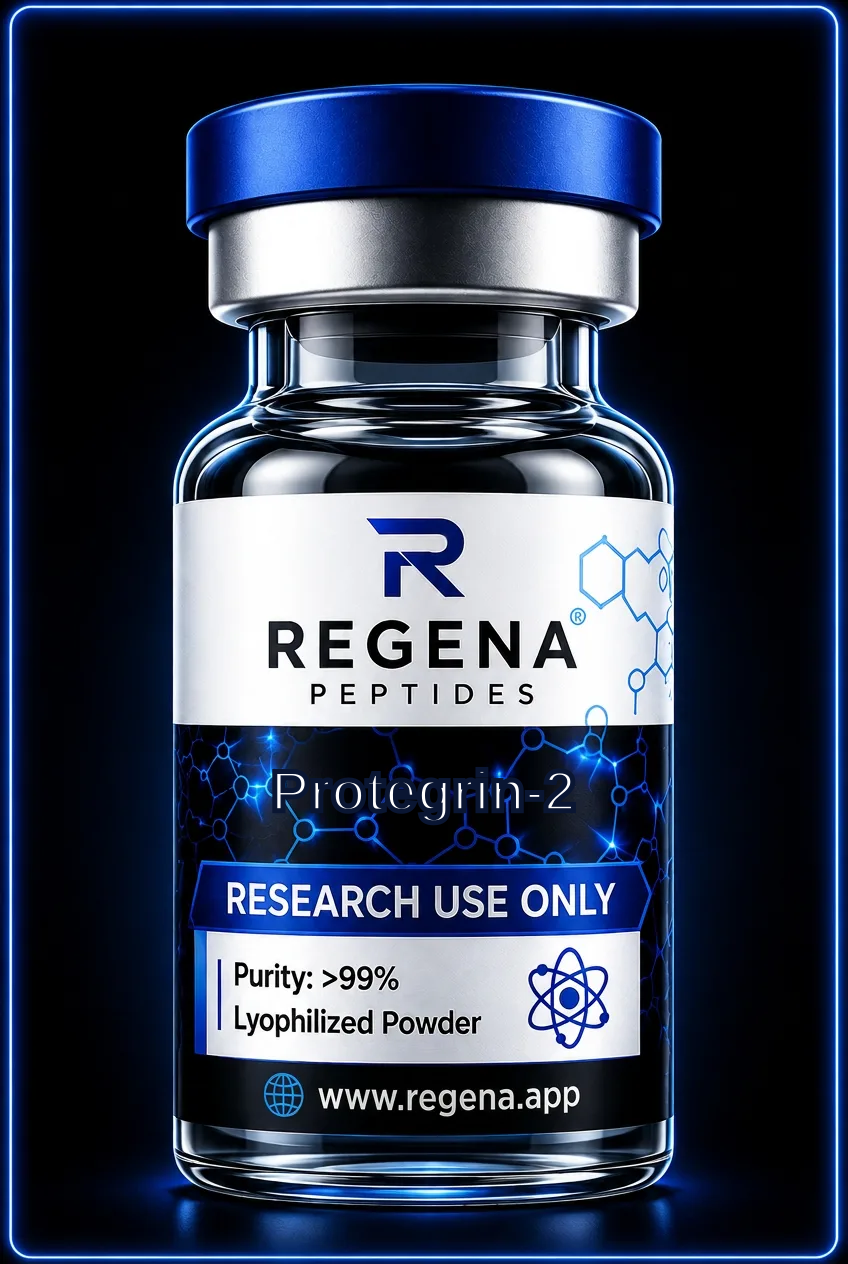
Antimicrobial · Porcine cathelicidin-derived β-hairpin antimicrobial peptide
Protegrin-2
Also known as PG-2
A 16-residue porcine protegrin used to explore how a compact disulphide-linked β-hairpin interacts with microbial membranes.
- Length
- 16 amino acids
- Half-life
- Not well characterised
- Mechanism
- Protegrin-2 interacts with anionic microbial membranes through its arginine-rich, disulphide-stabilised structure, promoting membrane permeabilisation. Membrane insertion and peptide assembly are implicated in protegrin-family activity, rather than signalling through a defined receptor.
- Studied in
- Bacterial cultures and model membrane systems are used to examine antimicrobial activity, lipid-dependent permeabilisation and the effects of peptide length within the protegrin family.
About Protegrin-2
Protegrin-2 is a member of the protegrin family first identified in porcine leucocytes. These peptides arise from cathelicidin precursors containing a conserved cathelin-like region and a variable C-terminal antimicrobial domain. The mature PG-2 peptide contains 16 amino acids, making it shorter than several other well-studied protegrins. Four cysteine residues form two intramolecular disulphide bonds, supporting a β-hairpin scaffold; the naturally described mature peptide also carries a C-terminal amide.
Its short, arginine-rich sequence provides a comparative model for investigating the minimum structural features required for protegrin membrane activity. Researchers examine microbial growth inhibition, membrane leakage and sensitivity to lipid composition or ionic conditions. Detailed pore architectures established for other protegrins should not be assumed to apply identically to PG-2. Direct measurements are needed to distinguish peptide binding, oligomerisation and membrane permeabilisation, particularly when comparing native folded material with linear or chemically modified analogues.
Laboratory notes
- For research use only; confirm the 16-residue sequence and distinguish PG-2 from longer protegrin family members.
- Avoid unintentional exposure to reducing reagents when studying the native disulphide-stabilised fold.
- Control microbial inoculum, medium composition and incubation conditions when comparing antimicrobial assay results.
Storage and reconstitution basics: storage guide.
Questions about Protegrin-2
Why is Protegrin-2 described as cathelicidin-derived?
Its antimicrobial sequence is produced from the variable C-terminal region of a precursor containing the conserved cathelin-like domain characteristic of cathelicidins.
Is PG-2 the same length as Protegrin-1?
No. Mature PG-2 contains 16 amino acids, whereas mature Protegrin-1 contains 18. Length differences should be considered when comparing their membrane interactions.
Can a pore model from another protegrin be assigned directly to PG-2?
Not without supporting data. Related sequences can differ in assembly and lipid-dependent behaviour, so PG-2-specific structural or biophysical measurements are preferable.
Is Protegrin-2 for human use?
No. It is supplied strictly for in-vitro laboratory research and is not for human or animal consumption.
Related research peptides
All products are sold for laboratory research use only. Not for human consumption, not a medicine, not for diagnosing, treating or preventing any condition.