
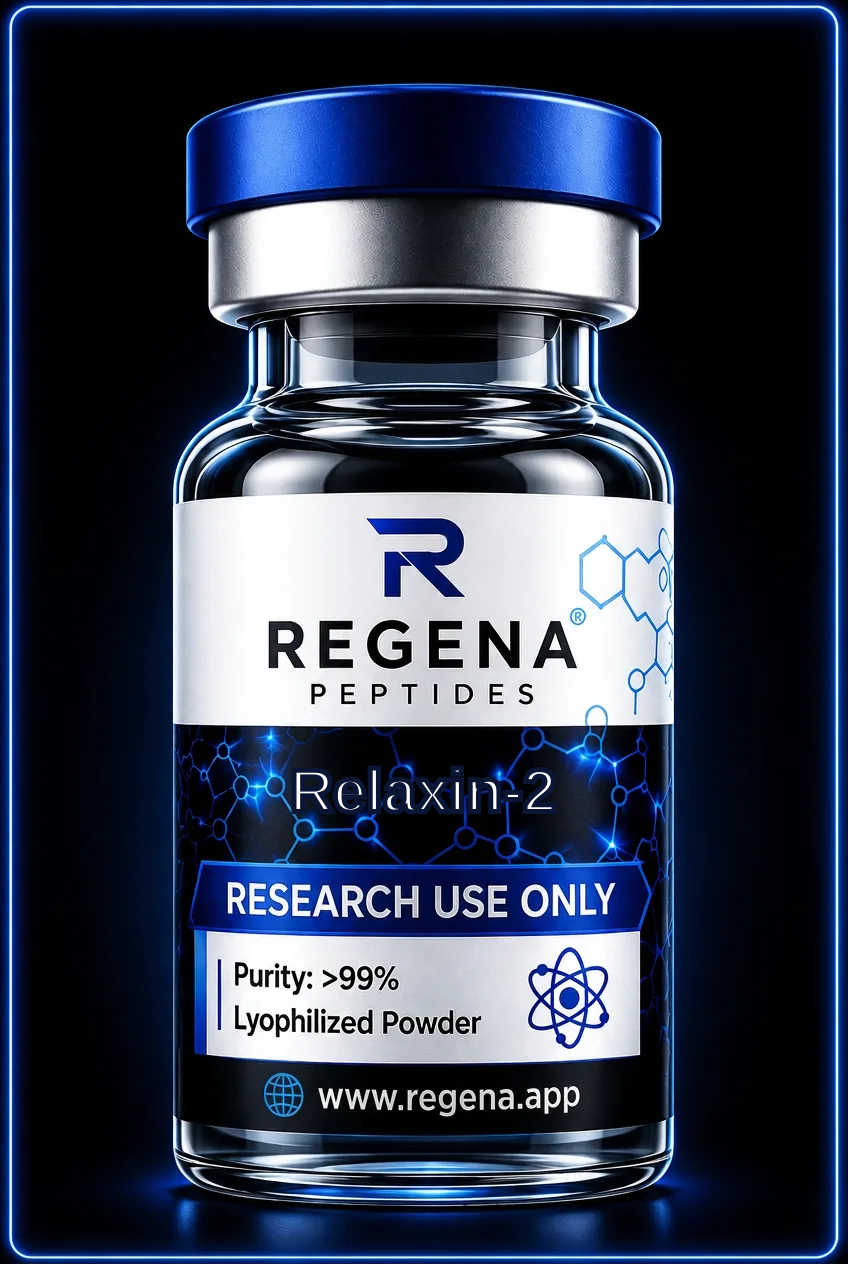
Hormone · Insulin-superfamily peptide hormone
Relaxin-2
Also known as H2 relaxin; RLN2
A disulphide-linked, two-chain hormone used to investigate RXFP1 signalling and extracellular matrix regulation.
- Length
- 53 amino acids across two chains in the canonical mature human form
- Half-life
- Not well characterised
- Mechanism
- Relaxin-2 activates relaxin family peptide receptor 1 (RXFP1), a leucine-rich repeat-containing G protein-coupled receptor. Signalling includes context-dependent cAMP, nitric oxide and kinase pathways; activity at RXFP2 can also occur in recombinant receptor systems.
- Studied in
- Receptor-expressing cell lines, primary fibroblasts, vascular preparations and animal tissue-remodelling models are used to examine RXFP1 signalling and extracellular matrix regulation.
About Relaxin-2
Relaxin-2 is encoded by RLN2 and belongs to the insulin superfamily. Its precursor is processed to produce an A chain of 24 residues and a B chain of 29 residues in the canonical mature human peptide. Two interchain disulphide bonds and one intrachain bond stabilise the folded structure. Relaxin was first described through reproductive physiology experiments in 1926, long before its sequences and receptor family were established.
Most mechanistic work centres on RXFP1, whose extracellular leucine-rich repeats and low-density lipoprotein receptor class A module contribute to ligand recognition and receptor activation. The B chain carries a characteristic receptor-binding motif, but the intact two-chain fold is important for activity. Laboratory studies examine cAMP responses, nitric oxide signalling, matrix metalloproteinase expression and collagen turnover. Receptor abundance, cell background and incubation period can substantially change the observed signalling profile.
Laboratory notes
- Confirm chain lengths, intact mass and disulphide connectivity; mass alone does not establish correct folding.
- Use low-binding consumables and validate recovery at low concentrations, where surface adsorption can distort assay results.
- Include receptor-negative cells and an orthogonal RXFP1 readout; cAMP responses alone do not establish receptor selectivity.
Storage and reconstitution basics: storage guide.
Questions about Relaxin-2
Is Relaxin-2 a single linear peptide?
No. The canonical mature peptide consists of separate A and B chains held together by two disulphide bonds, with a third disulphide bond within the A chain.
Does Relaxin-2 activate only RXFP1?
RXFP1 is its principal receptor, but RXFP2 activation has been reported in recombinant systems. Species, receptor expression and assay conditions influence apparent selectivity.
Why is one half-life value not given?
Persistence differs between purified buffer, culture medium and biological matrices. Stability should be measured under the intended experimental conditions rather than inferred from a different system.
Is Relaxin-2 for human use?
No. It is supplied strictly for in-vitro laboratory research and is not for human or animal consumption.
Related research peptides
All products are sold for laboratory research use only. Not for human consumption, not a medicine, not for diagnosing, treating or preventing any condition.