
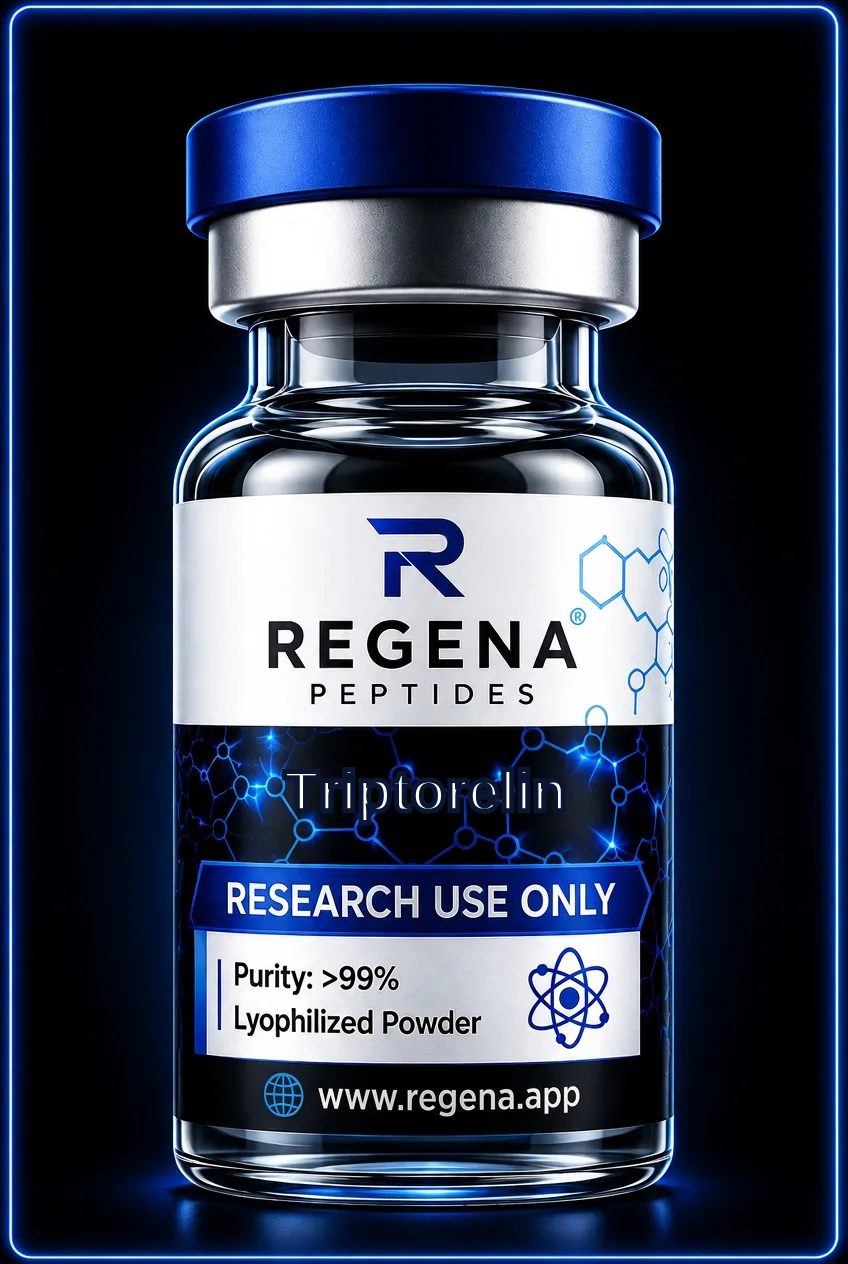
Hormone · Synthetic gonadotrophin-releasing hormone receptor agonist
Triptorelin
Also known as [D-Trp6]-GnRH; [D-Trp6]-LHRH
A GnRH decapeptide with D-tryptophan at position 6, used to investigate ligand recognition and time-dependent receptor responses.
- Length
- 10 amino acids
- Half-life
- Not well characterised
- Mechanism
- Triptorelin activates GnRHR, coupling receptor engagement to phospholipase C signalling, calcium mobilisation and context-dependent downstream kinase responses. Sustained stimulation can alter gonadotroph responsiveness and gonadotrophin synthesis.
- Studied in
- Recombinant GnRHR assays, primary pituitary cultures and animal endocrine models use triptorelin to study position-6 structure–activity relationships and stimulus-dependent signalling.
About Triptorelin
Triptorelin is a GnRH analogue defined by a single amino acid substitution: D-tryptophan replaces glycine at position 6 of the native decapeptide. Its sequence is pGlu-His-Trp-Ser-Tyr-D-Trp-Leu-Arg-Pro-Gly-NH2, retaining both the N-terminal pyroglutamate and C-terminal glycinamide. The molecule emerged from systematic investigations of GnRH structure and activity, which identified position 6 as an important site for modifying peptide conformation, enzymatic stability and agonist activity without removing the natural terminal framework.
Because it retains ten amino acids, triptorelin provides a useful comparator for analogues with additional C-terminal changes. Researchers examine its interaction with GnRH receptors through binding competition, calcium measurements and downstream transcriptional assays. Pituitary preparations also allow investigation of how stimulation patterns influence gonadotrophin synthesis and secretion. Functional potency should not be treated as a fixed property across systems: receptor density, signal amplification and the selected endpoint can shift the measured concentration–response relationship.
Laboratory notes
- The peptide contains two tryptophan residues; limit unnecessary light and oxidative exposure, and monitor degradation when validating storage conditions.
- Use identity methods capable of supporting stereochemical assignment, since routine mass spectrometry alone cannot distinguish D- from L-tryptophan.
- When comparing analogues, match receptor expression, assay timing and buffer composition to minimise system-dependent differences.
Storage and reconstitution basics: storage guide.
Questions about Triptorelin
Which tryptophan residue is in the D configuration?
The substituted residue at position 6 is D-tryptophan. The native tryptophan at position 3 remains in the L configuration.
Does triptorelin retain native GnRH's terminal groups?
Yes. It retains N-terminal pyroglutamate and C-terminal glycinamide, unlike nonapeptide analogues ending in proline ethylamide.
Can mass alone confirm triptorelin's stereochemistry?
No. D- and L-amino acid forms have the same mass. Stereochemical verification requires suitable orthogonal analytical methods and manufacturing documentation.
Is Triptorelin for human use?
No. It is supplied strictly for in-vitro laboratory research and is not for human or animal consumption.
Related research peptides
All products are sold for laboratory research use only. Not for human consumption, not a medicine, not for diagnosing, treating or preventing any condition.