
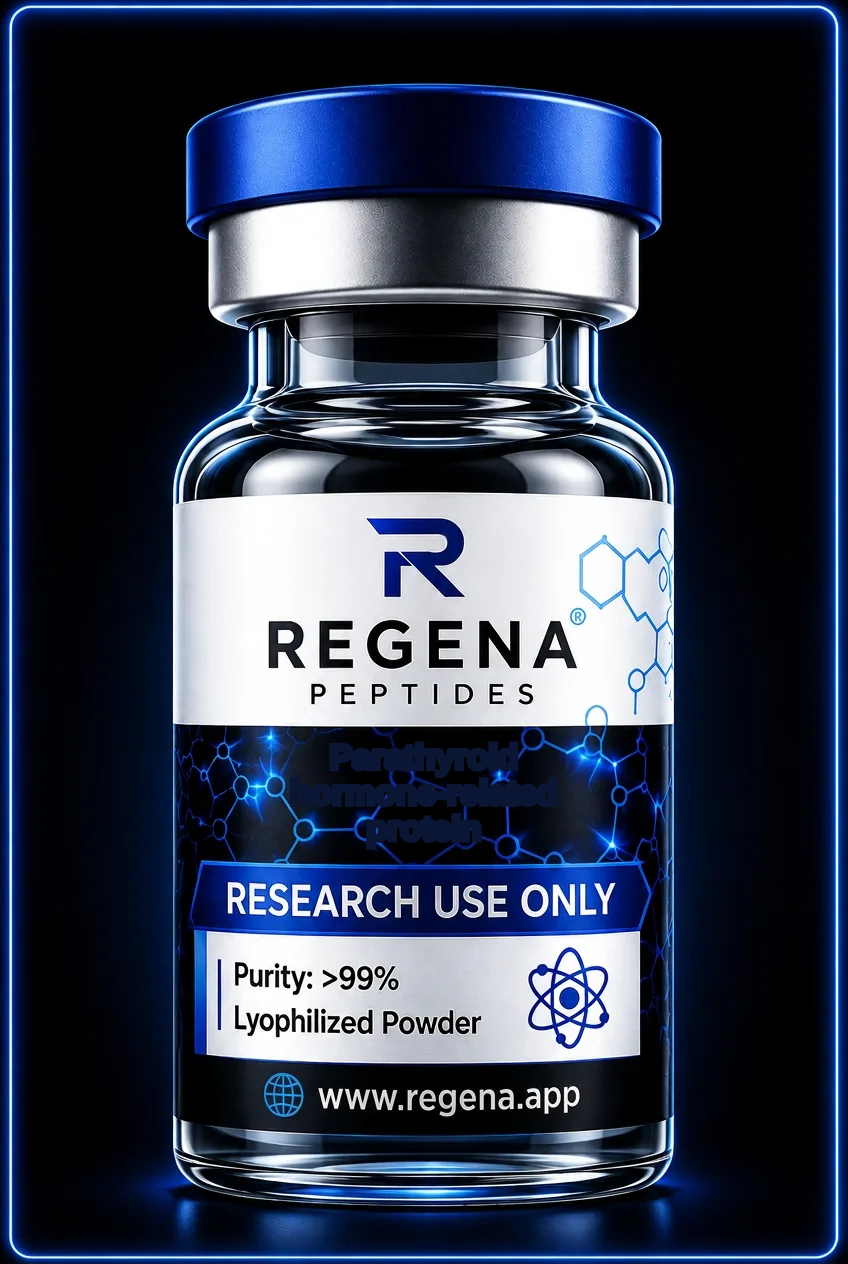
Hormone · N-terminal PTHrP fragment; class B GPCR agonist
Parathyroid hormone-related protein (1-36)
Also known as PTHrP(1–36); PTHrP 1–36
The 36-residue N-terminal fragment of PTHrP, used to investigate PTH1R activation, signalling kinetics and receptor trafficking.
- Length
- 36 amino acids
- Half-life
- Not well characterised
- Mechanism
- PTHrP(1–36) activates the parathyroid hormone 1 receptor, PTH1R, principally engaging Gs–adenylyl cyclase–cAMP signalling. Gq/11-linked signalling and receptor trafficking can also contribute, depending on the cellular system.
- Studied in
- Research uses PTH1R-expressing cell lines, osteoblast-lineage cultures, chondrocyte models and animal skeletal-development systems to examine receptor signalling.
About Parathyroid hormone-related protein (1-36)
Parathyroid hormone-related protein was identified in the 1980s through studies of factors capable of reproducing selected parathyroid hormone-like activities. Its first 36 residues contain the principal N-terminal receptor-activating region, making PTHrP(1–36) a widely used fragment for mechanistic experiments. Although PTHrP and parathyroid hormone have limited overall sequence identity, their N-terminal regions share structural features recognised by PTH1R. The fragment does not contain the mid-region and C-terminal sequences responsible for other aspects of PTHrP biology.
PTH1R is a class B G protein-coupled receptor with an extracellular ligand-binding domain and a transmembrane activation domain. PTHrP(1–36) engages this two-domain recognition system and is used to study cAMP production, calcium-linked responses, receptor internalisation and signalling duration. Comparisons with other PTH1R ligands can reveal differences in receptor-state preference and spatial signalling. Interpretation requires attention to receptor abundance, peptide degradation and assay timing, since a single endpoint may obscure substantially different signalling kinetics.
Laboratory notes
- Confirm species sequence and C-terminal chemistry; amidated and free-acid preparations should not be treated as interchangeable without validation.
- Use receptor-negative or PTH1R-deficient controls to distinguish receptor-mediated responses from assay background.
- Standardise incubation timing and minimise repeated freeze–thaw cycles when comparing signalling kinetics across batches.
Storage and reconstitution basics: storage guide.
Questions about Parathyroid hormone-related protein (1-36)
Which receptor is the main target of PTHrP(1–36)?
PTH1R is the established principal receptor. The fragment should not be described as a general agonist of all parathyroid hormone receptor subtypes.
Does this fragment represent all PTHrP functions?
No. It models the N-terminal receptor-active region and omits other domains, including sequences associated with intracellular localisation and C-terminal activities.
Why measure both cAMP and receptor trafficking?
Together they help distinguish signal magnitude from changes in receptor localisation and signal persistence that a single cAMP endpoint may miss.
Is Parathyroid hormone-related protein (1-36) for human use?
No. It is supplied strictly for in-vitro laboratory research and is not for human or animal consumption.
Related research peptides
All products are sold for laboratory research use only. Not for human consumption, not a medicine, not for diagnosing, treating or preventing any condition.