
Cardiovascular · Venom-derived endothelin receptor agonist
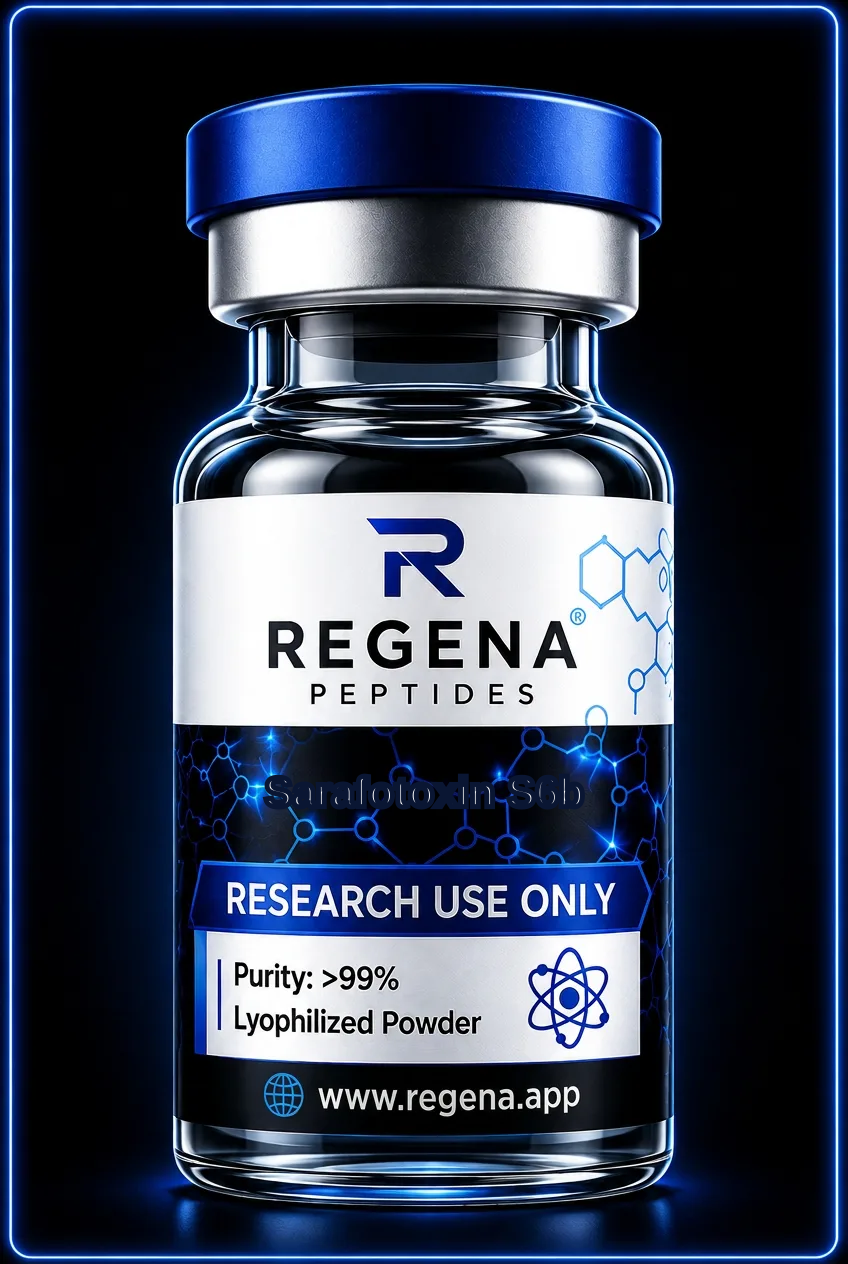
Sarafotoxin S6b
Also known as SRTX-b; S6b
A disulphide-rich venom peptide that activates ETA and ETB receptors in endothelin pharmacology experiments.
- Length
- 21 amino acids
- Half-life
- Not well characterised
- Mechanism
- Sarafotoxin S6b is an agonist at both ETA and ETB receptors. Receptor activation couples to intracellular signalling pathways that include phospholipase C activation and calcium mobilisation.
- Studied in
- Recombinant receptor systems, isolated vascular tissues and animal physiology models use S6b to examine endothelin receptor activation and contractile signalling.
About Sarafotoxin S6b
Sarafotoxin S6b belongs to a family of peptides originally isolated from the venom of the burrowing asp Atractaspis engaddensis. Its discovery helped reveal a striking structural and functional relationship between venom peptides and endogenous endothelins. S6b contains 21 amino acids, with disulphide bonds connecting Cys1–Cys15 and Cys3–Cys11. This constrained framework and its conserved C-terminal features support interaction with endothelin receptors despite its distinct biological origin.
Unlike the strongly ETB-preferring sarafotoxin S6c, S6b activates both major endothelin receptor subtypes and is commonly treated as a non-selective endothelin receptor agonist. Receptor-defined expression systems allow its binding and signalling properties to be measured separately at ETA and ETB. In isolated tissues, the observed response also reflects receptor distribution and cellular context. Parallel antagonist experiments are therefore important when using S6b to assign a functional response to either subtype.
Laboratory notes
- For research use only; handle as a potent venom-derived bioactive peptide under an institutional risk assessment and the applicable safety data sheet.
- Confirm native disulphide pairing and control oxidative degradation, particularly during prolonged solution storage.
- Use receptor-subtype controls and matched exposure times when comparing S6b with endothelins or other sarafotoxins.
Storage and reconstitution basics: storage guide.
Questions about Sarafotoxin S6b
How does S6b differ pharmacologically from S6c?
S6b activates both ETA and ETB, whereas S6c shows a strong preference for ETB.
Is S6b an endogenous endothelin?
No. It is a venom-derived sarafotoxin with structural similarities to endothelins and activity at their receptors.
Can a tissue response alone identify the receptor involved?
No. Receptor-selective antagonists, receptor-defined cells or genetic controls are needed to distinguish ETA-dependent from ETB-dependent components.
Is Sarafotoxin S6b for human use?
No. It is supplied strictly for in-vitro laboratory research and is not for human or animal consumption.
Related research peptides
All products are sold for laboratory research use only. Not for human consumption, not a medicine, not for diagnosing, treating or preventing any condition.