
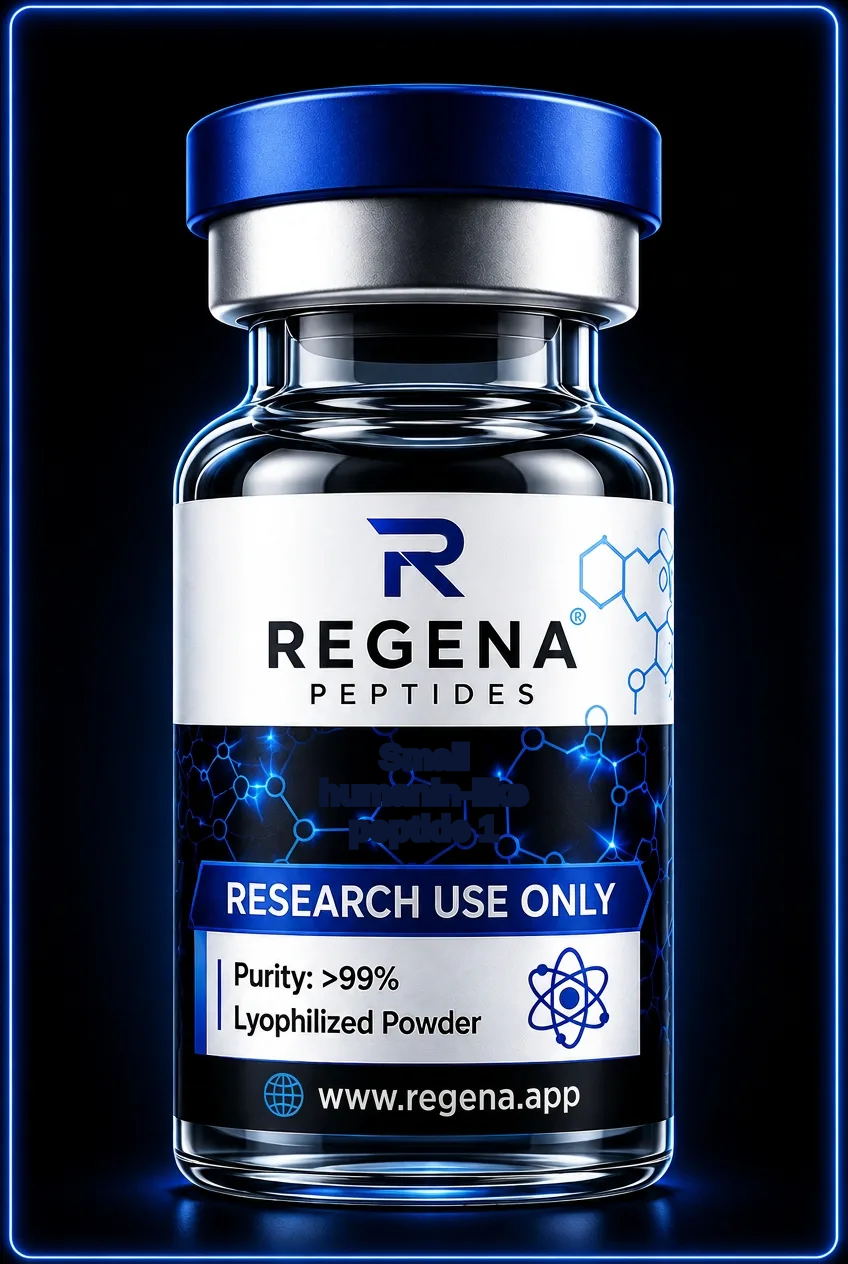
Other · Putative mitochondrial-derived peptide
Small humanin-like peptide 1 (SHLP1)
Also known as SHLP1
A 26-residue MT-RNR2-associated research peptide with an unresolved receptor target and limited functional characterisation.
- Length
- 26 amino acids
- Half-life
- Not well characterised
- Mechanism
- SHLP1 has no established receptor target or well-defined signalling mechanism. Its designation reflects a predicted short open reading frame within the mitochondrial MT-RNR2 region, rather than demonstrated engagement of humanin receptors.
- Studied in
- Synthetic SHLP1 is used in exploratory cell-based comparisons of mitochondrial-derived peptides, including assays of viability, apoptosis and cellular stress.
About Small humanin-like peptide 1 (SHLP1)
Small humanin-like peptide 1 belongs to a set of six candidate peptides described in 2016 following analysis of short open reading frames within the mitochondrial 16S ribosomal RNA region, MT-RNR2. The predicted SHLP1 product contains 26 amino acids. Its name groups it with humanin-related mitochondrial peptide research, but does not establish a shared receptor or identical biological activity. Synthetic SHLP1 provides a defined reagent for testing the properties of the proposed peptide sequence.
Compared with SHLP2 and SHLP3, SHLP1 has received relatively limited functional investigation. A specific receptor, direct molecular binding partner and reproducible downstream signalling cascade have not been established. Exploratory studies therefore need to distinguish sequence-dependent effects from general assay interference or preparation-related effects. Cellular viability, apoptosis markers and mitochondrial measurements can serve as screening endpoints, but none alone demonstrates a mechanism. Evidence obtained with a synthetic peptide also does not independently establish its endogenous production or abundance.
Laboratory notes
- Verify the complete sequence and terminal chemistry against the intended literature reference; the SHLP numbering does not imply interchangeable structures.
- Establish solubility and recovery in the actual assay buffer, using matched vehicle blanks and checks for precipitation or surface adsorption.
- For research use only. Pair viability measurements with orthogonal assays and peptide-only blanks to identify readout interference.
Storage and reconstitution basics: storage guide.
Questions about Small humanin-like peptide 1 (SHLP1)
Does SHLP1 bind the same receptors as humanin?
Shared receptor binding has not been established. The family name is not evidence of activity at FPR2 or the proposed humanin cytokine-receptor complex.
Where does the SHLP1 sequence originate?
It was proposed from a short open reading frame within the mitochondrial MT-RNR2 region, which also encodes 16S ribosomal RNA.
Does activity of synthetic SHLP1 prove endogenous peptide expression?
No. Endogenous expression requires separate evidence, ideally including sequence-specific detection with appropriate analytical controls.
Is Small humanin-like peptide 1 (SHLP1) for human use?
No. It is supplied strictly for in-vitro laboratory research and is not for human or animal consumption.
Related research peptides
All products are sold for laboratory research use only. Not for human consumption, not a medicine, not for diagnosing, treating or preventing any condition.