
Hormone · Peptide hormone
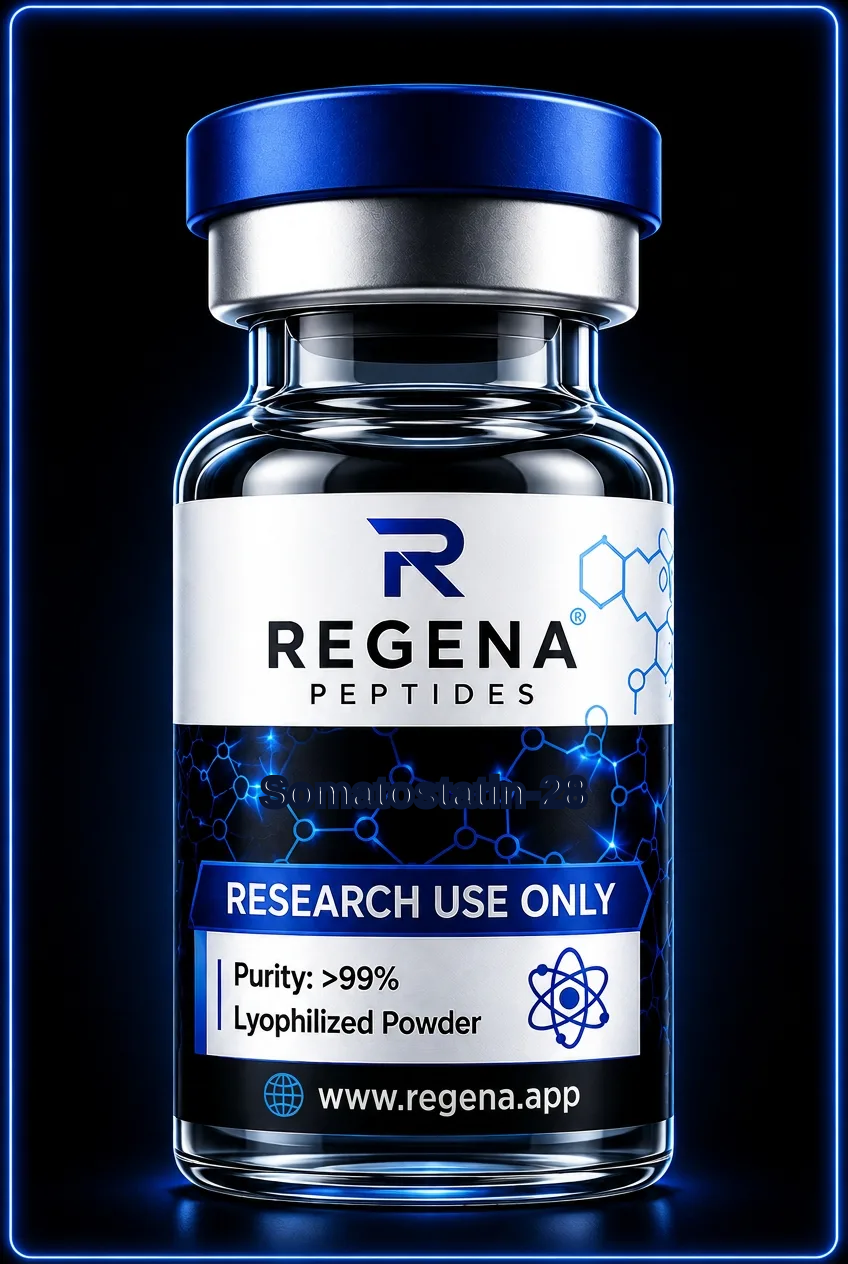
Somatostatin-28
Also known as SST-28
A 28-amino acid peptide hormone, Somatostatin-28 is an endogenous ligand for all five somatostatin receptors (SSTRs) used in endocrinology research.
- Length
- 28 amino acids
- Half-life
- Approximately 2-4 minutes in human plasma.
- Mechanism
- Somatostatin-28 is an endogenous ligand that binds with high affinity to all five somatostatin receptor subtypes (SSTR1-5), inhibiting the release of various hormones.
- Studied in
- It is used as a reference compound in endocrinology and neuroscience research to study SSTR signaling and its inhibitory effects on hormone secretion and cell proliferation.
About Somatostatin-28
Somatostatin-28 (SST-28) is one of two primary, naturally occurring forms of the inhibitory peptide hormone somatostatin, the other being the shorter Somatostatin-14 (SST-14). Both are derived from the preprosomatostatin precursor protein. SST-28 is an N-terminally extended version of SST-14 and exhibits a somewhat different profile of biological activity and potency at various receptor subtypes.
This peptide functions as a non-selective agonist, binding to all five known G-protein coupled somatostatin receptors (SSTR1-5). Activation of these receptors universally leads to inhibitory cellular effects, such as the suppression of hormone release, including growth hormone, insulin, and glucagon. In laboratory research, SST-28 is used to study these inhibitory pathways, investigate receptor-specific functions using cell lines expressing individual SSTRs, and explore its role in regulating cell cycle progression.
Laboratory notes
- SST-28 contains a critical disulfide bridge between Cys residues, which is essential for its receptor binding and biological activity.
- The peptide has a very short plasma half-life due to rapid enzymatic degradation, a key consideration for in vivo experimental design.
- Reconstitute with sterile, deionized water or a mild acidic buffer to ensure full solubility.
Storage and reconstitution basics: storage guide.
Questions about Somatostatin-28
What is the difference between Somatostatin-28 and Somatostatin-14?
Somatostatin-28 is an N-terminally extended form of Somatostatin-14, both arising from the same precursor. While they share the core active sequence, they can exhibit different potencies and binding profiles at the five SSTR subtypes.
What is the general function of Somatostatin-28?
It is a potent inhibitory hormone that acts by binding to somatostatin receptors (SSTRs) to suppress the release of many other hormones, such as growth hormone, TSH, insulin, and glucagon.
Is the disulfide bond in Somatostatin-28 important?
Yes, the intramolecular disulfide bond is crucial for maintaining the peptide's three-dimensional structure, which is required for high-affinity receptor binding and biological function.
Is Somatostatin-28 for human use?
No. It is supplied strictly for in-vitro laboratory research and is not for human or animal consumption.
Related research peptides
All products are sold for laboratory research use only. Not for human consumption, not a medicine, not for diagnosing, treating or preventing any condition.