
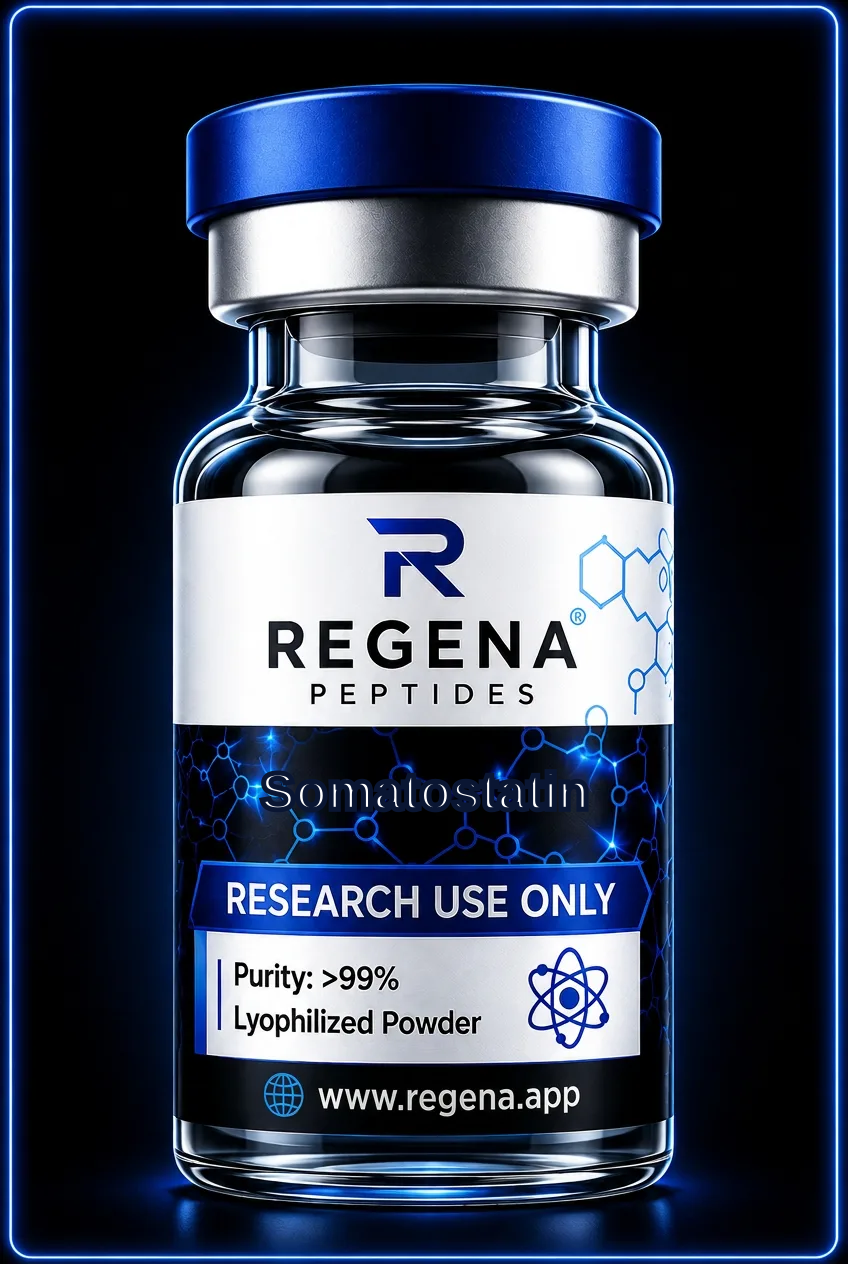
Hormone · Hormone Peptide
Somatostatin
Also known as Growth hormone-inhibiting hormone (GHIH)
A key inhibitory peptide hormone that regulates the endocrine system by suppressing the release of growth hormone, insulin, and other hormones.
- Length
- 14 amino acids
- Half-life
- Extremely short, 1-3 minutes in plasma
- Mechanism
- A peptide hormone that inhibits the secretion of numerous other hormones, including growth hormone and insulin, by binding to a family of five somatostatin receptors (SSTR1-5).
- Studied in
- Utilised in endocrinology research to study the regulation of pituitary and pancreatic hormone secretion and as a tool in gastroenterology research for its inhibitory effects.
About Somatostatin
Somatostatin, also known as growth hormone-inhibiting hormone (GHIH), is a regulatory peptide hormone produced in the hypothalamus, pancreas, and gastrointestinal tract. It exists in two primary bioactive forms, a 14-amino-acid peptide (SST-14) and a 28-amino-acid peptide (SST-28), both derived from the precursor preprosomatostatin. Both forms contain a critical disulfide bridge that forms a loop structure essential for their activity.
The primary function of somatostatin is inhibitory. It acts on a family of five G protein-coupled somatostatin receptors (SSTRs) to suppress the secretion of a wide range of hormones, including growth hormone from the pituitary, and insulin and glucagon from the pancreas. In laboratory settings, it is a standard tool for studying the control loops of the endocrine system and investigating receptor-specific signaling pathways. This molecule is a reference compound with a clinical history.
Laboratory notes
- This product is Somatostatin-14. An N-terminally extended 28-amino-acid form (Somatostatin-28) also exists with different tissue distribution and potency.
- A disulfide bond between Cys3 and Cys14 is crucial for its biological activity; reducing conditions will inactivate the peptide.
- Extremely short plasma half-life of 1-3 minutes necessitates the development of more stable synthetic analogs for many research applications.
Storage and reconstitution basics: storage guide.
Questions about Somatostatin
What is Somatostatin?
Somatostatin is a peptide hormone that inhibits the secretion of several other hormones, most notably growth hormone and insulin.
Are there different forms of Somatostatin?
Yes, there are two main endogenous forms: Somatostatin-14 (14 amino acids) and Somatostatin-28 (28 amino acids), which are produced in different tissues and have varying potencies.
Why is Somatostatin's half-life so short?
It is rapidly cleared from circulation and degraded by peptidases in the plasma and tissues, limiting its duration of action to only 1-3 minutes.
Is Somatostatin for human use?
No. It is supplied strictly for in-vitro laboratory research and is not for human or animal consumption.
Related research peptides
All products are sold for laboratory research use only. Not for human consumption, not a medicine, not for diagnosing, treating or preventing any condition.