
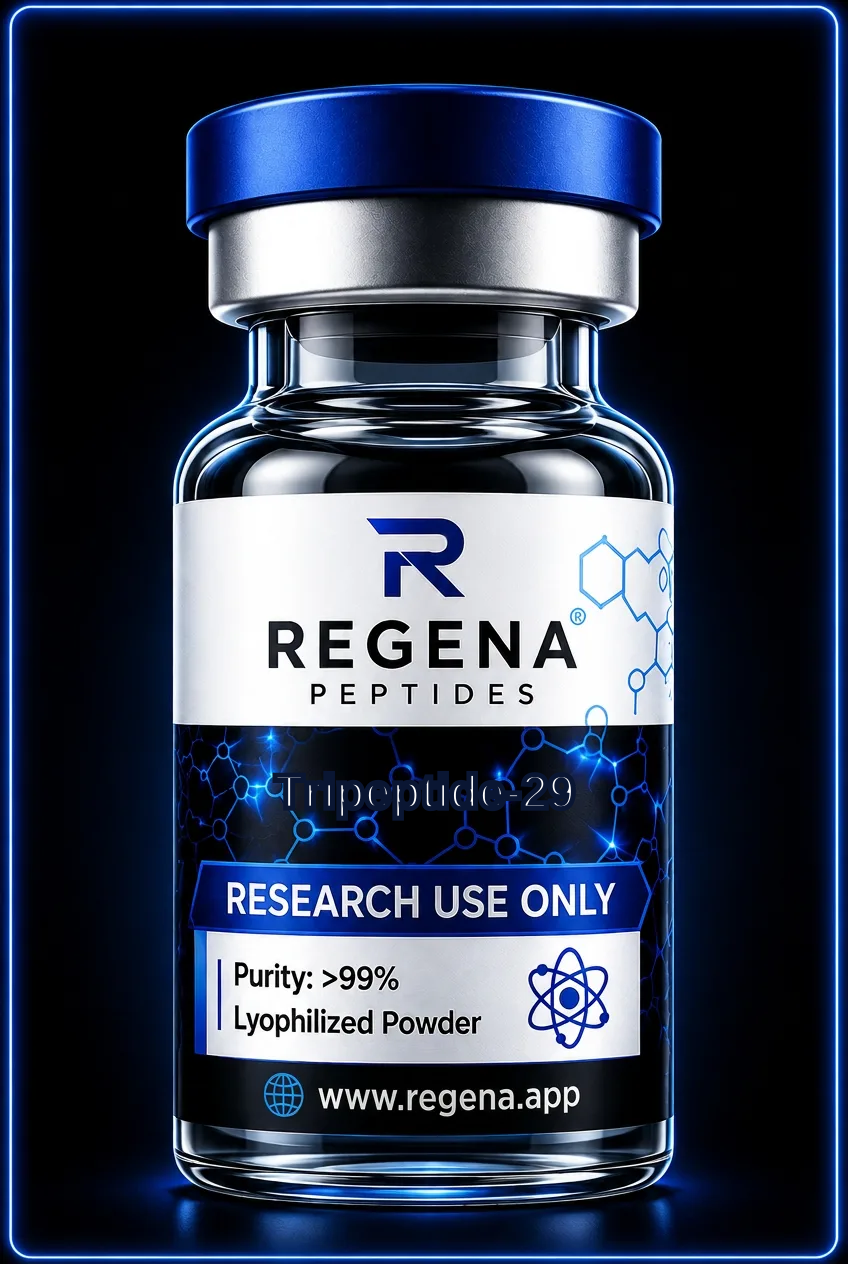
Cosmetic · Synthetic collagen-associated tripeptide
Tripeptide-29
Also known as GPK; Gly-Pro-Lys
Gly-Pro-Lys is a short collagen-associated research peptide whose direct receptor target remains unresolved.
- Length
- 3 amino acids
- Half-life
- Not well characterised
- Mechanism
- Gly-Pro-Lys is investigated for effects on collagen-associated cellular endpoints, but its direct molecular target is not well characterised. A specific receptor-mediated mechanism should not be inferred from changes in collagen-marker expression.
- Studied in
- Exploratory in-vitro work uses dermal fibroblast cultures to assess collagen-related expression, secreted matrix markers and peptide stability.
About Tripeptide-29
Tripeptide-29 is commonly specified as Gly-Pro-Lys, abbreviated GPK. The sequence fits the Gly-X-Y pattern characteristic of collagen, although a three-residue peptide does not reproduce collagen's triple-helical structure. Proline constrains the peptide backbone, while lysine supplies a basic side chain that may influence solubility and chemical derivatisation. The name does not indicate hydroxyproline, lipidation or acetylation; those features would require separate structural specification. Independent documentation of its initial discovery is limited.
Research descriptions generally centre on collagen-associated responses in fibroblast models rather than a validated binding target. Interpretation requires care because short peptides can undergo extracellular degradation or alter nutrient availability, creating effects unrelated to selective signalling. Measuring intact GPK in culture medium helps distinguish exposure to the original peptide from exposure to breakdown products. Research-only experiments can combine transcript analysis, secreted protein measurements and matrix-deposition assays, while accounting for cell proliferation and background components in the medium.
Laboratory notes
- Distinguish Gly-Pro-Lys from peptides containing hydroxyproline or a different residue order; these are chemically distinct materials.
- Assess intact-peptide recovery in the actual culture medium using a suitable chromatographic or mass-spectrometric method.
- Include vehicle and viability controls; amino-acid or scrambled-sequence controls may help investigate whether an observed response is sequence-dependent.
Storage and reconstitution basics: storage guide.
Questions about Tripeptide-29
Does Tripeptide-29 contain hydroxyproline?
The commonly specified GPK sequence contains proline, not hydroxyproline. A hydroxyproline-containing analogue would have a different chemical identity.
Can GPK form the same structure as intact collagen?
A single GPK tripeptide does not reproduce the extended, three-chain triple helix of collagen.
Why check peptide stability during a cell assay?
Medium components and cellular peptidases may degrade short peptides. Stability measurements help establish whether cells encounter intact GPK throughout the experiment.
Is Tripeptide-29 for human use?
No. It is supplied strictly for in-vitro laboratory research and is not for human or animal consumption.
Related research peptides
All products are sold for laboratory research use only. Not for human consumption, not a medicine, not for diagnosing, treating or preventing any condition.