
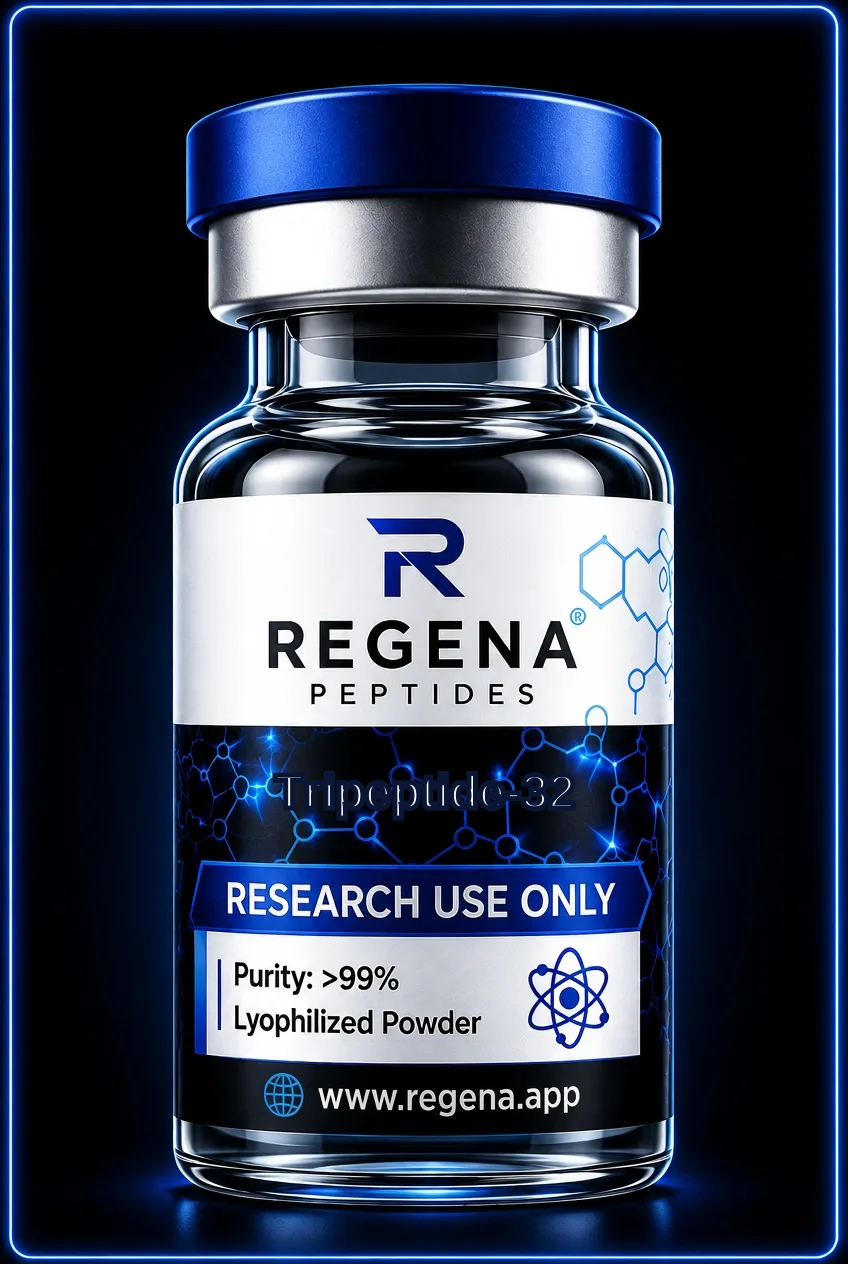
Cosmetic · Synthetic tripeptide associated with circadian-signalling research
Tripeptide-32
Also known as —
A synthetic tripeptide associated with exploratory clock-gene research, without an established direct molecular target.
- Length
- 3 amino acids
- Half-life
- Not well characterised
- Mechanism
- Supplier descriptions associate Tripeptide-32 with modulation of clock-related cellular markers. A direct receptor target or defined interaction with core circadian-clock proteins has not been established in robust independent mechanistic literature.
- Studied in
- Relevant exploratory models include synchronised skin-cell cultures with time-series measurements of clock-gene expression or circadian reporter activity.
About Tripeptide-32
Tripeptide-32 is a cosmetic ingredient designation for a synthetic three-residue peptide. Public ingredient descriptions commonly identify proline, serine and threonine as its constituent amino acids, but composition alone does not establish residue order. A verified sequence and stereochemical specification are essential for a scientific reference material. Independent accounts of the peptide's discovery and structure–activity development are sparse, and its numerical designation should not be interpreted as a sequence identifier or mechanistic classification.
The peptide is discussed in relation to cellular circadian biology, where transcriptional feedback loops involve proteins such as CLOCK, BMAL1, PER and CRY. These proteins are clock components, not established receptors for Tripeptide-32. A single measurement of a clock-related transcript cannot distinguish a change in rhythm amplitude from a phase shift or an unrelated expression effect. Research-only characterisation therefore benefits from synchronised cultures, repeated sampling and reporter-based measurements over multiple cycles, supported by viability and synchronisation controls.
Laboratory notes
- Obtain a sequence-resolved certificate of analysis; an amino-acid composition statement cannot distinguish sequence isomers.
- Standardise culture synchronisation and record sampling times relative to the synchronising event.
- Use multi-cycle time-series analysis to distinguish period, phase and amplitude changes, and check reporter assays for direct signal interference.
Storage and reconstitution basics: storage guide.
Questions about Tripeptide-32
Are CLOCK or PER proteins confirmed binding targets of Tripeptide-32?
No direct binding relationship is firmly established. Their involvement in circadian biology does not make them demonstrated peptide targets.
Why is one clock-gene measurement insufficient?
Clock-gene expression oscillates. A difference at one sampling time may reflect a phase shift rather than a sustained change in expression or rhythm amplitude.
Does amino-acid composition establish the peptide's identity?
No. Residue order, stereochemistry and terminal chemistry also determine identity and should be supported by sequence-resolved analytical documentation.
Is Tripeptide-32 for human use?
No. It is supplied strictly for in-vitro laboratory research and is not for human or animal consumption.
Related research peptides
All products are sold for laboratory research use only. Not for human consumption, not a medicine, not for diagnosing, treating or preventing any condition.