
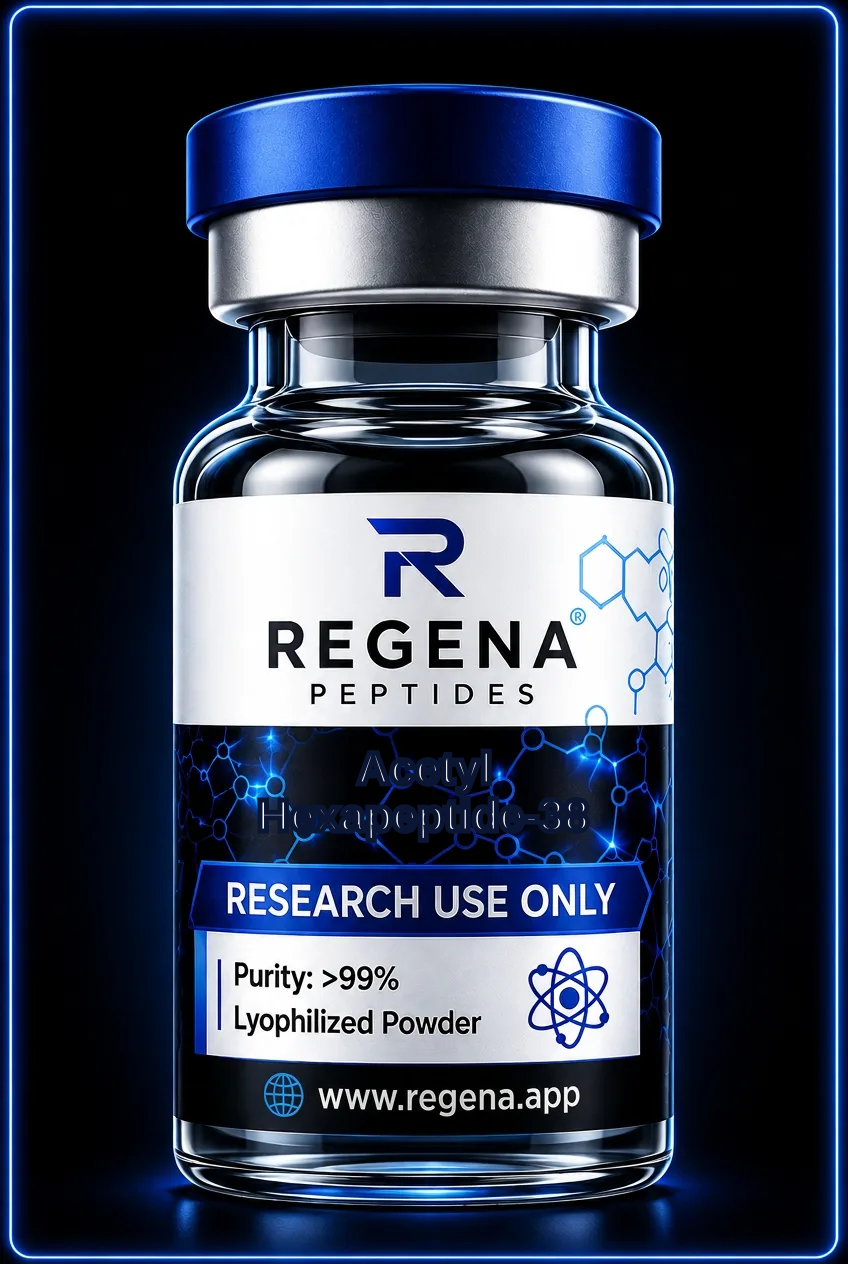
Cosmetic · Synthetic Hexapeptide
Acetyl Hexapeptide-38
An acetylated hexapeptide that acts as a PGC-1α agonist, used in adipocyte cell culture to study mechanisms of adipogenesis and lipid storage.
- Length
- 6 amino acids
- Half-life
- Not well characterised
- Mechanism
- This acetylated hexapeptide is designed to act as an agonist of the peroxisome proliferator-activated receptor gamma coactivator 1-alpha (PGC-1α).
- Studied in
- It is studied in adipocyte precursor cell cultures to investigate its influence on PGC-1α expression, adipocyte differentiation (adipogenesis), and lipid accumulation.
About Acetyl Hexapeptide-38
Acetyl Hexapeptide-38 is a synthetic, N-terminally acetylated peptide with a six amino acid sequence. Its design is targeted towards the peroxisome proliferator-activated receptor gamma coactivator 1-alpha (PGC-1α) pathway, a master regulator of mitochondrial biogenesis and energy metabolism.
In a laboratory setting, this peptide is used as a tool to probe the molecular mechanisms of adipogenesis. Research using pre-adipocyte cell lines, such as 3T3-L1, investigates the peptide's ability to increase PGC-1α expression. Downstream effects studied include the differentiation of pre-adipocytes into mature, lipid-storing adipocytes and the quantification of intracellular lipid accumulation.
Laboratory notes
- The peptide's activity is linked to the PGC-1α signalling pathway.
- Commonly used in in vitro models of adipogenesis, such as differentiating 3T3-L1 cells or human mesenchymal stem cells.
- Experimental readouts often include qPCR for PGC-1α gene expression and Oil Red O staining to quantify lipid droplet accumulation.
Storage and reconstitution basics: storage guide.
Questions about Acetyl Hexapeptide-38
What is the proposed mechanism of Acetyl Hexapeptide-38?
It is proposed to function by upregulating the expression of PGC-1α (peroxisome proliferator-activated receptor gamma coactivator 1-alpha), a key transcriptional coactivator in cellular metabolism.
What cell processes are studied using this peptide?
It is used to study adipogenesis, the process by which precursor cells differentiate into mature fat cells (adipocytes), and the subsequent accumulation of lipids within these cells.
What is PGC-1α?
PGC-1α is a transcriptional coactivator that plays a central role in regulating cellular energy metabolism, mitochondrial biogenesis, and the differentiation of several cell types, including adipocytes.
Is Acetyl Hexapeptide-38 for human use?
No. It is supplied strictly for in-vitro laboratory research and is not for human or animal consumption.
Related research peptides
All products are sold for laboratory research use only. Not for human consumption, not a medicine, not for diagnosing, treating or preventing any condition.