
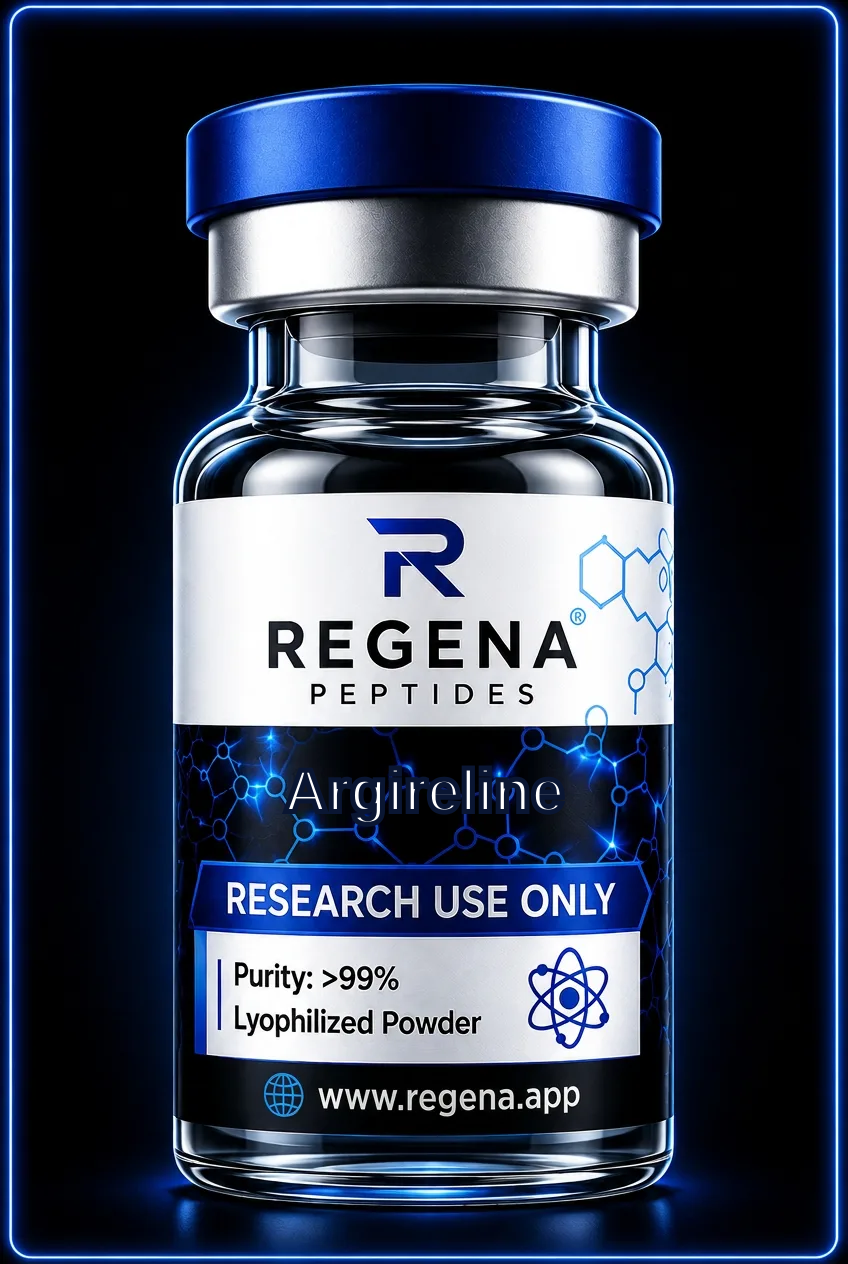
Cosmetic · Neuropeptide Analogue
Argireline (Acetyl Hexapeptide-3)
Also known as Acetyl Hexapeptide-3, Acetyl Hexapeptide-8
A synthetic hexapeptide that acts as a competitive inhibitor of the SNARE complex, studied in vitro for its ability to modulate neurotransmitter release.
- Length
- 6 amino acids
- Half-life
- Not well characterised
- Mechanism
- This peptide mimics the N-terminal end of the SNAP-25 protein and competes with it for a position in the SNARE complex, thereby inhibiting neurotransmitter release at the neuromuscular junction in vitro.
- Studied in
- In vitro models, such as co-cultures of motor neurons and myotubes, are used to study its ability to modulate acetylcholine release and subsequent muscle cell contraction.
About Argireline (Acetyl Hexapeptide-3)
Acetyl Hexapeptide-3, also designated Acetyl Hexapeptide-8, is a synthetic peptide composed of six amino acids. Its sequence is a biomimetic of the N-terminal domain of SNAP-25, a protein intrinsically involved in neuronal exocytosis. The peptide is N-terminally acetylated, a modification that can influence peptide stability.
The established mechanism of action involves competition with native SNAP-25 for a position within the SNARE (Soluble N-ethylmaleimide-sensitive factor Attachment protein REceptor) complex. By occupying this position, the peptide destabilizes the fully-formed SNARE complex, which is essential for the fusion of synaptic vesicles with the presynaptic membrane. This interference is studied in neuronal cell cultures for its effect on the release of neurotransmitters, such as acetylcholine.
Laboratory notes
- The peptide sequence is Ac-Glu-Glu-Met-Gln-Arg-Arg-NH2.
- Efficacy in vitro is often assessed by measuring the reduction of calcium-dependent neurotransmitter (e.g., glutamate or acetylcholine) release from cultured neurons.
- SNAP-8 is a related but distinct octapeptide that also targets the SNARE complex and is often used as a comparative compound in research.
Storage and reconstitution basics: storage guide.
Questions about Argireline (Acetyl Hexapeptide-3)
What is the SNARE complex?
The SNARE complex is a group of proteins, including SNAP-25, syntaxin, and synaptobrevin, that mediate the fusion of vesicles with their target membrane. In neurons, this process is essential for releasing neurotransmitters into the synapse.
How does Acetyl Hexapeptide-3 interfere with this process?
It mimics a part of the SNAP-25 protein, allowing it to compete for a spot in the SNARE complex. This competition leads to the formation of an unstable complex that is inefficient at mediating vesicle fusion, thus reducing neurotransmitter release in experimental models.
Is Acetyl Hexapeptide-3 the same as Acetyl Hexapeptide-8?
Yes, the names are used interchangeably in literature and commerce to refer to the same molecule, Ac-EEMQRR-NH2.
Is Argireline (Acetyl Hexapeptide-3) for human use?
No. It is supplied strictly for in-vitro laboratory research and is not for human or animal consumption.
Related research peptides
All products are sold for laboratory research use only. Not for human consumption, not a medicine, not for diagnosing, treating or preventing any condition.