
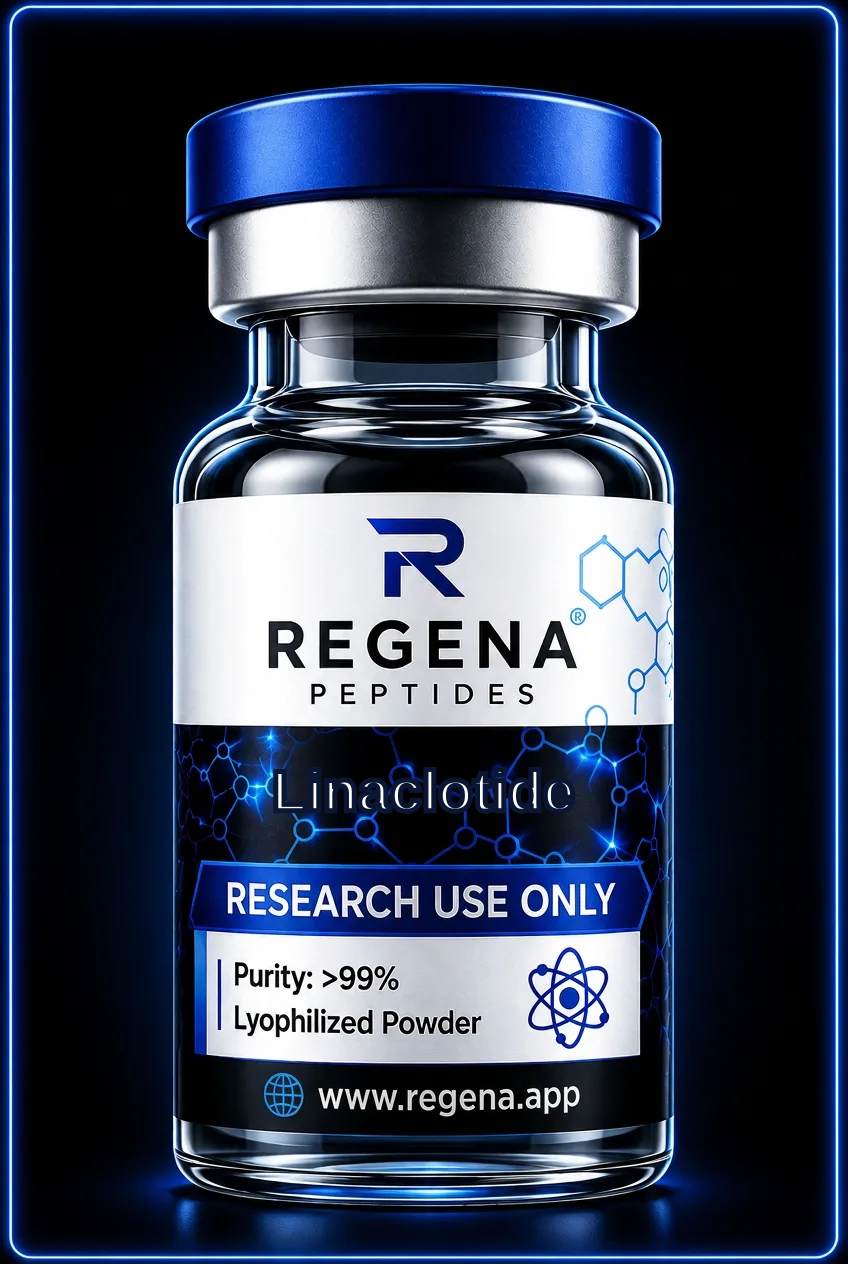
Hormone · Peptide Agonist
Linaclotide
A 14-amino acid peptide agonist of the guanylate cyclase-C receptor, studied for its role in intestinal fluid secretion and motility. A reference compound.
- Length
- 14 amino acids
- Half-life
- Not systemically absorbed; acts locally
- Mechanism
- It is an agonist of the guanylate cyclase C (GC-C) receptor on the luminal surface of the intestinal epithelium.
- Studied in
- Laboratory investigations use this peptide in intestinal cell lines (e.g., T84) and animal models to study intestinal fluid secretion, ion transport, and visceral hypersensitivity.
About Linaclotide
Linaclotide is a synthetic 14-amino-acid peptide containing three disulfide bonds which constrain its structure. It is a structural and functional analog of the endogenous hormones guanylin and uroguanylin. This peptide is a reference compound with a clinical history.
The molecule functions as a selective agonist for the guanylate cyclase-C (GC-C) receptor located on the apical membrane of intestinal enterocytes. Receptor binding triggers an intracellular increase in cyclic guanosine monophosphate (cGMP), which in turn activates the cystic fibrosis transmembrane conductance regulator (CFTR) ion channel, leading to chloride and bicarbonate secretion into the intestinal lumen. Research models explore these pathways to understand fluid homeostasis and nociception in the gut.
Laboratory notes
- Due to its three disulfide bonds, proper reconstitution is critical; use manufacturer-recommended solvent and avoid vigorous shaking.
- Designed for local action in the gut, it exhibits minimal systemic absorption in experimental models.
- Store lyophilised peptide at recommended low temperatures (-20°C or below) and protect from moisture.
Storage and reconstitution basics: storage guide.
Questions about Linaclotide
What is Linaclotide's molecular target?
Its target is the guanylate cyclase-C (GC-C) receptor on the surface of cells lining the intestine.
Is Linaclotide orally bioavailable?
It is not designed to be systemically absorbed. Its activity is localized to the gastrointestinal tract where it binds to its receptor on the luminal side.
How is its structure stabilised?
Linaclotide's structure is constrained by three intramolecular disulfide bonds, which contribute to its stability and receptor-binding activity.
Is Linaclotide for human use?
No. It is supplied strictly for in-vitro laboratory research and is not for human or animal consumption.
Related research peptides
All products are sold for laboratory research use only. Not for human consumption, not a medicine, not for diagnosing, treating or preventing any condition.