
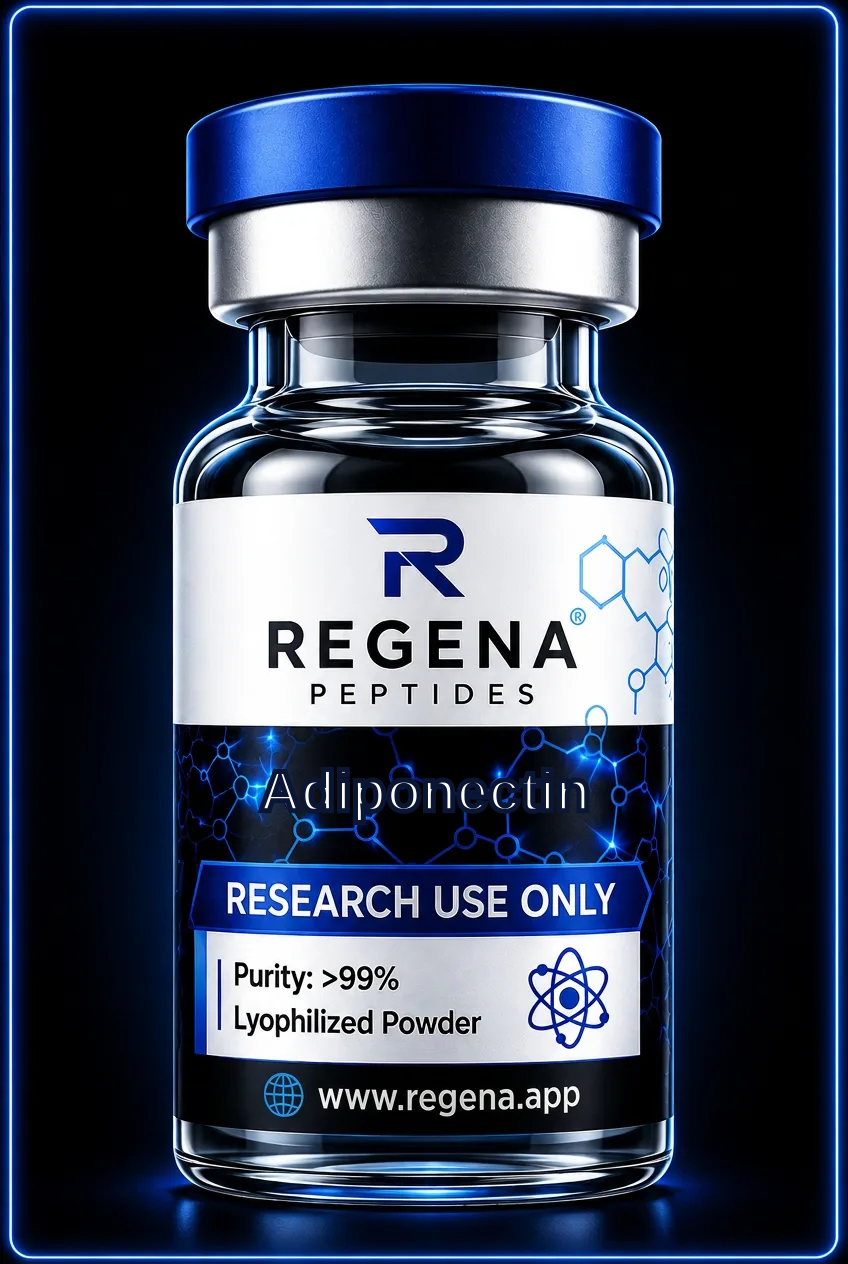
Metabolic · Peptide fragment
Adiponectin (262-276)
Also known as ADP 355
A C-terminal fragment of the adipokine adiponectin, ADP 355 is studied for its non-metabolic, receptor-mediated cellular activities.
- Length
- 15 amino acids
- Half-life
- Not well characterised.
- Mechanism
- This C-terminal fragment of adiponectin is proposed to bind to cadherin receptors, distinct from the AdipoR1/R2 receptors targeted by full-length adiponectin.
- Studied in
- It is investigated in laboratory models for its potential role in cellular protection, distinct from the metabolic actions of the parent hormone.
About Adiponectin (262-276)
Adiponectin (262-276), also known as ADP 355, is a 15-amino-acid peptide fragment derived from the C-terminal tail of the full-length adiponectin protein. Its sequence is Asp-Ile-Pro-Ala-Gly-Leu-Tyr-Tyr-Phe-Ala-His-Asn-Asn-Val-Tyr. This fragment was identified through research seeking to isolate specific functional domains of the parent adipokine.
Unlike globular or full-length adiponectin, which act via AdipoR1 and AdipoR2 receptors, this fragment is reported to exert its effects through a different mechanism involving cadherin binding. Its use in research focuses on exploring these non-canonical signaling pathways. It is used in in vitro studies to examine cellular responses independent of the classical metabolic actions associated with the full adiponectin hormone.
Laboratory notes
- This peptide is highly hydrophobic; reconstitution may require a small amount of an organic solvent like DMSO or acetonitrile before dilution with aqueous buffer.
- Confirm sequence and purity with appropriate analytical methods like HPLC-MS before commencing experiments.
- Store lyophilised powder at -20°C. Once reconstituted, store solutions at -80°C.
Storage and reconstitution basics: storage guide.
Questions about Adiponectin (262-276)
Is this the full adiponectin protein?
No, it is a small 15-amino acid fragment from the C-terminal end of the much larger adiponectin protein.
Does this fragment bind to adiponectin receptors AdipoR1/R2?
Current research indicates that it does not bind to AdipoR1/R2, but instead interacts with other targets such as T-cadherin.
What kind of research is this peptide used for?
It is used in cell-based assays to investigate cellular protective mechanisms that are distinct from the metabolic roles of full-length adiponectin.
Is Adiponectin (262-276) for human use?
No. It is supplied strictly for in-vitro laboratory research and is not for human or animal consumption.
Related research peptides
All products are sold for laboratory research use only. Not for human consumption, not a medicine, not for diagnosing, treating or preventing any condition.