
Cardiovascular · Angiotensin-related heptapeptide; MrgD-associated receptor ligand
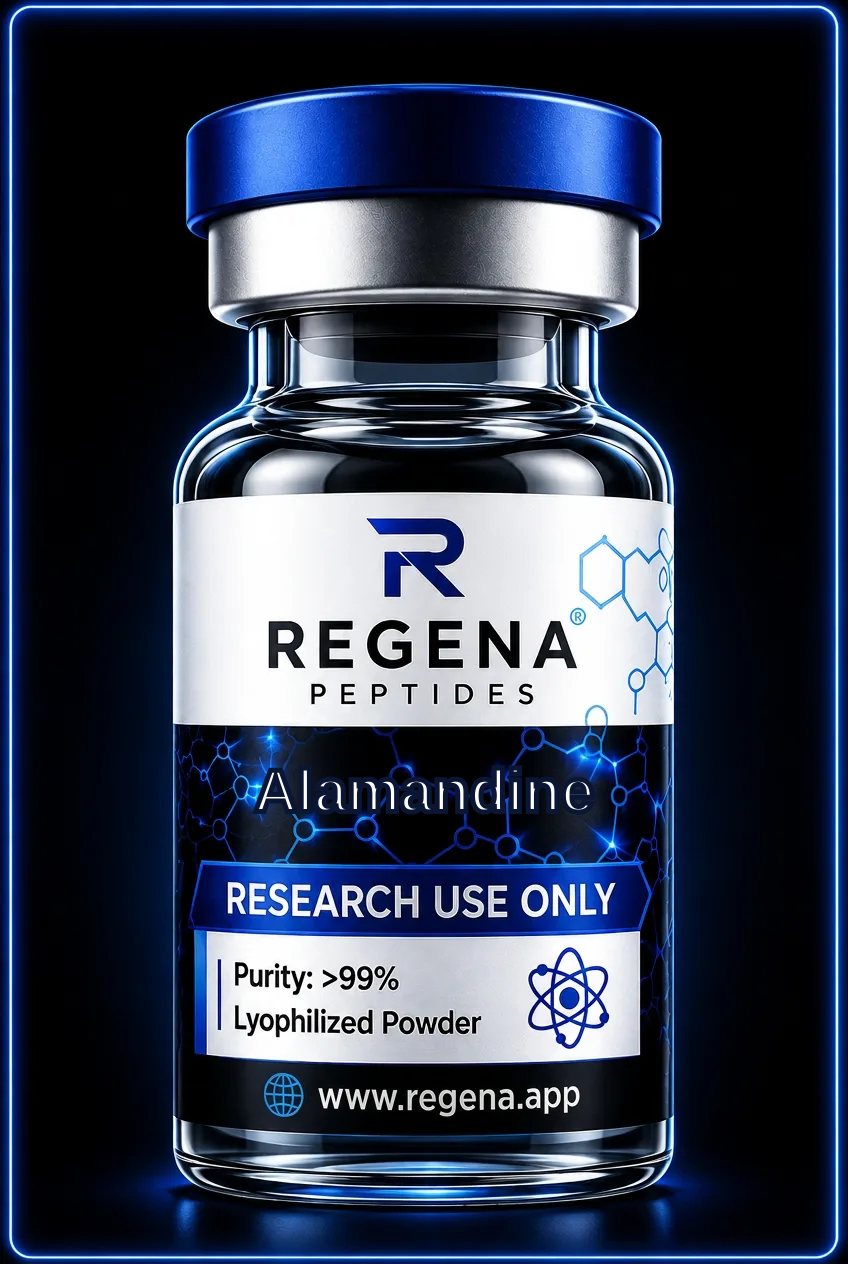
Alamandine
Also known as [Ala¹]-angiotensin-(1–7)
An alanine-containing angiotensin heptapeptide investigated for MrgD-associated signalling and alternative angiotensin processing.
- Length
- 7 amino acids
- Half-life
- Not well characterised
- Mechanism
- Alamandine signals through the Mas-related G protein-coupled receptor D (MrgD) in reported experimental systems, with nitric oxide-associated signalling described in vascular preparations. Its pharmacology is distinct from the canonical angiotensin-(1–7)/Mas receptor axis, although downstream pathways depend on the model.
- Studied in
- MrgD-expressing cells, isolated vessels and rodent cardiac and renal models study alamandine-dependent signalling, receptor attribution and peptide metabolism.
About Alamandine
Alamandine is the linear heptapeptide Ala–Arg–Val–Tyr–Ile–His–Pro, first described in 2013 as an endogenous component of the broader renin–angiotensin peptide network. Its sequence differs from angiotensin-(1–7) by replacement of the N-terminal aspartate with alanine. One demonstrated formation route is ACE2-mediated cleavage of angiotensin A. Decarboxylation of angiotensin-(1–7) has also been proposed as a route, although its biological contribution is not fully resolved.
The principal reported receptor target is MrgD, also written MRGPRD, rather than the Mas receptor classically associated with angiotensin-(1–7). Vascular experiments have examined endothelium-dependent responses and nitric oxide signalling, while cell models explore downstream kinase and second-messenger pathways. Receptor attribution benefits from genetic controls because pharmacological blockers alone may not distinguish related pathways cleanly. Measuring intact alamandine alongside precursor peptides helps separate receptor-level effects from changes in local peptide generation.
Laboratory notes
- For research use only. Confirm the N-terminal residue and use an analytical method that distinguishes alamandine from angiotensin-(1–7).
- Validate MrgD expression in the chosen model and include genetic or orthogonal receptor controls where possible.
- Evaluate peptide recovery and degradation during the actual incubation period; use low-binding consumables and minimise repeated freeze–thaw cycles.
Storage and reconstitution basics: storage guide.
Questions about Alamandine
Is alamandine the same as angiotensin-(1–7)?
No. Both contain seven residues, but alamandine begins with alanine whereas angiotensin-(1–7) begins with aspartate.
Which receptor is most closely associated with alamandine?
MrgD, encoded by MRGPRD, is its principal reported receptor target. This should be verified in each experimental system rather than inferred solely from peptide identity.
Can ACE2 generate alamandine directly from angiotensin A?
Yes. Removal of angiotensin A's C-terminal phenylalanine yields alamandine, a conversion that can be examined in purified-enzyme assays.
Is Alamandine for human use?
No. It is supplied strictly for in-vitro laboratory research and is not for human or animal consumption.
Related research peptides
All products are sold for laboratory research use only. Not for human consumption, not a medicine, not for diagnosing, treating or preventing any condition.