
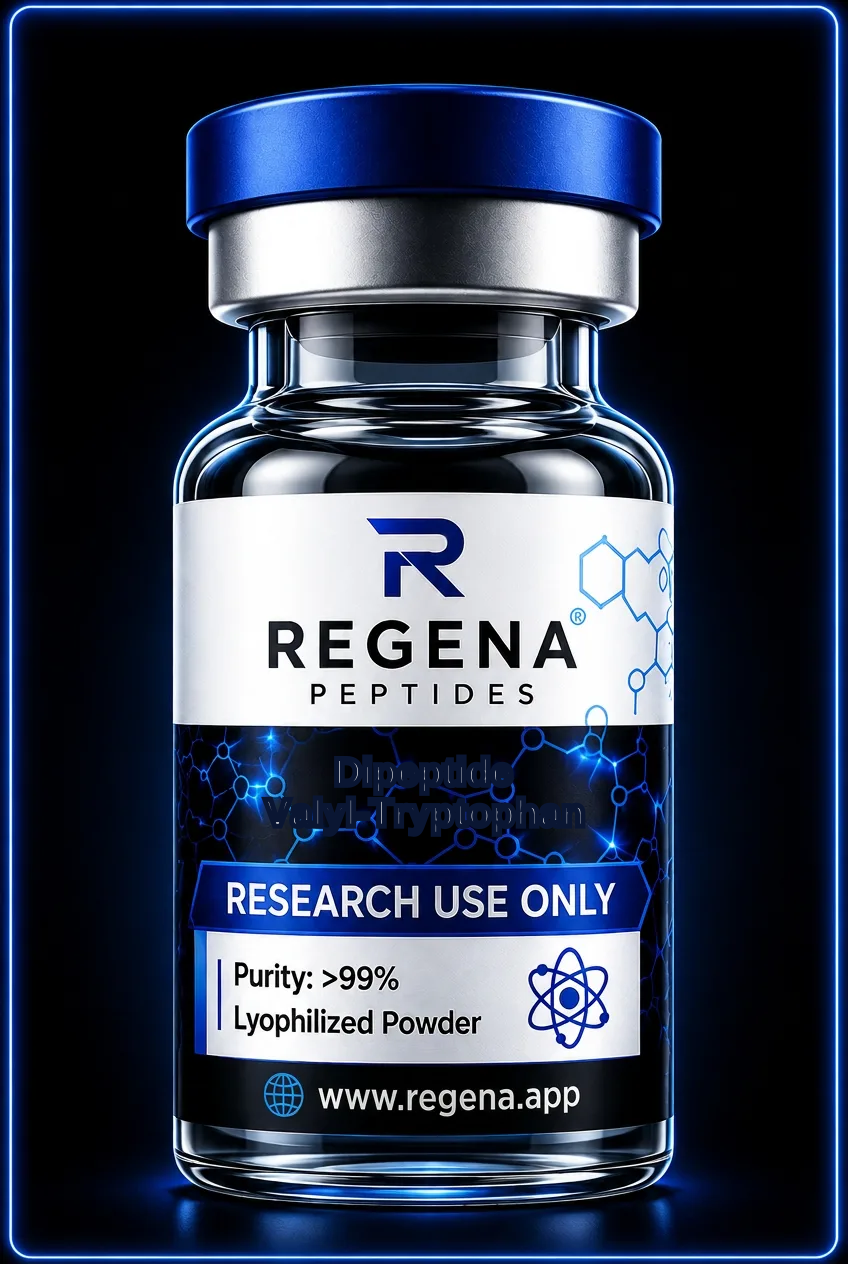
Cardiovascular · Aromatic amino acid-containing dipeptide
Dipeptide Valyl-Tryptophan
Also known as Val–Trp; VW
Val–Trp is a two-residue peptide investigated in enzyme-inhibition assays and studies of protein-derived bioactive fragments.
- Length
- 2 amino acids
- Half-life
- Not well characterised
- Mechanism
- Val–Trp has been investigated as an inhibitor of angiotensin-converting enzyme, a zinc-dependent peptidase rather than a receptor. Its inhibitory activity depends on the enzyme preparation, substrate and assay conditions.
- Studied in
- Cell-free angiotensin-converting enzyme assays, protein-hydrolysate characterisation and simulated digestion systems are used to investigate Val–Trp.
About Dipeptide Valyl-Tryptophan
Valyl-tryptophan consists of an N-terminal valine joined by a peptide bond to C-terminal tryptophan. In standard biochemical notation it is written Val–Trp or VW, with the all-L form generally intended unless otherwise specified. It is chemically distinct from the reversed sequence Trp–Val. Research on this dipeptide sits within the broader identification of short enzyme-active fragments in protein hydrolysates, rather than depending on a single unique natural source or precursor protein.
A principal biochemical interest is inhibition of angiotensin-converting enzyme, commonly abbreviated ACE. The C-terminal aromatic residue is consistent with structural features examined in many short ACE-inhibitory peptides, although sequence features alone cannot predict an inhibition constant. Laboratory studies may compare purified synthetic VW with hydrolysate fractions, measure substrate turnover and examine persistence during simulated digestion. Such experiments establish behaviour within their test systems and should not be extrapolated into organism-level outcomes.
Laboratory notes
- Confirm sequence order and stereochemistry; Val–Trp and Trp–Val have the same nominal composition but are different compounds.
- Include peptide-only blanks when using optical assays because tryptophan can contribute absorbance or fluorescence.
- Report ACE source, substrate, buffer and incubation conditions when comparing inhibition results.
Storage and reconstitution basics: storage guide.
Questions about Dipeptide Valyl-Tryptophan
Is ACE a receptor for Val–Trp?
No. ACE is an enzyme; inhibition is assessed by measuring its catalytic activity rather than receptor signalling.
Is VW equivalent to WV?
No. Reversing the residue order changes the peptide's termini and molecular interactions, even though its elemental composition remains the same.
Why can inhibition measurements differ between laboratories?
Enzyme source, substrate selection, assay chemistry and experimental conditions can all affect the apparent inhibitory activity.
Is Dipeptide Valyl-Tryptophan for human use?
No. It is supplied strictly for in-vitro laboratory research and is not for human or animal consumption.
Related research peptides
All products are sold for laboratory research use only. Not for human consumption, not a medicine, not for diagnosing, treating or preventing any condition.