
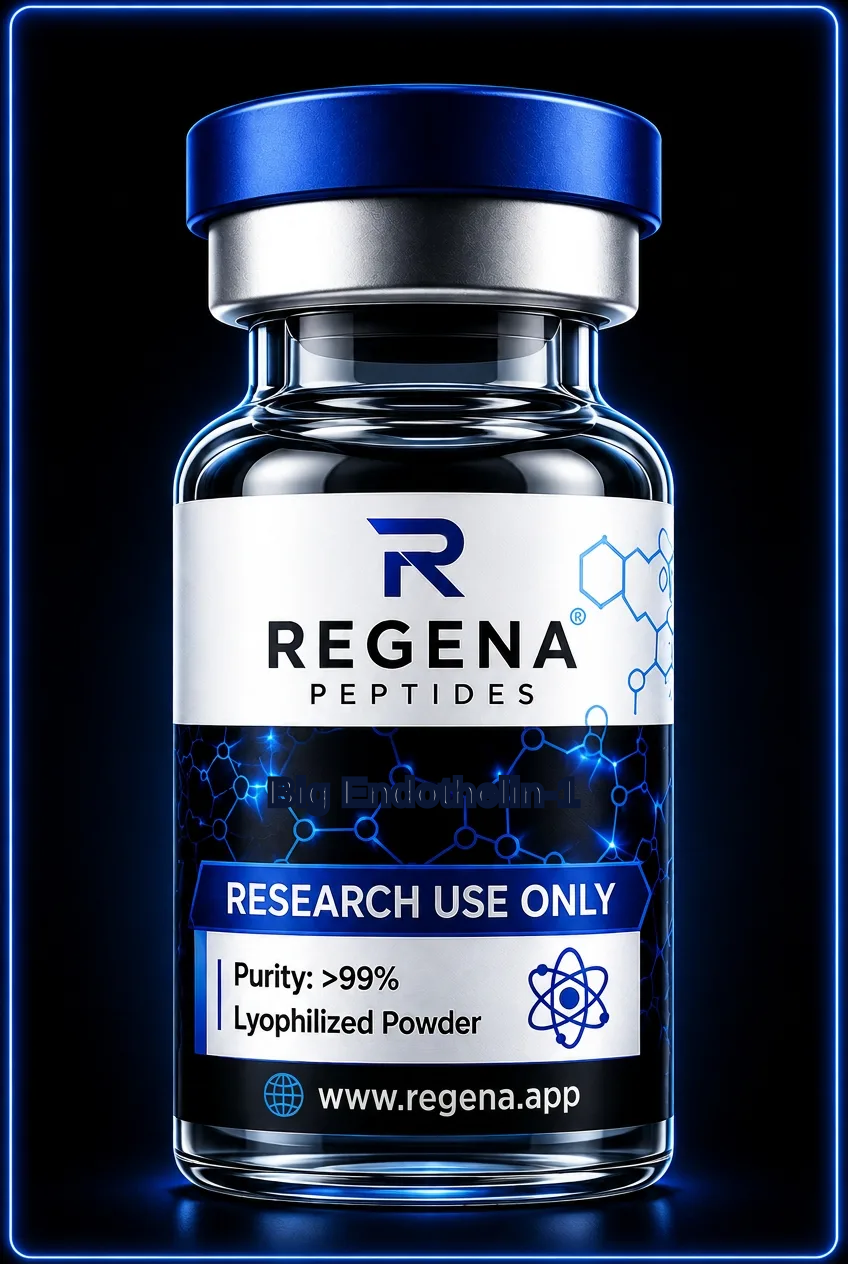
Cardiovascular · Endothelin precursor peptide
Big Endothelin-1
Also known as Big ET-1; Big endothelin
The 38-residue human endothelin-1 precursor used to investigate endothelin-converting enzymes and peptide maturation.
- Length
- 38 amino acids
- Half-life
- Not well characterised
- Mechanism
- Big Endothelin-1 is a precursor substrate for endothelin-converting enzymes, which cleave the Trp21–Val22 bond to release mature endothelin-1. The resulting 21-residue peptide activates ETA and ETB receptors; precursor activity must therefore be distinguished from activity caused by enzymatic conversion.
- Studied in
- Purified-enzyme assays, endothelial cultures and isolated tissue models use Big Endothelin-1 to study endothelin processing and conversion-dependent signalling.
About Big Endothelin-1
Big Endothelin-1 is an intermediate in the biosynthesis of endothelin-1 rather than simply a longer equivalent of the mature receptor ligand. The human form contains 38 amino acids and is generated by proteolytic processing of preproendothelin-1. Its first 21 residues constitute the mature endothelin-1 sequence, including the two native disulphide bonds. Species identification matters when sourcing material because commonly studied precursor sequences differ in length, including a 39-residue porcine form.
Endothelin-converting enzymes ECE-1 and ECE-2 can cleave the precursor at Trp21–Val22, but their activity depends on the experimental environment, including pH and enzyme localisation. Other proteases can generate alternative endothelin-related fragments, complicating interpretation in tissue preparations. Experiments therefore often combine precursor incubation with direct product analysis and receptor-based readouts. Comparing Big Endothelin-1 with mature endothelin-1 helps separate changes in peptide processing from changes in downstream receptor responsiveness.
Laboratory notes
- For research use only; confirm the species sequence, since this entry describes the 38-residue human precursor.
- Measure conversion products by a validated chromatographic or mass-spectrometric method rather than inferring cleavage solely from a functional response.
- Include enzyme-free, inhibitor and mature endothelin-1 controls, and document assay pH because converting-enzyme activity is condition-dependent.
Storage and reconstitution basics: storage guide.
Questions about Big Endothelin-1
Is Big Endothelin-1 interchangeable with endothelin-1?
No. It contains a C-terminal extension and is primarily used as a processing substrate; mature endothelin-1 is the principal receptor-active product.
Which bond releases mature endothelin-1?
Canonical endothelin-converting enzyme processing cleaves the Trp21–Val22 bond.
Why can different tissues produce different assay responses?
Tissues differ in converting-enzyme expression, alternative protease activity and endothelin receptor composition, each of which can affect the readout.
Is Big Endothelin-1 for human use?
No. It is supplied strictly for in-vitro laboratory research and is not for human or animal consumption.
Related research peptides
All products are sold for laboratory research use only. Not for human consumption, not a medicine, not for diagnosing, treating or preventing any condition.