
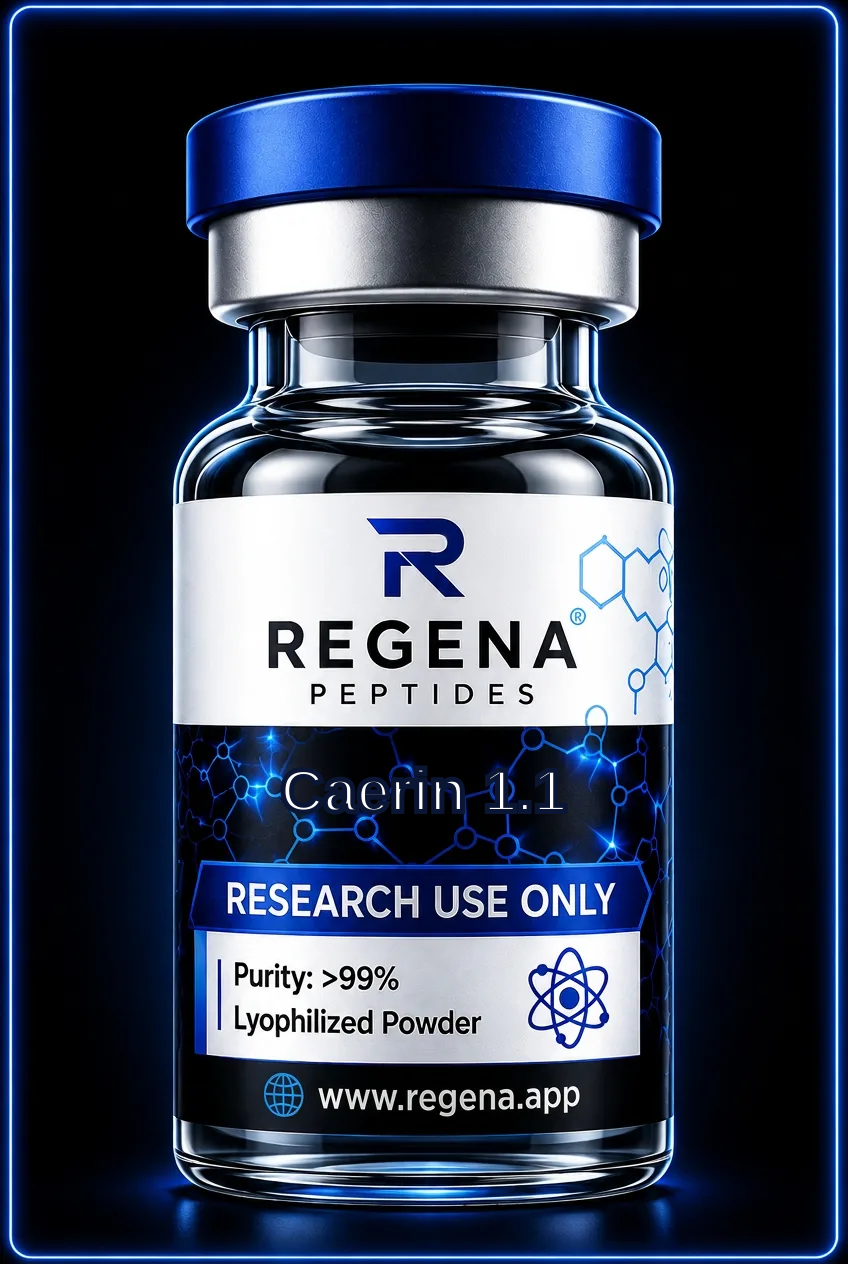
Antimicrobial · Cationic antimicrobial peptide
Caerin 1.1
Caerin 1.1 is a 25-amino-acid antimicrobial peptide from the Australian green tree frog, studied for its membrane-disrupting effects on microbes.
- Length
- 25 amino acids
- Half-life
- Not well characterised
- Mechanism
- It disrupts microbial cell membranes through a pore-forming mechanism, leading to cell lysis.
- Studied in
- Laboratory models investigate its activity against a spectrum of bacteria, including antibiotic-resistant strains, and certain viruses.
About Caerin 1.1
Caerin 1.1 is an antimicrobial peptide originally isolated from the skin secretions of the Australian green tree frog, Litoria caerulea. Its primary structure consists of 25 amino acid residues, and it belongs to the caerin family of peptides, which are known for their broad-spectrum antimicrobial properties. In laboratory settings, it is studied as a model for understanding host-defense mechanisms.
The peptide's mechanism of action is primarily lytic, involving the perturbation and permeabilization of microbial cell membranes. It adopts an amphipathic alpha-helical conformation upon interacting with lipid bilayers, which facilitates its insertion and subsequent disruption of membrane integrity. This physical mechanism is a subject of interest in studies exploring alternatives to conventional antibiotics.
Laboratory notes
- Caerin 1.1 is highly hydrophobic; careful selection of solvents like DMSO or acetonitrile is recommended for reconstitution.
- Peptide solutions should be stored at -20°C or below to minimize degradation.
- Activity assays are typically performed in low-salt buffers, as high ionic strength can inhibit its function.
Storage and reconstitution basics: storage guide.
Questions about Caerin 1.1
What is the source of Caerin 1.1?
It is a synthetic peptide identical to the one naturally found in the skin of the Litoria caerulea frog.
What is the primary structural feature of Caerin 1.1?
It forms an amphipathic α-helix, a common structural motif for many membrane-active antimicrobial peptides.
Is this peptide effective in the presence of serum?
Many studies report that the activity of cationic AMPs like Caerin 1.1 can be reduced in the presence of serum components and high salt concentrations, a key consideration for in vitro assay design.
Is Caerin 1.1 for human use?
No. It is supplied strictly for in-vitro laboratory research and is not for human or animal consumption.
Related research peptides
All products are sold for laboratory research use only. Not for human consumption, not a medicine, not for diagnosing, treating or preventing any condition.