
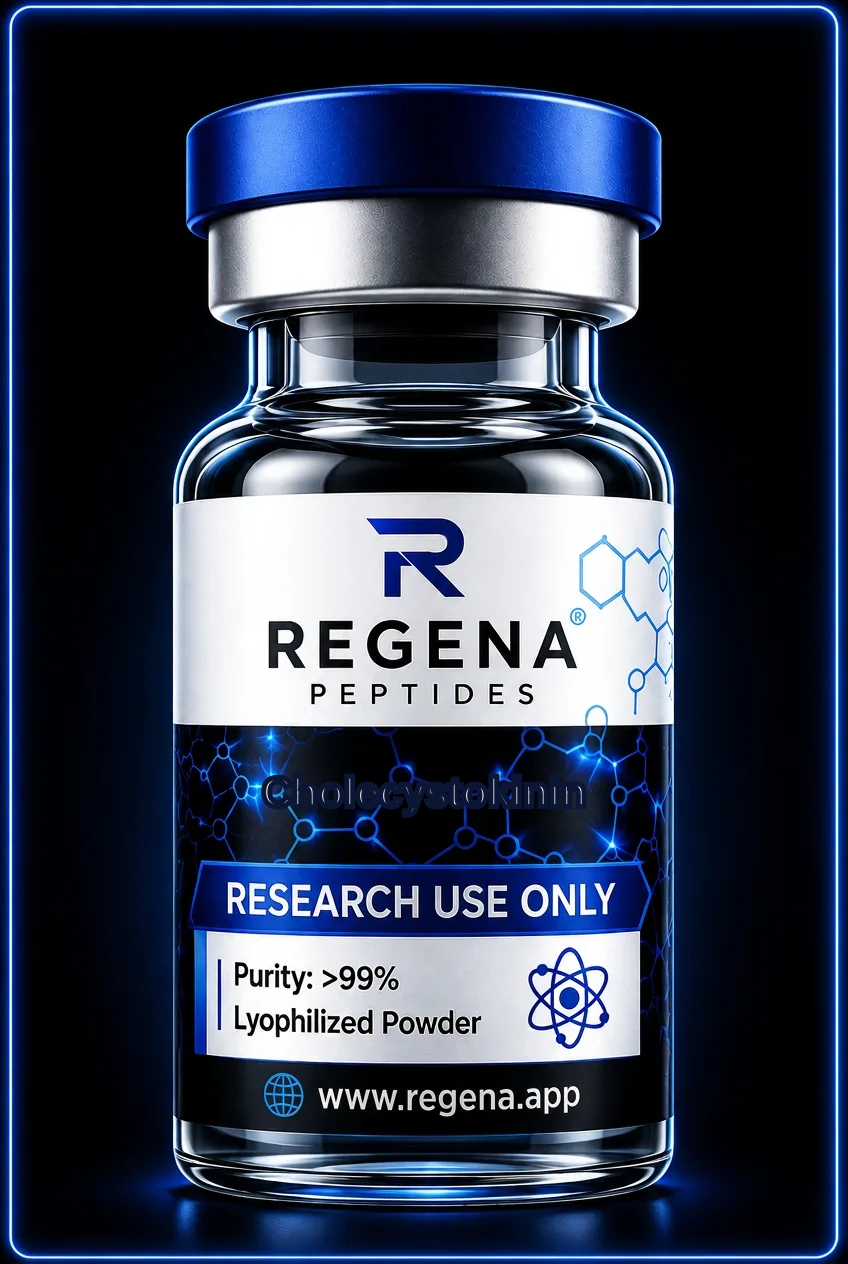
Hormone · Extended procholecystokinin-derived peptide hormone
Cholecystokinin (CCK-58)
Also known as CCK-58
An extended 58-residue CCK form used to investigate prohormone processing, peptide stability and receptor signalling.
- Length
- 58 amino acids
- Half-life
- Not well characterised
- Mechanism
- CCK-58 contains the amidated C-terminal CCK pharmacophore and activates CCK1 and CCK2 receptors through pathways that prominently involve Gq/11 and intracellular calcium. Its tyrosine sulphation state substantially influences CCK1 recognition, while the extended N-terminal sequence can affect degradation and assay behaviour.
- Studied in
- Biochemical processing studies, pancreatic acinar assays and animal gastrointestinal models use CCK-58 to compare extended and shorter molecular forms of CCK.
About Cholecystokinin (CCK-58)
Cholecystokinin (CCK-58) is an extended, biologically active product of procholecystokinin processing. Its sequence includes the complete C-terminal region found in shorter CCK forms, with a further N-terminal extension. Biochemical studies of intestinal extracts and circulating peptides established that CCK exists as multiple molecular species rather than a single short peptide. The relative abundance of CCK-58 varies with species, sample handling and analytical method, making molecular-form identification an important part of CCK research.
Both CCK1 and CCK2 receptors recognise the conserved C-terminal region, but strong CCK1 recognition depends especially on tyrosine sulphation and terminal amidation. The additional residues in CCK-58 allow researchers to test whether an extended peptide behaves differently from CCK-8 or CCK-33 in proteolytic environments and tissue preparations. Receptor assays alone cannot establish equivalent behaviour across these forms. Intact-peptide analysis alongside functional measurements helps separate direct CCK-58 activity from activity attributable to degradation products.
Laboratory notes
- Confirm intact mass and chromatographic purity; shorter CCK-containing fragments may retain activity and confound functional interpretation.
- Validate extraction recovery and storage conditions for the intact 58-residue peptide rather than borrowing a protocol established only for CCK-8.
- Check antibody epitope specificity in immunoassays, as C-terminal antibodies may detect several CCK molecular forms.
Storage and reconstitution basics: storage guide.
Questions about Cholecystokinin (CCK-58)
Is CCK-58 simply an inactive precursor of CCK-8?
No. Appropriately modified CCK-58 is itself receptor-active. It is a processed procholecystokinin product, not the full prohormone.
Can a standard CCK immunoassay identify intact CCK-58?
Not necessarily. Antibodies recognising shared C-terminal epitopes may detect shorter forms as well. Molecular separation or a validated form-specific method is needed.
Why monitor degradation during a CCK-58 experiment?
Cleavage can generate fragments containing the receptor-active C-terminus. A functional response may therefore reflect intact peptide, active fragments or both.
Is Cholecystokinin (CCK-58) for human use?
No. It is supplied strictly for in-vitro laboratory research and is not for human or animal consumption.
Related research peptides
All products are sold for laboratory research use only. Not for human consumption, not a medicine, not for diagnosing, treating or preventing any condition.