
Hormone · Peptide Hormone
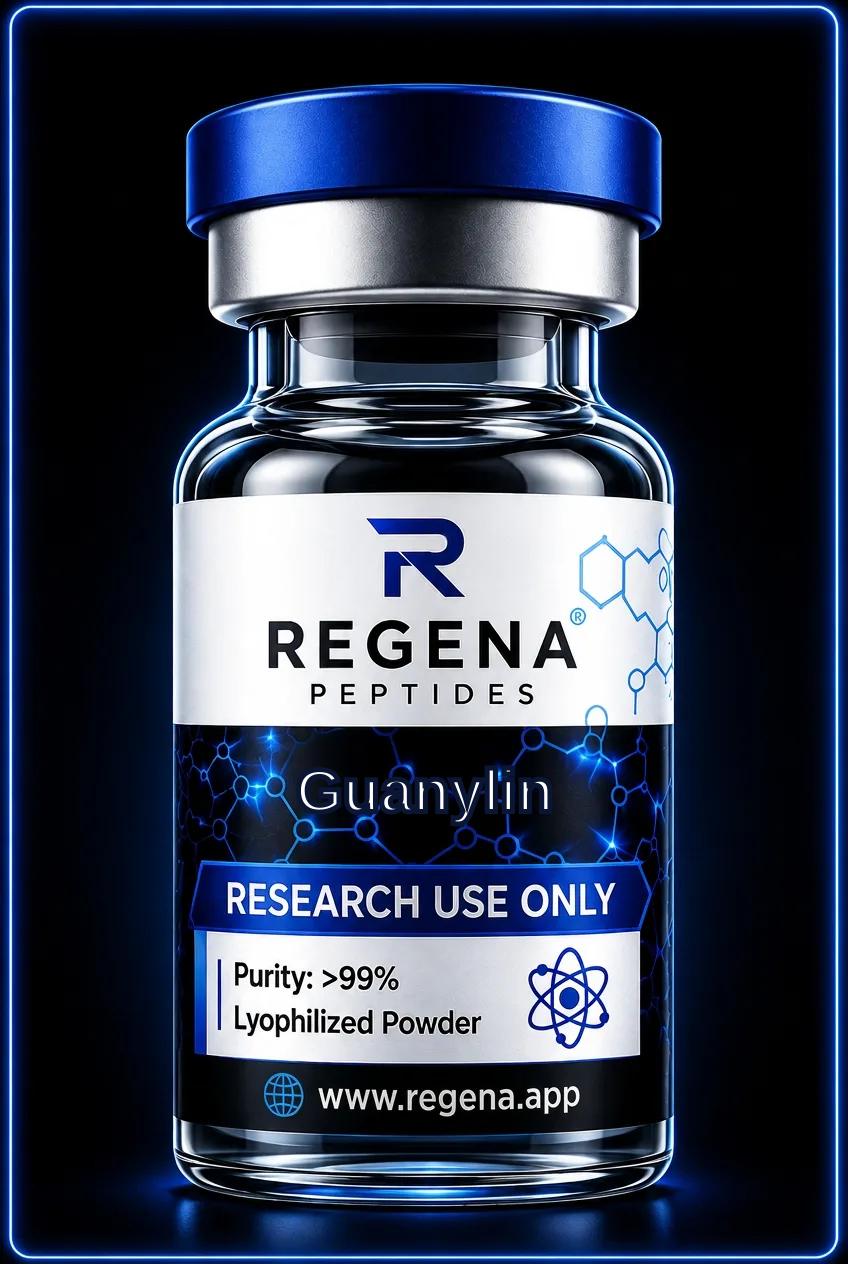
Guanylin
A 15-amino acid peptide hormone that activates intestinal guanylate cyclase C (GC-C) receptors, studied for its role in electrolyte balance.
- Length
- 15 amino acids
- Half-life
- Not well characterised, but presumed very short in circulation
- Mechanism
- It acts as an endogenous ligand for guanylate cyclase C (GC-C) receptors on the apical surface of intestinal epithelial cells.
- Studied in
- Laboratory models utilize guanylin to study intestinal fluid and electrolyte transport, epithelial cell turnover, and GC-C signaling pathways.
About Guanylin
Guanylin is a 15-amino acid peptide primarily expressed in the intestinal epithelium, particularly in the colon. It belongs to the guanylin peptide family, which also includes uroguanylin. The structure of guanylin is characterized by two disulfide bonds, which are critical for forming the stable, biologically active conformation required for receptor binding.
The peptide functions by binding to and activating the guanylate cyclase C (GC-C) receptor, an enzyme-linked receptor located on the luminal membrane of enterocytes. This activation leads to an increase in intracellular cyclic GMP (cGMP), which in turn modulates ion channels, resulting in chloride and bicarbonate secretion into the intestinal lumen. Research using guanylin focuses on understanding the molecular mechanisms of intestinal homeostasis and fluid secretion.
Laboratory notes
- The integrity of the two disulfide bonds is essential for biological activity; use of reducing agents should be avoided.
- Guanylin is soluble in water, but stock solutions are best prepared in a slightly acidic buffer (e.g., 0.1% TFA) to improve stability.
- Peptide activity is typically measured by quantifying cGMP production in GC-C expressing cell lines, such as T84 human colon carcinoma cells.
Storage and reconstitution basics: storage guide.
Questions about Guanylin
What is the primary difference between guanylin and uroguanylin?
Both activate the GC-C receptor, but they have different expression patterns and pH sensitivity. Guanylin is more active in the neutral to alkaline environment of the distal intestine, while uroguanylin is more active in the acidic environment of the proximal small intestine.
Is this a reference compound for a therapeutic?
Guanylin is an endogenous peptide. Some molecules that mimic its mechanism of action are reference compounds with a clinical history, used for GC-C receptor research.
How should I handle this peptide for experiments?
This peptide is for in vitro research only. Handle using standard laboratory safety protocols. Reconstitute in appropriate sterile buffer for your specific assay.
Is Guanylin for human use?
No. It is supplied strictly for in-vitro laboratory research and is not for human or animal consumption.
Related research peptides
All products are sold for laboratory research use only. Not for human consumption, not a medicine, not for diagnosing, treating or preventing any condition.