
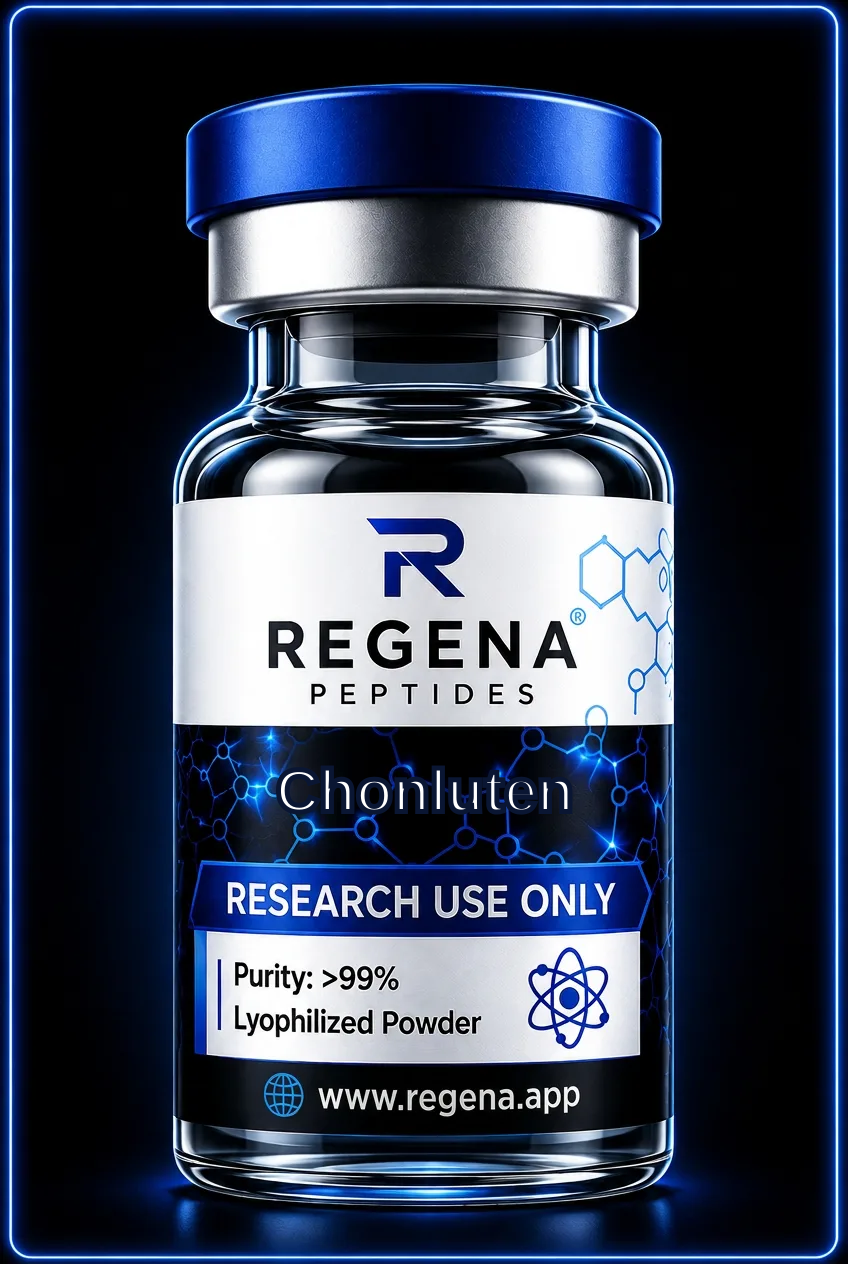
Regenerative · Tripeptide
Chonluten
Also known as Glu-Asp-Gly
A tripeptide (Glu-Asp-Gly) studied in chondrocyte cell cultures for its potential influence on extracellular matrix protein synthesis.
- Length
- 3 amino acids
- Half-life
- Not well characterised
- Mechanism
- The peptide Glu-Asp-Gly is suggested in research literature to modulate the functional activity of chondrocytes, the primary cells in cartilage.
- Studied in
- It is applied in chondrocyte cell culture systems to study its effects on the expression of extracellular matrix proteins like collagen and proteoglycans.
About Chonluten
Chonluten refers to the synthetic tripeptide Glutamyl-Aspartyl-Glycine. This sequence was identified in research involving peptides isolated from cartilaginous tissues. Its synthetic form provides a pure, standardized compound for investigating its biological activities in a laboratory setting.
The proposed mechanism centers on the regulation of chondrocyte metabolism. In-vitro studies explore its capacity to influence the synthesis of key cartilage components, such as type II collagen and aggrecan. These experiments typically involve treating primary chondrocyte or chondrosarcoma cell line cultures and analyzing changes in gene expression and protein production.
Laboratory notes
- Solubilize in sterile phosphate-buffered saline (PBS) for use in cell culture experiments.
- Store lyophilized powder at -20°C and protect from moisture to ensure integrity.
- Verify peptide concentration using a quantitative amino acid analysis or a colorimetric peptide assay for accurate in-vitro concentrations.
Storage and reconstitution basics: storage guide.
Questions about Chonluten
What is the chemical structure of synthetic Chonluten?
It is a tripeptide with the amino acid sequence L-Glutamyl-L-Aspartyl-L-Glycine (Glu-Asp-Gly).
What cell type is typically used to study Chonluten?
Research on Chonluten is primarily conducted using in-vitro models of chondrocytes, the cells responsible for cartilage matrix maintenance.
What markers are analyzed in these studies?
Commonly analyzed markers include mRNA and protein levels of Type II Collagen (COL2A1), Aggrecan (ACAN), and SOX9, a key transcription factor in chondrogenesis.
Is Chonluten for human use?
No. It is supplied strictly for in-vitro laboratory research and is not for human or animal consumption.
Related research peptides
All products are sold for laboratory research use only. Not for human consumption, not a medicine, not for diagnosing, treating or preventing any condition.