
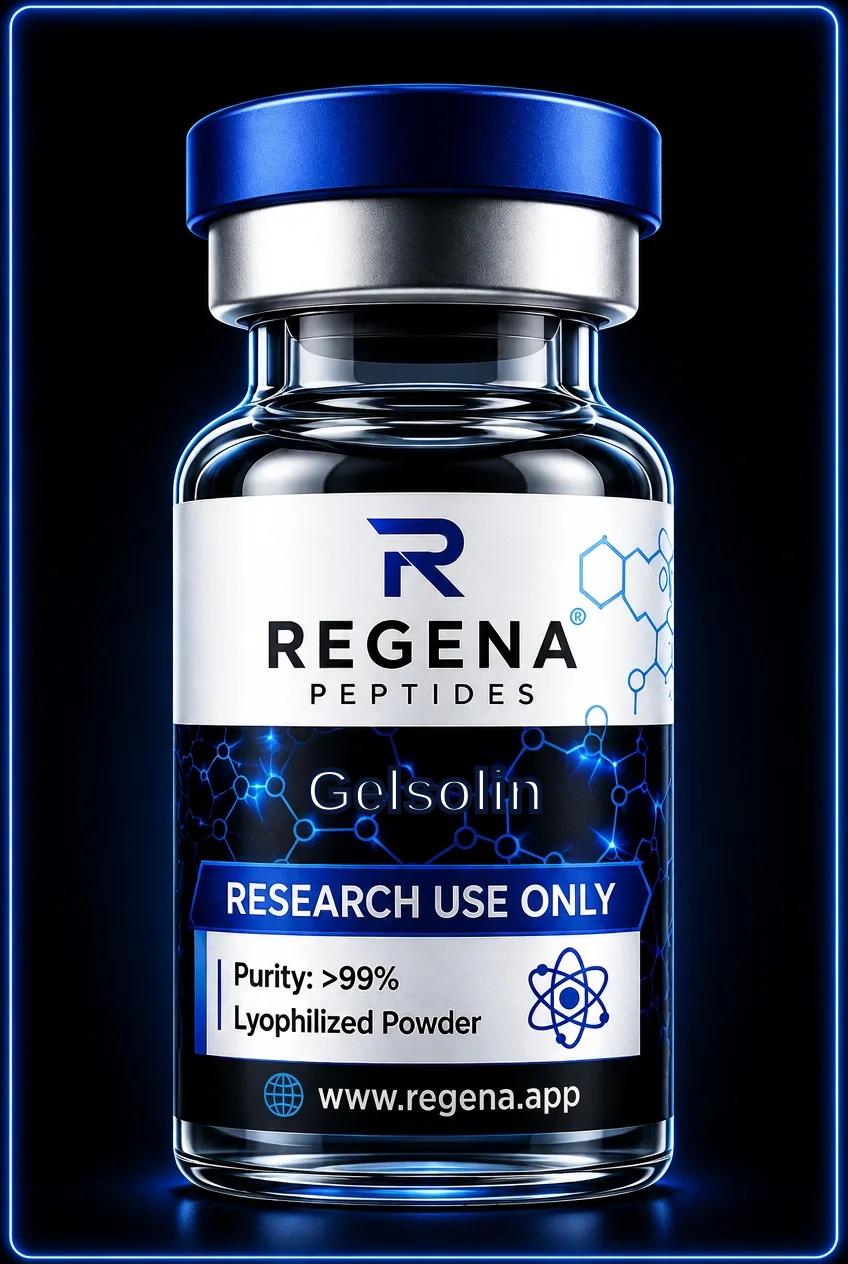
Regenerative · Protein fragment
Gelsolin (160-169)
Also known as GSN(160-169), PGSN
A 10-amino-acid fragment of Gelsolin studied for its ability to bind lipopolysaccharide in models of inflammation.
- Length
- 10 amino acids
- Half-life
- Not well characterised
- Mechanism
- This fragment of the larger Gelsolin protein is proposed to bind to inflammatory mediators such as lipopolysaccharide (LPS) and lysophosphatidic acid (LPA), thereby modulating inflammatory responses.
- Studied in
- Investigated in in vitro and in vivo models of inflammation and sepsis for its ability to sequester bacterial endotoxins and other pro-inflammatory molecules.
About Gelsolin (160-169)
Gelsolin is a ubiquitous, calcium-dependent protein that regulates the actin cytoskeleton. Gelsolin (160-169) is a synthetic 10-amino-acid peptide corresponding to a specific region within the full-length parent protein. This region, a phosphoinositide-binding domain, has been identified as having functions independent of actin regulation.
Research on this specific fragment focuses on its potent ability to bind and neutralize bacterial lipopolysaccharide (LPS, or endotoxin), a major trigger of septic shock. Unlike full-length gelsolin, the GSN(160-169) peptide does not sever actin filaments. Its focused activity makes it a specific tool for studying the modulation of inflammation by sequestering lipid inflammatory mediators in various experimental models.
Laboratory notes
- This is a specific fragment of the Gelsolin protein, not the full-length version.
- Its primary research application is centered on its high-affinity binding to LPS and other lipid mediators of inflammation like LPA.
- The sequence, QRLFQVKGRR, is derived from the second segment of the human plasma gelsolin protein.
Storage and reconstitution basics: storage guide.
Questions about Gelsolin (160-169)
Is this the full Gelsolin protein?
No, this is a 10-amino-acid peptide fragment derived from a specific binding domain (residues 160-169) of the much larger, 782-amino-acid Gelsolin protein.
What is its proposed mechanism in inflammation models?
It is thought to act as a decoy, binding directly to molecules like LPS. This sequestration prevents LPS from interacting with its cellular receptors (like TLR4), thereby inhibiting the downstream inflammatory signaling cascade.
What is Lipopolysaccharide (LPS)?
LPS, also known as endotoxin, is a major component of the outer membrane of Gram-negative bacteria. It is a potent activator of the innate immune system and is widely used in laboratories to induce a strong inflammatory response in cell culture or animal models.
Is Gelsolin (160-169) for human use?
No. It is supplied strictly for in-vitro laboratory research and is not for human or animal consumption.
Related research peptides
All products are sold for laboratory research use only. Not for human consumption, not a medicine, not for diagnosing, treating or preventing any condition.