
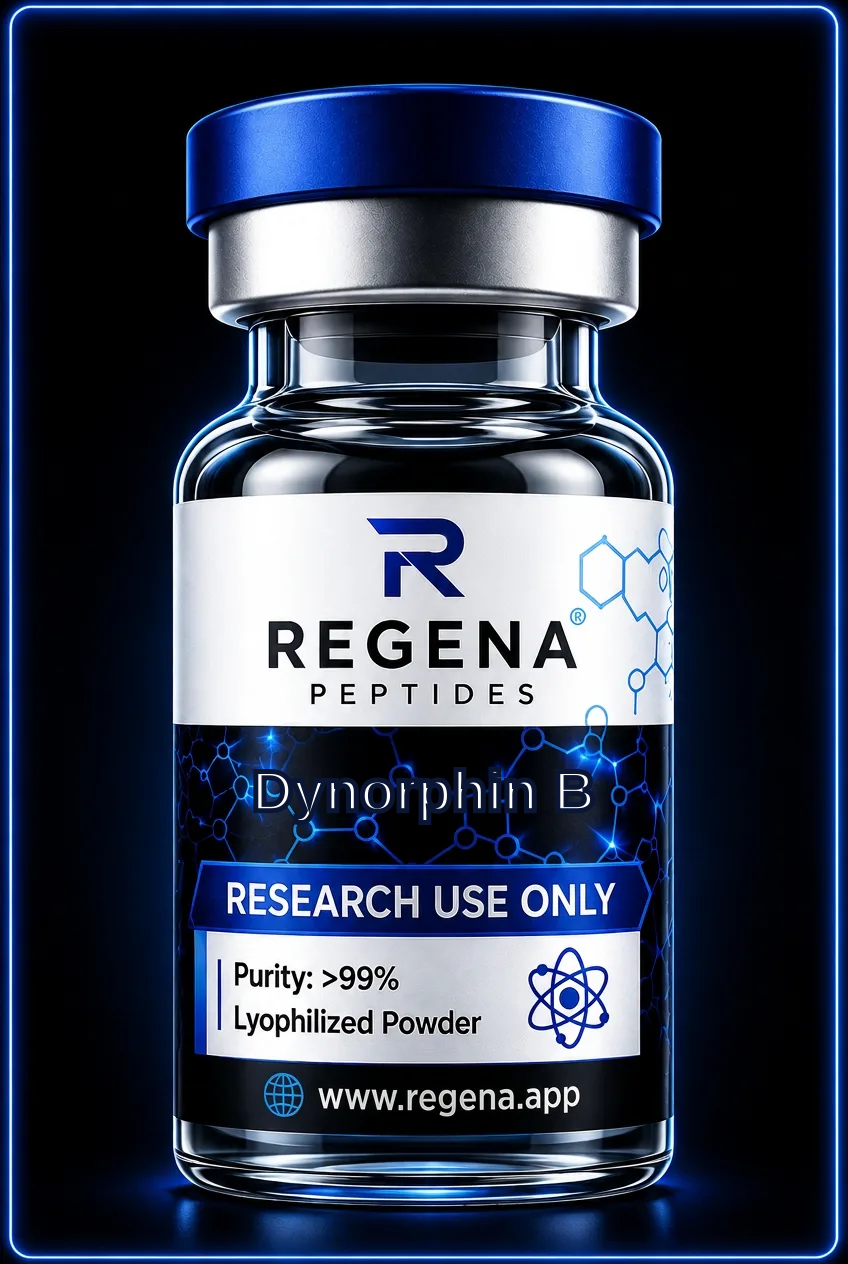
Other · Endogenous opioid peptide; prodynorphin-derived peptide
Dynorphin B
Also known as Dyn B; Rimorphin; Dynorphin B (1–13)
A 13-residue prodynorphin-derived opioid peptide, also called rimorphin, used to explore κ-receptor pharmacology.
- Length
- 13 amino acids
- Half-life
- Not well characterised
- Mechanism
- Dynorphin B preferentially activates κ-opioid receptors, which couple to Gi/o proteins to inhibit adenylyl cyclase and regulate ion-channel activity. Its preference is not absolute, and signalling at other opioid receptor subtypes depends on the assay system.
- Studied in
- Recombinant opioid receptor assays, brain tissue preparations and rodent models use dynorphin B to investigate κ-receptor signalling and prodynorphin processing.
About Dynorphin B
Dynorphin B is a 13-residue peptide with the sequence Tyr-Gly-Gly-Phe-Leu-Arg-Arg-Gln-Phe-Lys-Val-Val-Thr. Also known as rimorphin, it was characterised during biochemical studies of endogenous pituitary opioid peptides. Its sequence is encoded within prodynorphin, alongside dynorphin A and other opioid peptide sequences. Although both dynorphins begin with the leucine-enkephalin motif, their remaining residues differ substantially, giving researchers distinct endogenous ligands for comparing receptor recognition, proteolytic processing and functional signalling in laboratory preparations.
Prodynorphin processing can generate dynorphin B as well as larger products that contain its sequence. One such product, big dynorphin, includes dynorphin A and dynorphin B joined by a basic connecting segment; it should not be treated as equivalent to either isolated peptide. Experimental comparisons typically examine κ-opioid receptor binding, G-protein signalling and responses in neural preparations. Matching assay conditions and confirming peptide integrity are essential when interpreting differences between dynorphin B and dynorphin A.
Laboratory notes
- Verify the 13-residue sequence and free C-terminal threonine; extended prodynorphin products are distinct analytes.
- Validate peptide recovery in the selected buffer and vessel type before comparing receptor-binding measurements.
- Use matched receptor expression, incubation periods and degradation controls for comparisons with dynorphin A.
Storage and reconstitution basics: storage guide.
Questions about Dynorphin B
Is rimorphin a different peptide?
No. Rimorphin is an alternative research name for the 13-residue peptide dynorphin B.
How is dynorphin B related to big dynorphin?
Big dynorphin is a larger prodynorphin-derived peptide containing the dynorphin A and dynorphin B sequences linked by a basic segment.
Can dynorphin A and dynorphin B be used interchangeably?
No. They share an N-terminal opioid motif and κ-receptor preference, but differ in sequence, length, processing and experimental pharmacology.
Is Dynorphin B for human use?
No. It is supplied strictly for in-vitro laboratory research and is not for human or animal consumption.
Related research peptides
All products are sold for laboratory research use only. Not for human consumption, not a medicine, not for diagnosing, treating or preventing any condition.