
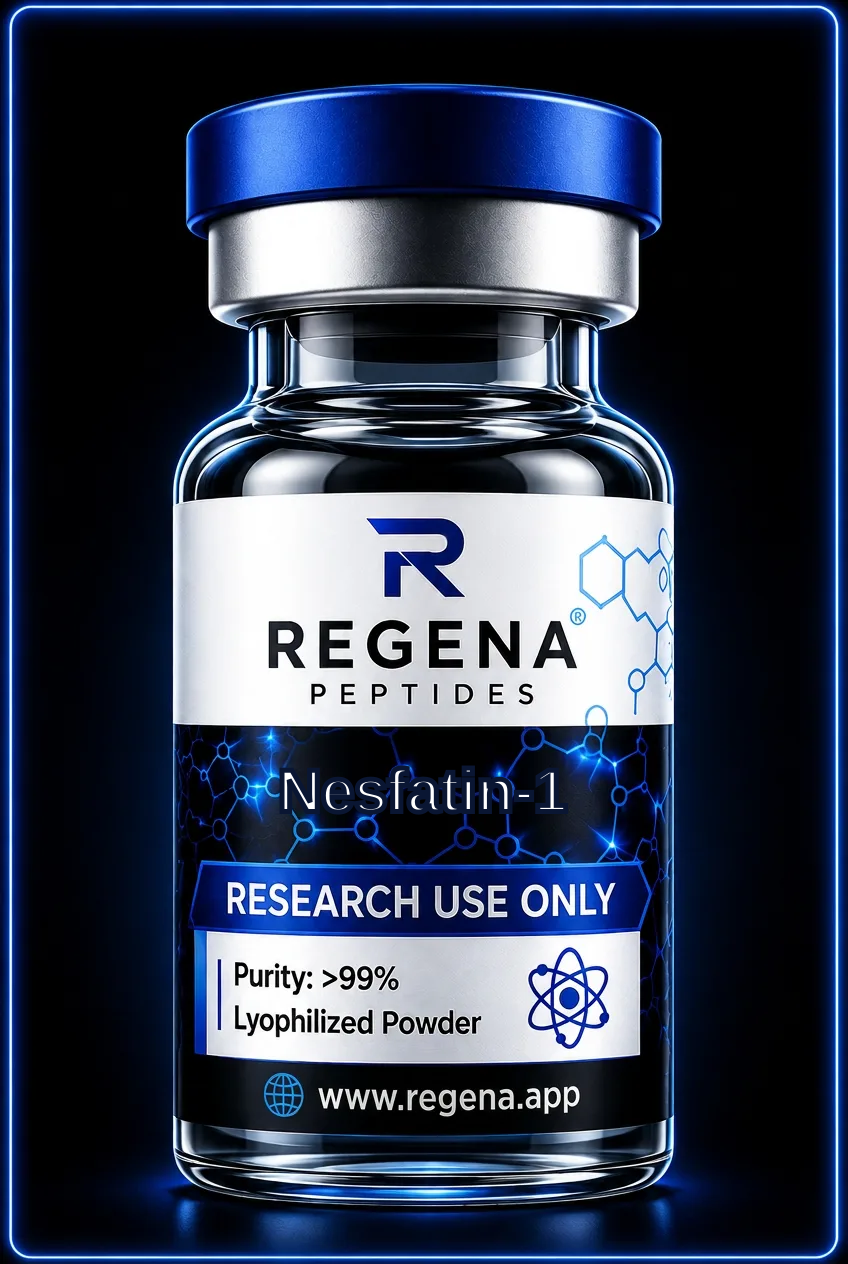
Other · NUCB2-derived neuroendocrine peptide
Nesfatin-1
Also known as Nesfatin 1; NUCB2-derived nesfatin-1
An 82-residue NUCB2-derived peptide investigated in neuronal and endocrine models, without a definitively identified receptor.
- Length
- 82 amino acids
- Half-life
- Not well characterised
- Mechanism
- Nesfatin-1 alters neuronal excitability and intracellular calcium signalling in selected experimental preparations, with evidence for G-protein-dependent mechanisms in some models. A specific, widely validated molecular receptor has not been identified.
- Studied in
- Hypothalamic slices, neuronal cultures, pancreatic islet preparations and rodent models are used to study nesfatin-1-associated neuronal, endocrine and nutrient-sensing pathways.
About Nesfatin-1
Nesfatin-1 was described in 2006 as an 82-amino-acid peptide corresponding to the N-terminal region of nucleobindin-2 after removal of its signal peptide. NUCB2 is a larger secretory-pathway protein with predicted processing sites that gave rise to the nesfatin fragment nomenclature. Importantly, endogenous production of the isolated 82-residue species is not equally well demonstrated in every tissue. Many localisation studies detect shared NUCB2/nesfatin-1 epitopes rather than uniquely identifying the processed peptide.
Cellular and animal research examines nesfatin-1-associated changes in neuronal activity, intracellular calcium, endocrine secretion and nutrient-responsive signalling. Several studies suggest membrane-initiated, G-protein-linked effects, but a definitive receptor identity remains unresolved. This limits the specificity of pharmacological interpretations based only on downstream inhibitors. Full-length nesfatin-1 should also be distinguished from shorter experimental fragments, whose activity may differ by preparation. Sequence species, processing state and the analytical specificity of detection methods are central to reproducible work.
Laboratory notes
- Specify the species sequence and confirm that the material is the 82-residue peptide rather than full-length NUCB2 or an experimental fragment.
- Validate immunoassays against both NUCB2 and nesfatin-1; shared epitopes can prevent selective quantification of the processed peptide.
- Assess peptide integrity and soluble recovery after reconstitution, and use low-binding consumables where adsorption affects assay reproducibility.
Storage and reconstitution basics: storage guide.
Questions about Nesfatin-1
Are nesfatin-1 and NUCB2 the same molecule?
No. NUCB2 is the larger parent protein, whereas nesfatin-1 is an 82-residue sequence derived from its N-terminal region after signal-peptide removal.
Which receptor does nesfatin-1 bind?
A specific molecular receptor has not been definitively established. Calcium responses or sensitivity to G-protein pathway inhibitors cannot independently identify a receptor.
Why do publications use the term NUCB2/nesfatin-1 immunoreactivity?
Many antibodies recognise a sequence present in both molecules and cannot distinguish them without additional analytical separation. These materials are for research use only.
Is Nesfatin-1 for human use?
No. It is supplied strictly for in-vitro laboratory research and is not for human or animal consumption.
Related research peptides
All products are sold for laboratory research use only. Not for human consumption, not a medicine, not for diagnosing, treating or preventing any condition.