
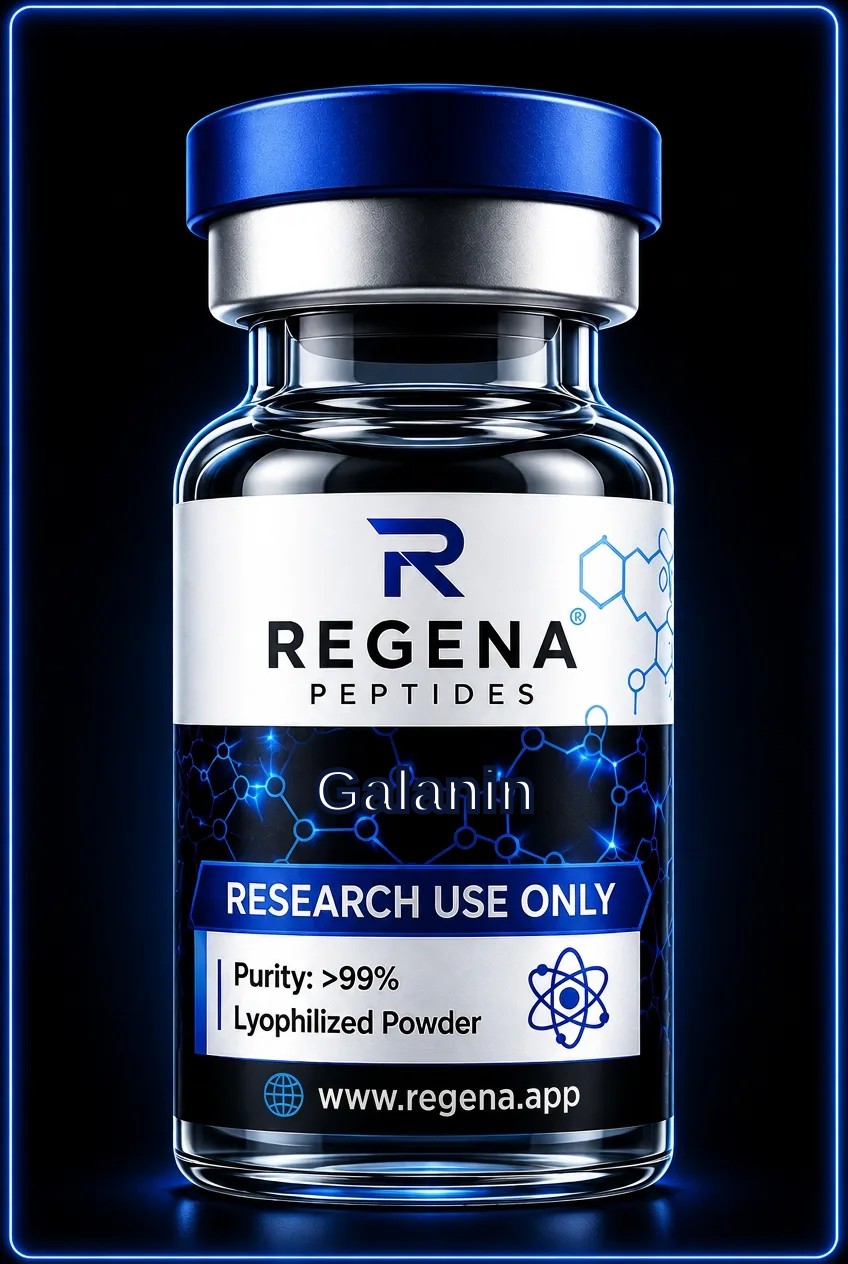
Cognitive · Neuropeptide
Galanin
A 30-amino-acid neuropeptide that acts on GALR1-3 receptors and is studied for its diverse roles in pain, mood, and appetite regulation.
- Length
- 30 amino acids
- Half-life
- Very short, estimated in minutes
- Mechanism
- A widely distributed neuropeptide that exerts its effects by binding to three G protein-coupled galanin receptor subtypes (GALR1, GALR2, and GALR3).
- Studied in
- Used in lab research to explore its role in nociception, mood regulation, appetite, and the modulation of seizure thresholds.
About Galanin
Galanin is a neuropeptide hormone broadly expressed in the central and peripheral nervous systems, as well as the gastrointestinal tract. The human form consists of 30 amino acids (29 in most other mammals) and is highly conserved across species. It functions as a neuromodulator by activating three distinct G protein-coupled receptor subtypes, GALR1, GALR2, and GALR3.
Its wide distribution leads to a diverse range of functions investigated in laboratory settings. In neuroscience, galanin is studied for its inhibitory effects on neurotransmitter release, contributing to research on seizure control and pain perception (nociception). Other areas of investigation include its influence on the hypothalamic-pituitary-adrenal (HPA) axis, mood-related behaviors in animal models, and the regulation of food intake.
Laboratory notes
- The N-terminal (1-15) fragment of galanin is critical for receptor binding and activation.
- Human galanin has 30 amino acids, while the common rat/mouse version has 29 and is non-amidated; sequence differences are important for species-specific assays.
- Galanin often co-exists in neurons with classical neurotransmitters like norepinephrine and acetylcholine, acting as a neuromodulator.
Storage and reconstitution basics: storage guide.
Questions about Galanin
What is Galanin?
Galanin is an inhibitory neuropeptide found throughout the nervous system that modulates a wide range of biological processes, including pain, cognition, and feeding.
How many receptors does Galanin have?
Galanin mediates its effects through three distinct G protein-coupled receptors, designated GALR1, GALR2, and GALR3.
Is Galanin the same across all species?
The sequence is highly conserved, but not identical. For example, human galanin is 30 amino acids long and C-terminally amidated, while rat galanin is 29 amino acids and not amidated.
Is Galanin for human use?
No. It is supplied strictly for in-vitro laboratory research and is not for human or animal consumption.
Related research peptides
All products are sold for laboratory research use only. Not for human consumption, not a medicine, not for diagnosing, treating or preventing any condition.