
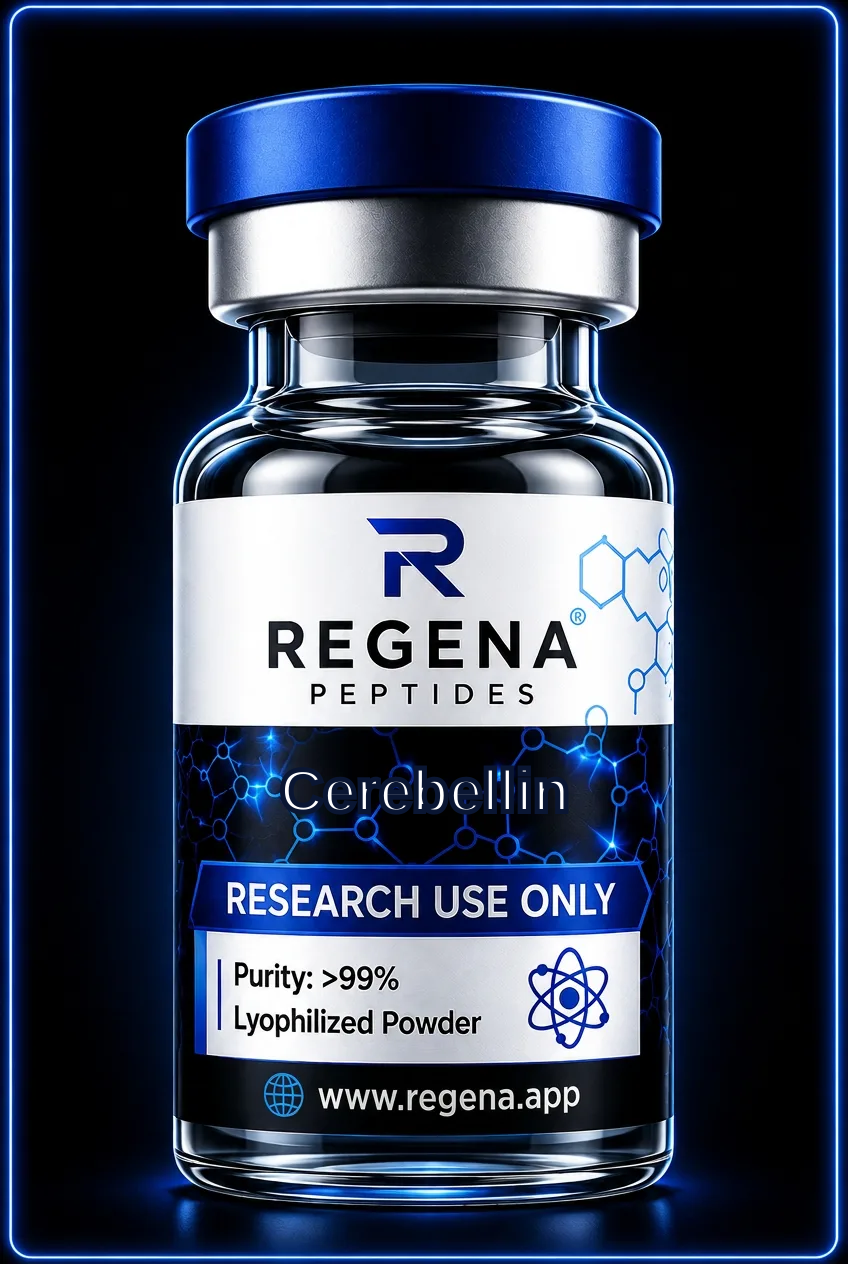
Cognitive · Endogenous Neuropeptide
Cerebellin
Cerebellin is a 16-amino-acid neuropeptide essential for synapse organization in the cerebellum, studied for its role in motor learning and coordination.
- Length
- 16 amino acids
- Half-life
- Not well characterised
- Mechanism
- It interacts with the GluD2 delta glutamate receptor, functioning as a synaptic organizer at parallel fiber-Purkinje cell synapses.
- Studied in
- In vitro and ex vivo models are used to study its role in synapse formation, plasticity, and motor coordination within the cerebellum.
About Cerebellin
Cerebellin is a hexadecapeptide originally isolated from rat cerebellum tissue. It is part of a family of related peptides, including Cerebellin-1 (Cbln1), which are crucial for the structural integrity and function of specific synapses. The peptide is highly conserved across species, indicating a fundamental role in neural architecture.
The primary function of Cerebellin is to act as a trans-synaptic organizer, bridging presynaptic neurexins with postsynaptic GluD2 receptors on Purkinje cells. This molecular bridge is fundamental for the formation and maintenance of parallel fiber-Purkinje cell synapses. Research models utilize cerebellin to investigate the mechanisms of synaptogenesis, synaptic plasticity, and its potential influence on motor learning and coordination circuits.
Laboratory notes
- Cerebellin's biological activity is highly dependent on its ability to form a hexameric structure which then binds to receptors.
- When studying its effects on cultured neurons, co-application with neurexin variants may be required to observe full synaptic organizing activity.
- The peptide sequence is S-G-S-A-K-V-A-F-S-A-I-R-S-T-N-H.
Storage and reconstitution basics: storage guide.
Questions about Cerebellin
What is Cerebellin's primary function in vitro?
In cell culture and tissue slice preparations, Cerebellin functions as a synaptic organizer, inducing the formation of synapses between specific types of neurons, particularly in cerebellar models.
Which receptor does Cerebellin bind to?
Cerebellin binds to the postsynaptic delta-2 glutamate receptor (GluD2) on Purkinje cells, which is a key step in its mechanism of action.
Why is this peptide named Cerebellin?
It was named for the cerebellum, the region of the brain where it was first discovered and where it is most highly expressed, reflecting its role in cerebellar function.
Is Cerebellin for human use?
No. It is supplied strictly for in-vitro laboratory research and is not for human or animal consumption.
Related research peptides
All products are sold for laboratory research use only. Not for human consumption, not a medicine, not for diagnosing, treating or preventing any condition.