
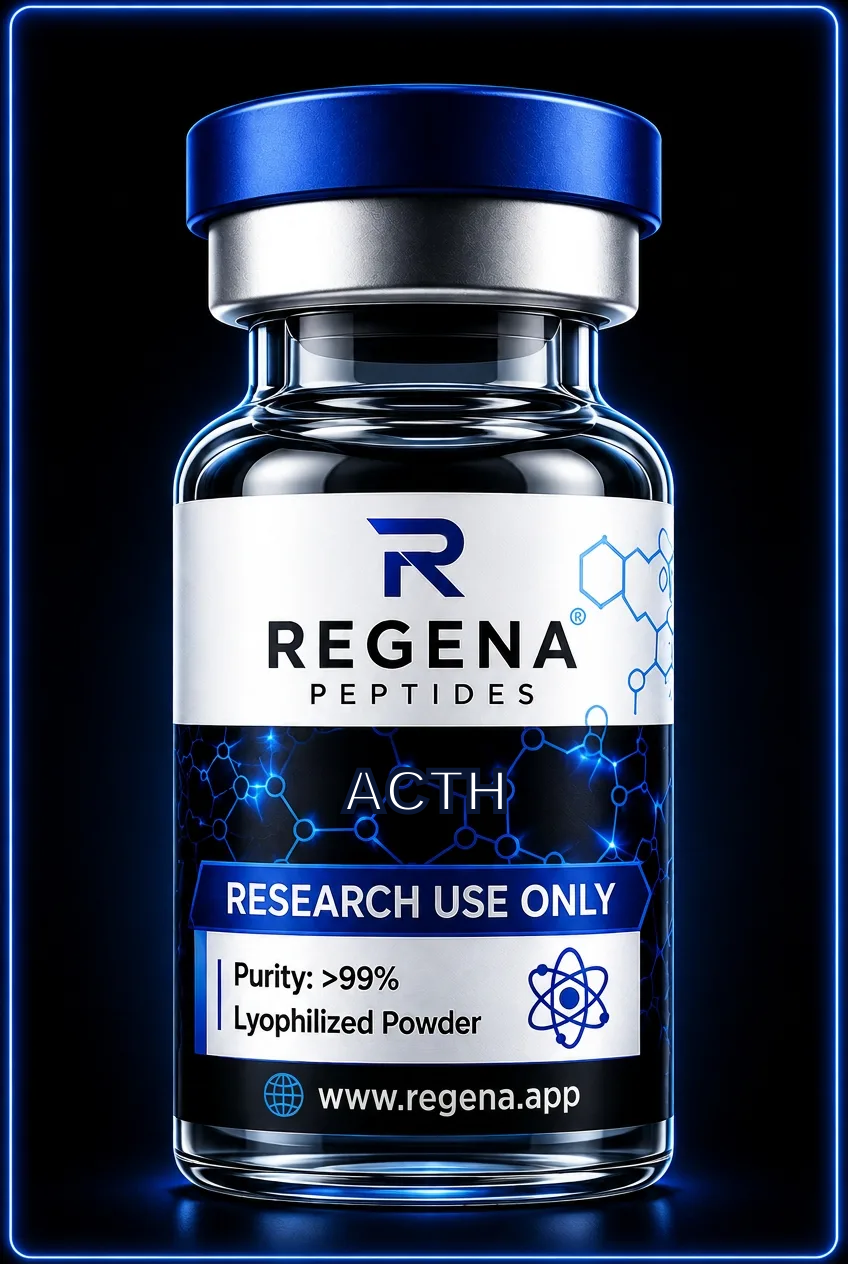
Cognitive · Neuropeptide fragment
ACTH (4-10)
Also known as Met-Glu-His-Phe-Arg-Trp-Gly
A 7-amino-acid fragment of ACTH studied in neuroscience for its central effects on cognition, independent of adrenal stimulation.
- Length
- 7 amino acids
- Half-life
- Not well characterised
- Mechanism
- Does not possess the steroidogenic activity of full-length ACTH; its effects are thought to be mediated centrally through melanocortin receptors, particularly MC3R and MC4R.
- Studied in
- Investigated in laboratory models for its effects on cognitive functions such as learning, memory, and attention, separate from the endocrine axis.
About ACTH (4-10)
ACTH (4-10) is a heptapeptide fragment corresponding to residues 4 through 10 of the full adrenocorticotropic hormone (ACTH) sequence. This fragment contains the core melanocortin sequence (His-Phe-Arg-Trp) shared by several related peptides. Unlike the parent hormone, it lacks the N-terminal sequence required for stimulating adrenal steroid production.
The peptide's biological activities are believed to be mediated through central nervous system pathways. It is an agonist at certain melanocortin receptors (MCRs), such as MC3R and MC4R, which are widely expressed in the brain. Laboratory research focuses on its potential to influence neuronal processes related to attention, memory consolidation, and learning in various animal and cellular models.
Laboratory notes
- This peptide is a useful tool to separate the central nervous system effects of melanocortins from the peripheral endocrine effects of ACTH.
- Reconstitute in sterile water or buffer; the peptide contains arginine and histidine, giving it a net positive charge at neutral pH.
- For in vivo CNS studies in animal models, intracerebroventricular (ICV) administration is often used to bypass the blood-brain barrier.
Storage and reconstitution basics: storage guide.
Questions about ACTH (4-10)
How does ACTH (4-10) differ from full-length ACTH?
It is a smaller fragment that retains central activities studied in cognitive research but lacks the ability to stimulate cortisol production from the adrenal glands.
What is the proposed mechanism for its cognitive effects?
It is thought to act on melanocortin receptors (MC3R/MC4R) within the brain to modulate neuronal activity related to learning and attention.
What is the core active sequence within this peptide?
The sequence His-Phe-Arg-Trp is considered the central message sequence for melanocortin receptor binding.
Is ACTH (4-10) for human use?
No. It is supplied strictly for in-vitro laboratory research and is not for human or animal consumption.
Related research peptides
All products are sold for laboratory research use only. Not for human consumption, not a medicine, not for diagnosing, treating or preventing any condition.