
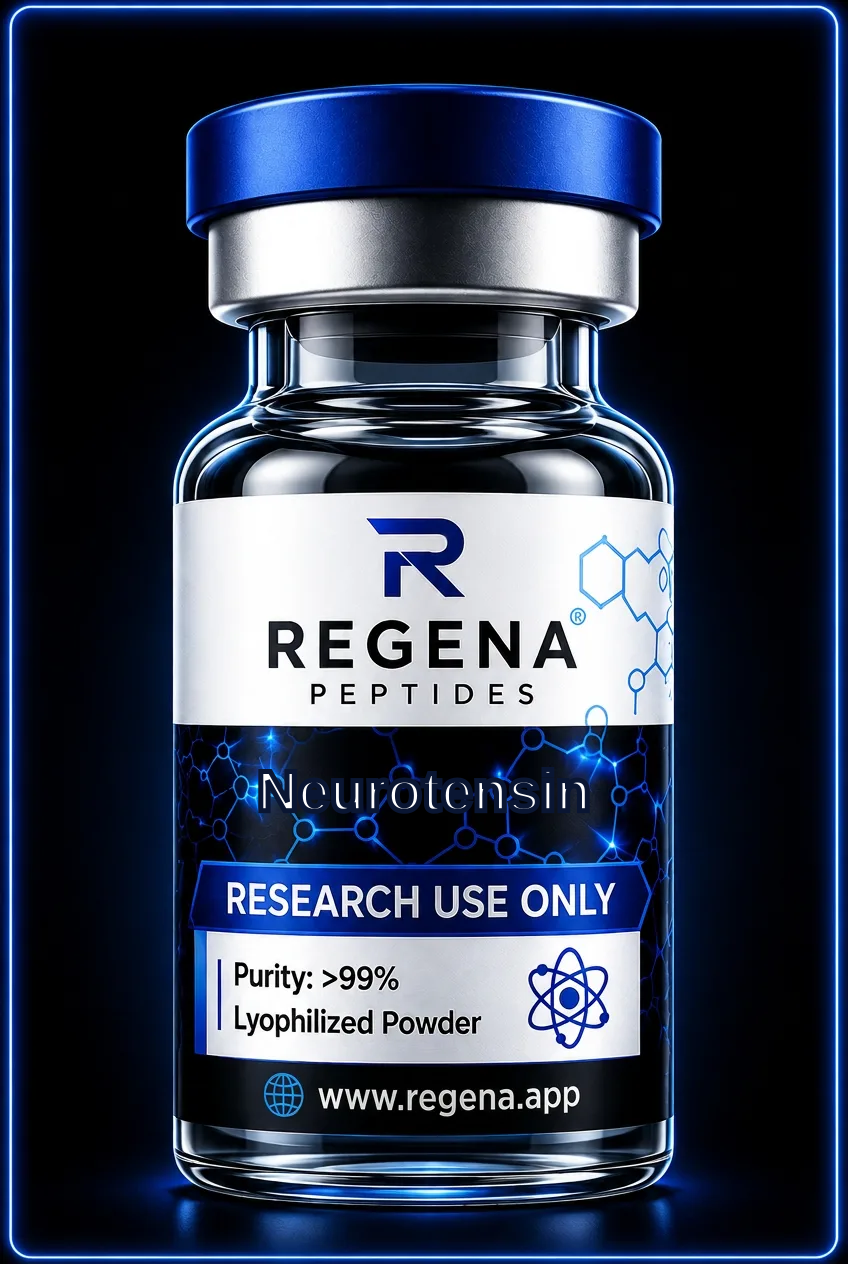
Cognitive · Neuropeptide
Neurotensin
Also known as NT
A 13-amino-acid neuropeptide that interacts with the dopamine system and is studied in models of thermoregulation, nociception, and gut motility.
- Length
- 13 amino acids
- Half-life
- Very short, <2 minutes in plasma
- Mechanism
- Functions as a neurotransmitter and neuromodulator by binding primarily to the high-affinity G protein-coupled receptor NTS1 and the lower-affinity receptor NTS2.
- Studied in
- Investigated for its role in nociception, thermoregulation, and its complex interactions with the dopamine system in the brain.
About Neurotensin
Neurotensin is a tridecapeptide found in both the central nervous system and the gastrointestinal tract. It is involved in a wide array of physiological processes by acting as a neuromodulator or neurotransmitter. Its biological effects are mediated through a family of receptors, principally the high-affinity G-protein coupled NTS1 receptor.
In the central nervous system, neurotensin is notably co-localized with dopamine in neurons of the ventral tegmental area and substantia nigra. For this reason, it is a significant tool for research into the modulation of dopaminergic pathways, with implications for reward and motor control systems. Other research applications include studying its potent effects on body temperature regulation and its analgesic properties in various nociception models. This molecule is a reference compound with a clinical history.
Laboratory notes
- The C-terminal portion of the peptide (the last 6 amino acids) is responsible for its biological activity and receptor binding.
- Neurotensin is rapidly degraded by metalloendopeptidases, resulting in a very short plasma half-life.
- This molecule is a reference compound with a clinical history.
Storage and reconstitution basics: storage guide.
Questions about Neurotensin
What is Neurotensin?
Neurotensin is a 13-amino-acid peptide that functions as a neurotransmitter in the brain and a hormone in the gut, involved in regulating dopamine pathways, pain perception, and core body temperature.
What is the relationship between Neurotensin and dopamine?
Neurotensin is often found in the same neurons as dopamine and is known to modulate dopaminergic neurotransmission, making it a subject of interest in research related to this system.
How stable is Neurotensin in solution?
Neurotensin is highly susceptible to enzymatic degradation in biological fluids, with a half-life of only a few minutes. Experiments may require the use of peptidase inhibitors.
Is Neurotensin for human use?
No. It is supplied strictly for in-vitro laboratory research and is not for human or animal consumption.
Related research peptides
All products are sold for laboratory research use only. Not for human consumption, not a medicine, not for diagnosing, treating or preventing any condition.