
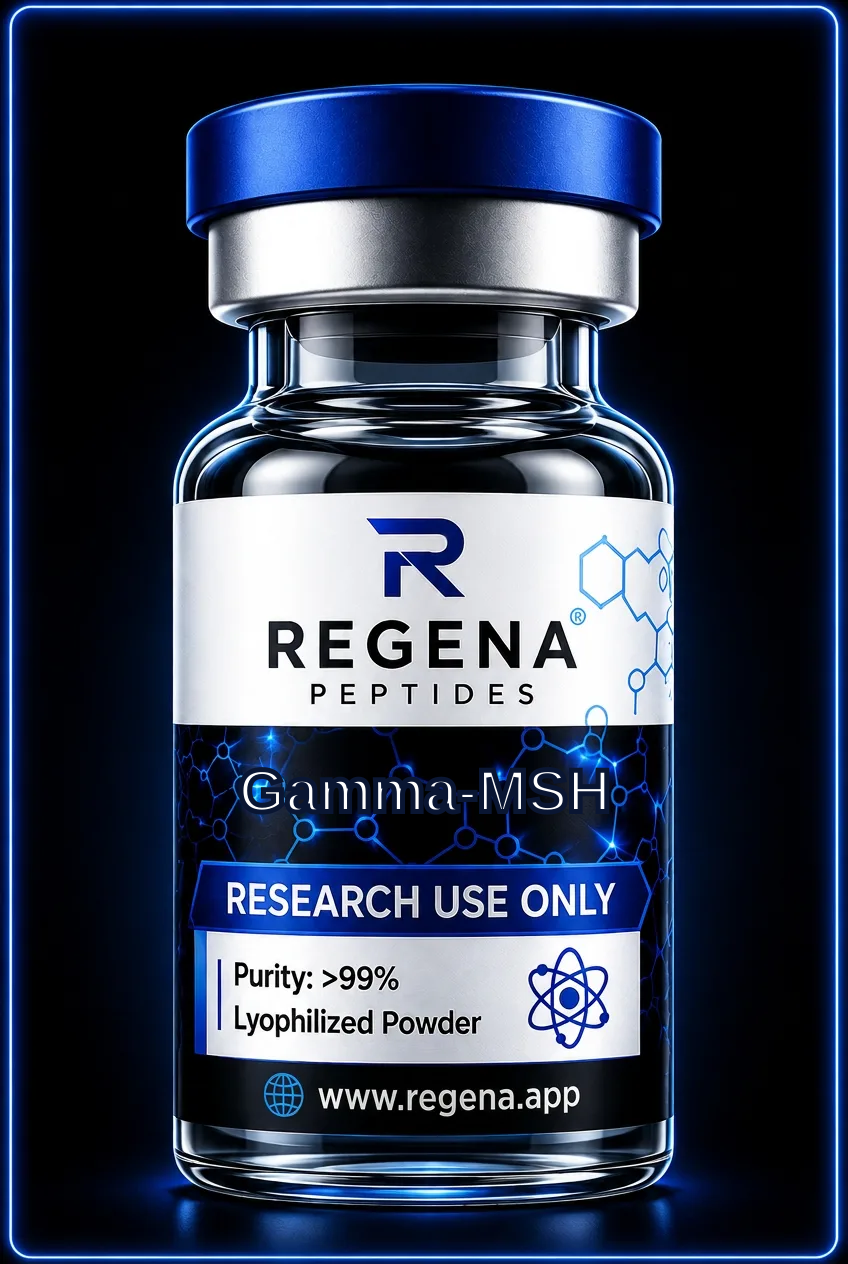
Hormone · Melanocortin peptide
Gamma-MSH
Also known as Gamma-Melanocyte-Stimulating Hormone
A short pro-opiomelanocortin (POMC)-derived peptide used in research on cardiovascular and adrenal regulation, primarily via MC3R activation.
- Length
- 11-12 amino acids
- Half-life
- Not well characterised
- Mechanism
- Functions as a selective agonist at the melanocortin 3 receptor (MC3R), with proposed downstream effects on cardiovascular and adrenal function.
- Studied in
- This peptide is investigated in experimental models for its potential role in natriuresis, blood pressure control, and adrenal steroidogenesis.
About Gamma-MSH
Gamma-Melanocyte-Stimulating Hormone (γ-MSH) is a peptide derived from the N-terminal region of the pro-opiomelanocortin (POMC) precursor. Unlike α-MSH and β-MSH, which are more centrally involved in pigmentation and energy balance, γ-MSH is primarily studied for its distinct physiological profile.
The primary receptor target for γ-MSH is the melanocortin 3 receptor (MC3R). Its relative selectivity for MC3R makes it a specific tool for interrogating this receptor's function in laboratory settings. Research applications focus on its apparent role in modulating blood pressure and promoting sodium excretion (natriuresis) in various animal models.
Laboratory notes
- Different forms exist (γ1, γ2, γ3) based on cleavage and length; confirm the correct sequence for your experimental model.
- Due to its short sequence, stability in solution may be limited; prepare fresh solutions for experiments.
- Store lyophilised peptide at -20°C or below, desiccated.
Storage and reconstitution basics: storage guide.
Questions about Gamma-MSH
How does γ-MSH's function differ from other MSH peptides?
While α-MSH and β-MSH are primarily researched for pigmentation and energy homeostasis, γ-MSH is studied for its effects on the cardiovascular and adrenal systems, such as blood pressure and natriuresis.
What is the primary receptor target for γ-MSH?
In laboratory studies, γ-MSH demonstrates preferential agonist activity at the melanocortin 3 receptor (MC3R).
Is γ-MSH related to pigmentation?
Despite its name, γ-MSH has very weak melanotropic (pigmentation-stimulating) activity compared to α-MSH and β-MSH.
Is Gamma-MSH for human use?
No. It is supplied strictly for in-vitro laboratory research and is not for human or animal consumption.
Related research peptides
All products are sold for laboratory research use only. Not for human consumption, not a medicine, not for diagnosing, treating or preventing any condition.