
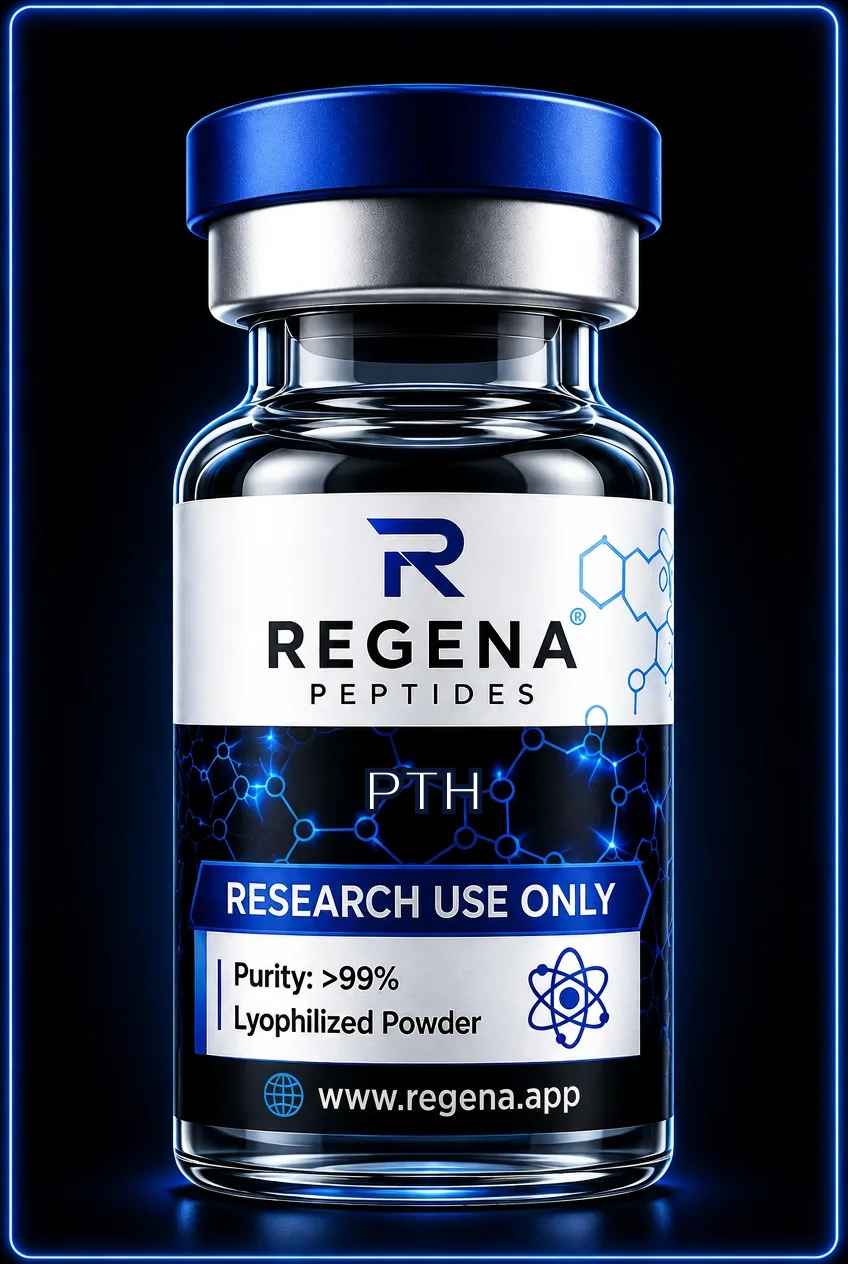
Hormone · Polypeptide hormone fragment
PTH (1-34)
Also known as Parathyroid Hormone (1-34)
The N-terminal fragment of parathyroid hormone, a key research tool for studying bone anabolism and PTH1R signaling pathways.
- Length
- 34 amino acids
- Half-life
- Approximately 1-2 minutes (in plasma)
- Mechanism
- Binds to the parathyroid hormone 1 receptor (PTH1R) to activate signaling pathways that modulate calcium and phosphate homeostasis and bone turnover.
- Studied in
- As a reference compound with a clinical history, it is employed in laboratory studies of bone formation, osteoblast activity, and mineral metabolism.
About PTH (1-34)
Parathyroid Hormone (1-34) represents the N-terminal, biologically active fragment of the full-length, 84-amino acid parathyroid hormone. This 34-amino acid sequence contains the necessary residues for binding and activating the PTH1 receptor (PTH1R). It is a principal regulator of calcium and phosphate levels in extracellular fluid.
In laboratory research, PTH (1-34) is a critical tool for investigating bone biology. While continuous exposure in cell culture can lead to bone resorption, intermittent application is known to stimulate osteoblast activity and promote bone formation. This dual effect makes it an important compound for studying the molecular switches that govern bone remodeling.
Laboratory notes
- The peptide is susceptible to oxidation at methionine residues (Met8 and Met18), which can reduce bioactivity.
- Experimental outcomes in cell culture (anabolic vs. catabolic effects) are highly dependent on the exposure pattern (intermittent vs. continuous).
- Use low-binding microcentrifuge tubes for reconstitution and storage to minimize loss of material due to surface adsorption.
Storage and reconstitution basics: storage guide.
Questions about PTH (1-34)
What does the '(1-34)' designation mean?
It indicates that this peptide consists of the first 34 amino acids from the N-terminus of the full 84-amino acid parathyroid hormone, which constitutes the fully active region of the molecule.
What is the primary receptor for PTH (1-34)?
Its biological effects are mediated through the parathyroid hormone 1 receptor (PTH1R), a G-protein coupled receptor expressed in bone and kidney cells.
Why is the pattern of exposure important in bone cell culture studies?
In vitro, intermittent or pulsatile exposure to PTH (1-34) tends to stimulate osteoblast differentiation and anabolic activity, whereas continuous exposure can promote osteoclast-mediated bone resorption.
Is PTH (1-34) for human use?
No. It is supplied strictly for in-vitro laboratory research and is not for human or animal consumption.
Related research peptides
All products are sold for laboratory research use only. Not for human consumption, not a medicine, not for diagnosing, treating or preventing any condition.