
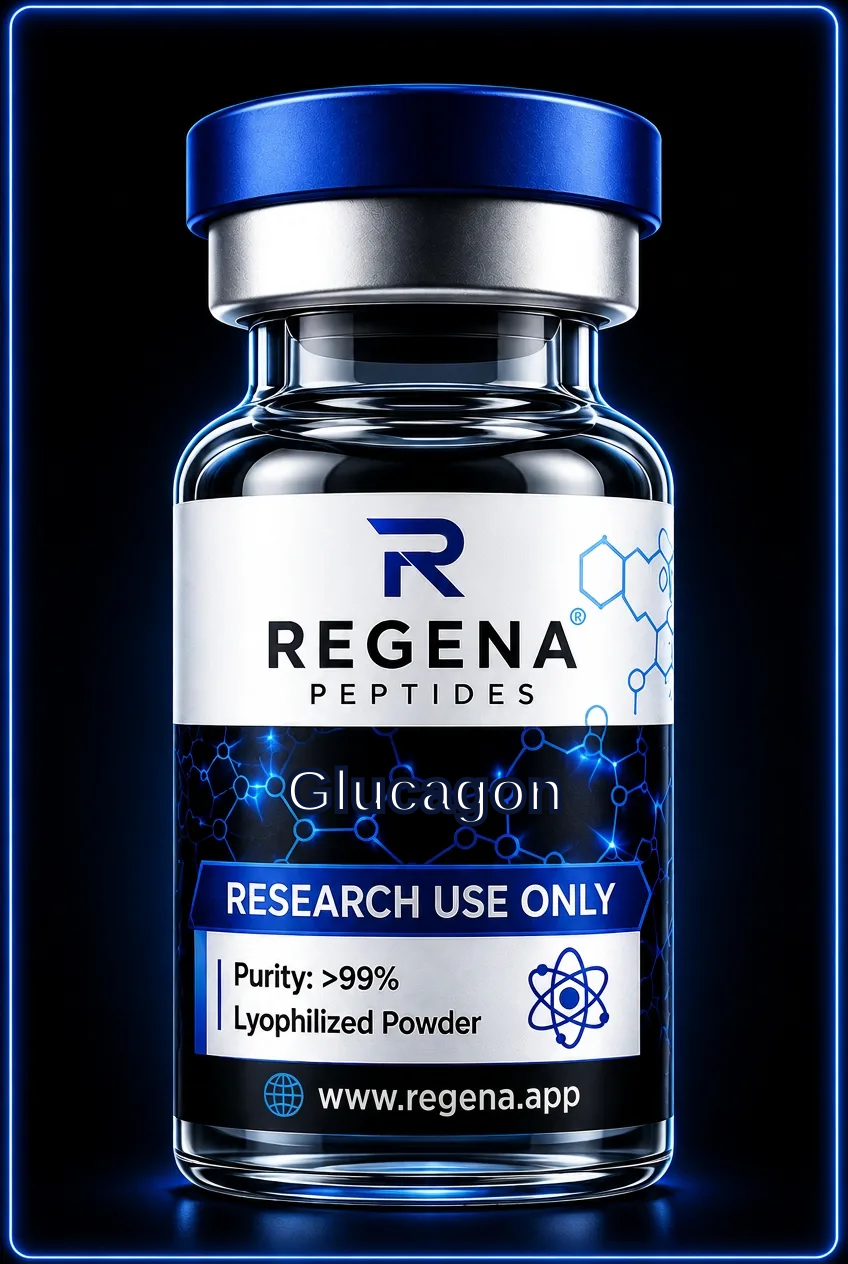
Hormone · Polypeptide hormone
Glucagon
A 29-amino acid pancreatic hormone that elevates blood glucose, used in research to investigate hepatic glucose metabolism and GCGR signaling.
- Length
- 29 amino acids
- Half-life
- 3-6 minutes (in plasma)
- Mechanism
- Acts as an agonist of the glucagon receptor (GCGR), a GPCR on hepatocytes, stimulating intracellular cAMP production to promote glycogenolysis and gluconeogenesis.
- Studied in
- This reference compound with a clinical history is used in metabolic research to study hepatic glucose output, glucose homeostasis, and GCGR signaling.
About Glucagon
Glucagon is a 29-amino acid peptide hormone synthesized and secreted by the alpha cells of the pancreatic islets. It is the primary counter-regulatory hormone to insulin, playing a critical role in maintaining glucose homeostasis. Its secretion is stimulated by hypoglycemia and inhibited by hyperglycemia.
In a laboratory setting, glucagon is a fundamental tool for metabolic research. Its primary action is on the liver, where it binds to the glucagon receptor (GCGR) to stimulate the breakdown of glycogen (glycogenolysis) and the synthesis of glucose from non-carbohydrate precursors (gluconeogenesis). These actions result in an increase in hepatic glucose output, making it an essential reagent for studying glucose regulation in primary hepatocytes, perfused liver models, and animal studies.
Laboratory notes
- Glucagon is prone to forming amyloid fibrils and aggregating in neutral or alkaline aqueous solutions, which inactivates it.
- For optimal stability, reconstitute lyophilised glucagon in a weak acidic solution (e.g., 10 mM HCl) before further dilution in experimental buffer.
- Reconstituted aliquots should be flash-frozen and stored at -80°C to minimize degradation.
Storage and reconstitution basics: storage guide.
Questions about Glucagon
What is glucagon's primary function in metabolic research?
It is used to stimulate hepatic glucose production in vitro and in vivo to study the pathways of glycogenolysis and gluconeogenesis and to investigate states of glucose dysregulation.
Why is reconstitution pH important for glucagon?
Glucagon is sparingly soluble and highly unstable at neutral pH, readily forming inactive amyloid fibrils. Reconstituting in a dilute acid solution maintains its monomeric, active state.
How does glucagon's role compare to insulin?
Glucagon and insulin have opposing effects on blood glucose. Glucagon raises blood glucose by stimulating hepatic glucose output, while insulin lowers it by promoting glucose uptake into peripheral tissues and suppressing hepatic output.
Is Glucagon for human use?
No. It is supplied strictly for in-vitro laboratory research and is not for human or animal consumption.
Related research peptides
All products are sold for laboratory research use only. Not for human consumption, not a medicine, not for diagnosing, treating or preventing any condition.