
Hormone · Progastrin-derived amidated peptide hormone
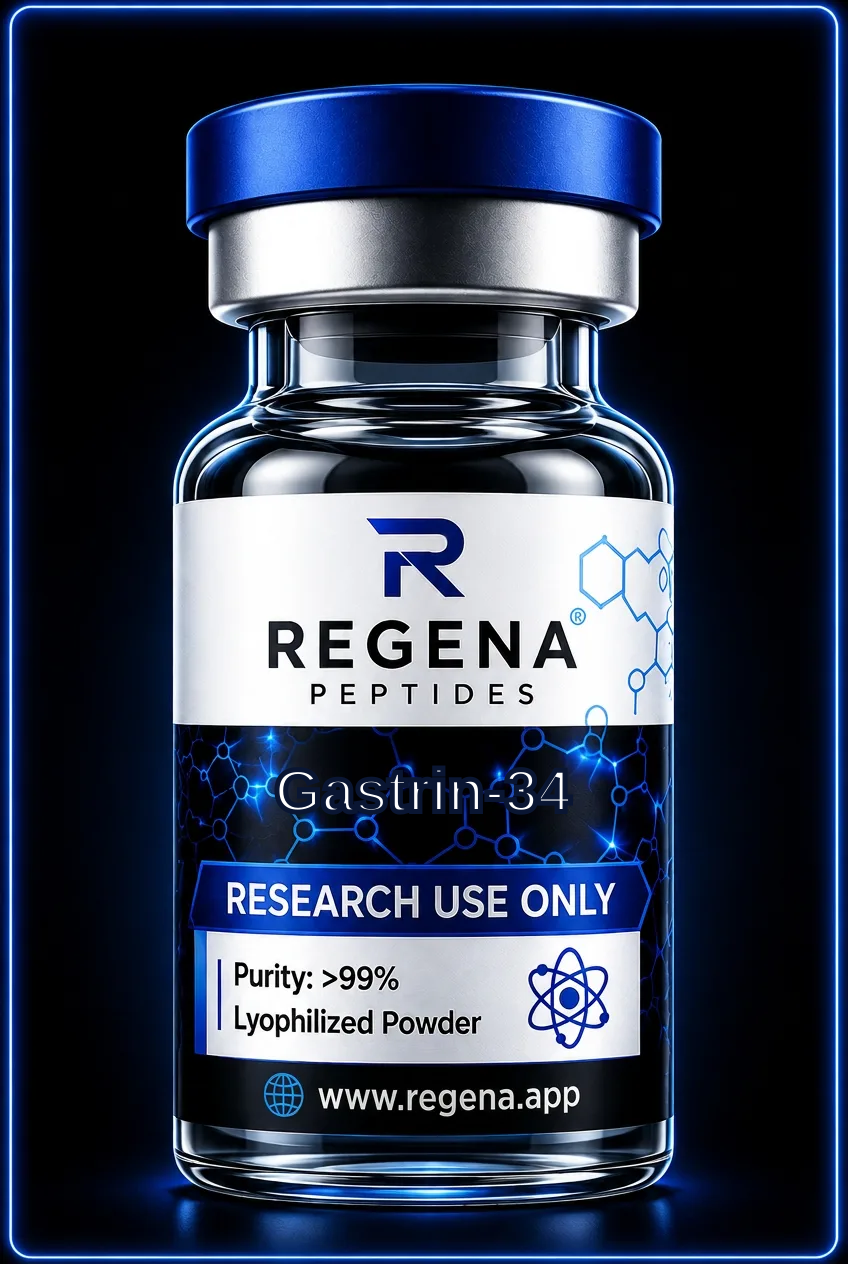
Gastrin-34
Also known as G-34; Big gastrin
The 34-residue big gastrin form, used to study CCK2 signalling and the processing of amidated gastrin peptides.
- Length
- 34 amino acids
- Half-life
- Not well characterised
- Mechanism
- Gastrin-34 activates the CCK2 receptor through its amidated C-terminal gastrin motif, principally stimulating Gq/11-dependent phospholipase C signalling and calcium mobilisation. Sulphated and non-sulphated forms can both engage CCK2 receptors; gastrin is substantially less favoured than sulphated CCK at CCK1 receptors.
- Studied in
- CCK2-expressing cell lines, gastric gland preparations and animal gastric physiology models use gastrin-34 to investigate receptor signalling and progastrin processing.
About Gastrin-34
Gastrin-34, historically termed big gastrin, is a 34-residue product of progastrin processing. Its C-terminal 17 residues correspond to gastrin-17, while the additional N-terminal segment distinguishes the longer form. Mature gastrin-34 typically has an N-terminal pyroglutamate and a C-terminal phenylalanine amide. Sulphated and non-sulphated variants occur, differing at a tyrosine near the C-terminus. Biochemical separation of these molecular forms established that gastrin immunoreactivity comprises several distinct peptides rather than one uniform analyte.
The principal receptor target is CCK2, which recognises the amidated C-terminal motif shared with cholecystokinin. Gastrin's tyrosine occupies a different position relative to the C-terminus from the sulphated tyrosine in CCK, contributing to their different CCK1 recognition profiles. Laboratory studies compare gastrin-34 with gastrin-17, glycine-extended gastrins and progastrin fragments to examine processing and receptor activation. Binding measurements, calcium assays and gastric tissue preparations address different experimental questions and should not be treated as interchangeable readouts.
Laboratory notes
- Verify N-terminal pyroglutamate, C-terminal amidation and tyrosine sulphation status in the product specification.
- Track methionine oxidation and peptide integrity by an appropriate chromatographic method during stability studies.
- Assess immunoassay cross-reactivity with gastrin-17 and precursor-derived fragments before interpreting a signal as gastrin-34-specific.
Storage and reconstitution basics: storage guide.
Questions about Gastrin-34
How does gastrin-34 relate to gastrin-17?
Gastrin-34 contains the gastrin-17 sequence at its C-terminus, preceded by an additional 17 residues. Both mature amidated forms can activate CCK2 receptors.
Is glycine-extended gastrin-34 equivalent to amidated gastrin-34?
No. A glycine-extended peptide is a distinct processing intermediate with different terminal chemistry. Its assay behaviour cannot be assumed to match that of the mature amidated ligand.
Does gastrin-34 sulphation have the same receptor effect as CCK sulphation?
No. The tyrosine occupies a different position in the two peptide families. CCK1 recognition is particularly sensitive to the correctly positioned sulphated tyrosine in CCK, whereas CCK2 recognises both sulphated and non-sulphated gastrins.
Is Gastrin-34 for human use?
No. It is supplied strictly for in-vitro laboratory research and is not for human or animal consumption.
Related research peptides
All products are sold for laboratory research use only. Not for human consumption, not a medicine, not for diagnosing, treating or preventing any condition.