
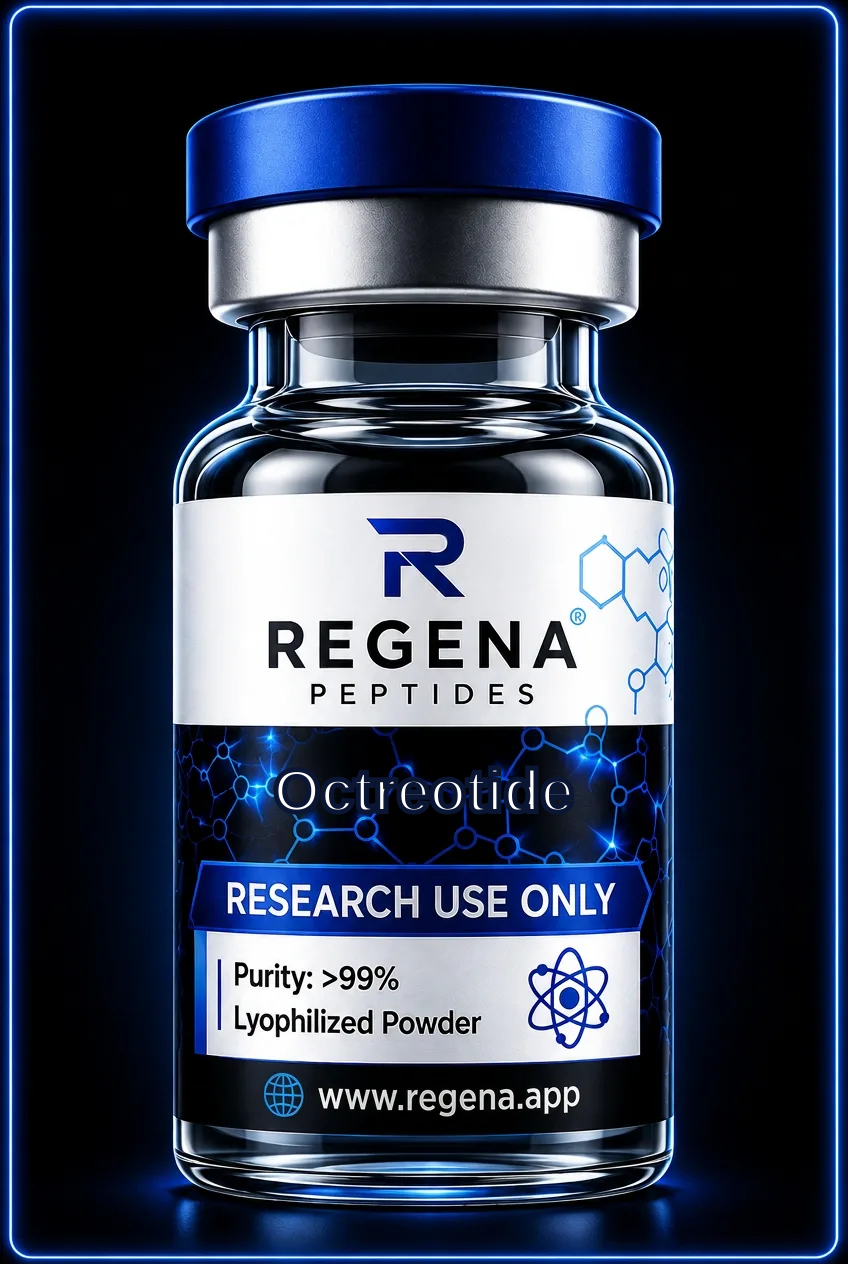
Hormone · Somatostatin analog
Octreotide
Also known as SMS 201-995
A stable, synthetic analog of somatostatin, Octreotide is a potent agonist at SSTR2/SSTR5 used for research into hormonal and cellular regulation.
- Length
- 8 amino acids
- Half-life
- ~1.7-1.9 hours (in plasma)
- Mechanism
- A synthetic octapeptide, it selectively binds as an agonist to somatostatin receptor subtypes SSTR2 and SSTR5, mimicking the inhibitory actions of native somatostatin.
- Studied in
- Laboratory models use this compound to investigate somatostatin receptor signaling and its potent inhibitory effects on hormonal secretion from various cell lines.
About Octreotide
Octreotide is a synthetic octapeptide designed to mimic the function of the natural hormone somatostatin but with significantly greater stability and a longer duration of action. Its structure is cyclic and incorporates a D-phenylalanine residue and a C-terminal threoninol alcohol, which together confer strong resistance to enzymatic degradation. This stability makes it a reliable reagent for in vitro and ex vivo studies.
This compound is a reference compound with a clinical history. Its mechanism involves high-affinity binding to somatostatin receptors SSTR2 and SSTR5, with lower affinity for SSTR3 and negligible binding to SSTR1 and SSTR4. In research, it is a standard tool for studying the pathways regulated by these receptors, including the inhibition of growth hormone, insulin, and glucagon secretion in pituitary and pancreatic cell culture models.
Laboratory notes
- Exhibits a much longer plasma half-life than endogenous somatostatin (~90 minutes vs. ~2-3 minutes).
- High selectivity for SSTR2 and SSTR5 is a key feature, allowing for targeted investigation of these subtypes.
- Reconstitution is often performed in sterile water or a weak acetic acid solution to ensure full solubility of the lyophilised peptide.
Storage and reconstitution basics: storage guide.
Questions about Octreotide
How does Octreotide's receptor profile differ from somatostatin?
While native somatostatin binds to all five SSTR subtypes (1-5) with similar high affinity, Octreotide is highly selective for SSTR2 and SSTR5.
Why is Octreotide more stable than natural somatostatin?
Its cyclic structure and the inclusion of a D-amino acid and an amino alcohol make it highly resistant to degradation by peptidases that rapidly break down endogenous somatostatin.
What is Octreotide's primary action in a cell culture model?
As an agonist, it activates SSTR2/SSTR5, which typically leads to the inhibition of adenylyl cyclase, a decrease in intracellular cAMP, and subsequent inhibition of hormone secretion or cell proliferation.
Is Octreotide for human use?
No. It is supplied strictly for in-vitro laboratory research and is not for human or animal consumption.
Related research peptides
All products are sold for laboratory research use only. Not for human consumption, not a medicine, not for diagnosing, treating or preventing any condition.