
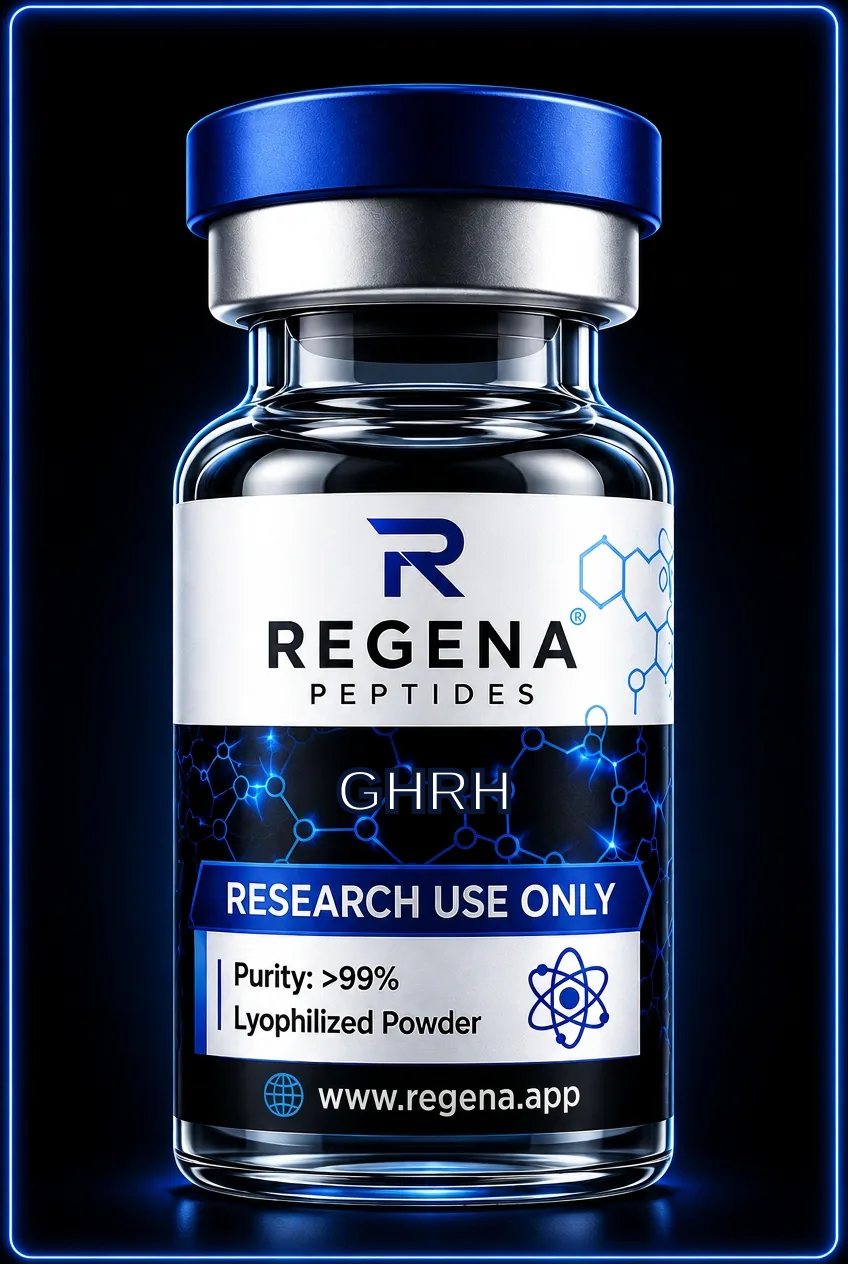
Growth Hormone · Endogenous Polypeptide Hormone
GHRH (1-44)
Also known as Somatocrinin, Somatorelin
GHRH (1-44) is an endogenous 44-amino acid polypeptide that stimulates growth hormone synthesis and release via the GHRH receptor in pituitary cells.
- Length
- 44 amino acids
- Half-life
- Reported plasma half-life is approximately 5-10 minutes in physiological systems.
- Mechanism
- GHRH (1-44) binds to the growth hormone-releasing hormone receptor (GHRHR) on somatotropic cells in the anterior pituitary, stimulating the synthesis and secretion of growth hormone.
- Studied in
- This peptide is utilised in research to study the regulation of the somatotropic axis and pituitary function in various in vitro and in vivo models.
About GHRH (1-44)
Growth Hormone-Releasing Hormone (1-44) is the full-length, endogenous form of the hypothalamic peptide responsible for regulating growth hormone (GH) secretion. Comprising 44 amino acids, this polypeptide is naturally produced in the arcuate nucleus of the hypothalamus and serves as a primary physiological stimulant for GH release from the anterior pituitary gland.
In a laboratory context, GHRH (1-44) is a critical tool for investigating the function of the hypothalamic-pituitary axis. Its mechanism of action involves binding to its specific G-protein coupled receptor, GHRHR, on pituitary somatotrophs, which activates the adenylyl cyclase pathway. This signalling cascade is a key area of study in endocrinological research and cell biology.
Laboratory notes
- GHRH (1-44) is also known by its endogenous name, Somatocrinin.
- The biologically active core is contained within the first 29 amino acids (GHRH 1-29), available as the research peptide Sermorelin.
- Due to its rapid degradation by dipeptidyl peptidase-IV (DPP-IV) in physiological systems, synthetic analogues with improved stability are often used for comparative studies.
Storage and reconstitution basics: storage guide.
Questions about GHRH (1-44)
What is the difference between GHRH (1-44) and GHRH (1-29)?
GHRH (1-44) is the full-length endogenous hormone. GHRH (1-29), known as Sermorelin, is the N-terminal fragment that retains full biological activity for stimulating the GHRH receptor.
What is the primary function of GHRH in a physiological system?
GHRH's primary function is to stimulate the synthesis and pulsatile release of growth hormone from somatotroph cells in the anterior pituitary.
How is GHRH activity regulated?
GHRH secretion and activity are regulated by a negative feedback loop involving somatostatin, insulin-like growth factor 1 (IGF-1), and growth hormone itself.
Is GHRH (1-44) for human use?
No. It is supplied strictly for in-vitro laboratory research and is not for human or animal consumption.
Related research peptides
All products are sold for laboratory research use only. Not for human consumption, not a medicine, not for diagnosing, treating or preventing any condition.