
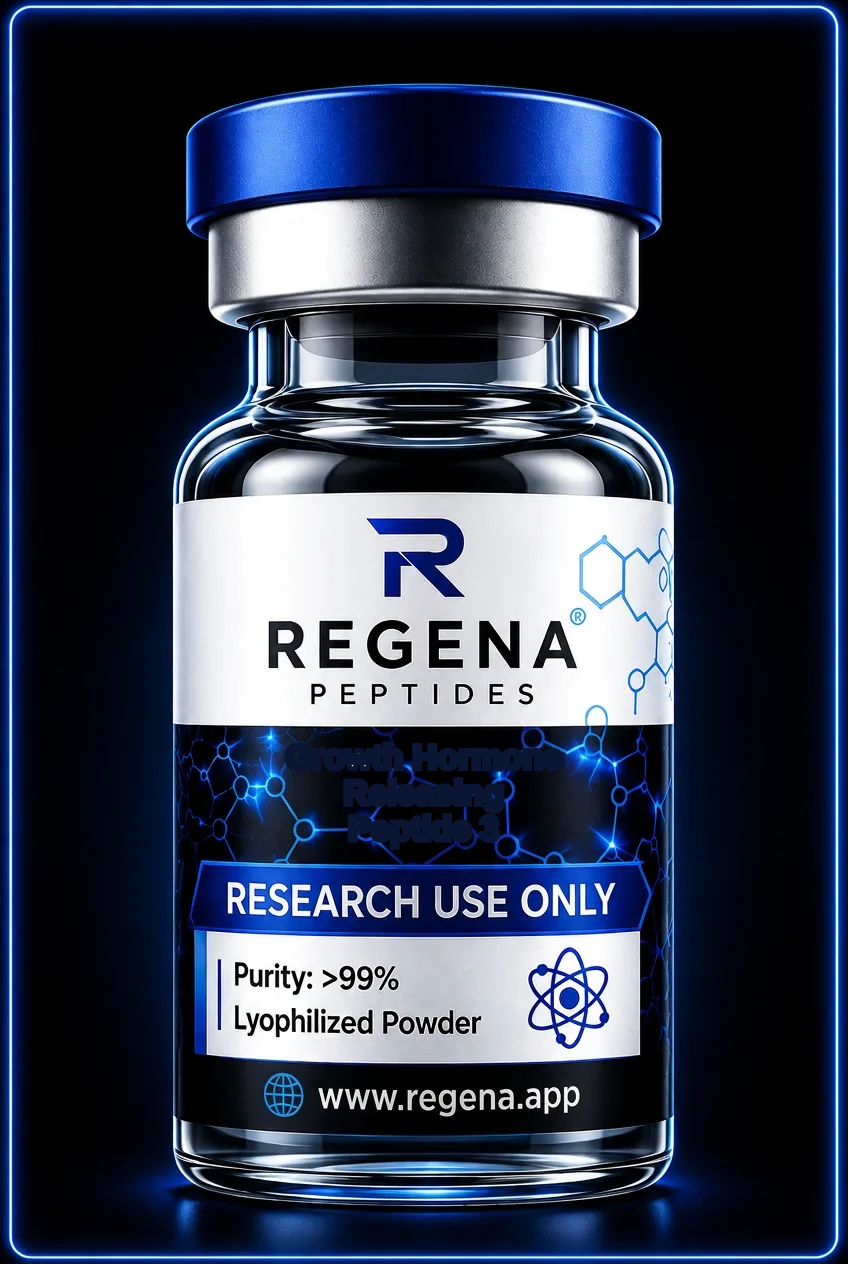
Growth Hormone · Synthetic Ghrelin Analogue
Growth Hormone Releasing Peptide 3
Also known as GHRP-3
GHRP-3 is a synthetic hexapeptide that functions as a potent agonist of the ghrelin receptor (GHSR-1a), used in endocrine research.
- Length
- 6 amino acids
- Half-life
- Not well characterised
- Mechanism
- GHRP-3 acts as an agonist on the growth hormone secretagogue receptor (GHSR-1a), also known as the ghrelin receptor.
- Studied in
- Laboratory models employ GHRP-3 to investigate the signaling pathways of the GHSR-1a receptor and its role in stimulating GH release from pituitary cells.
About Growth Hormone Releasing Peptide 3
Growth Hormone Releasing Peptide 3 (GHRP-3) is a synthetic hexapeptide belonging to the GHRP family. Structurally, it is characterized by the sequence His-D-Trp-Ala-Trp-D-Phe-Lys-NH2. It was developed as a potent agonist for the growth hormone secretagogue receptor (GHSR-1a), the same receptor activated by the endogenous hormone ghrelin.
Its primary action in a laboratory setting is the specific binding and activation of GHSR-1a, which in appropriate cell models (e.g., primary pituitary cell cultures) triggers a signaling cascade leading to the release of growth hormone. Unlike endogenous GHRH, which acts via the GHRH receptor, GHRPs provide a distinct pathway for studying GH regulation. The compound serves as a valuable tool for probing the function and downstream effects of the ghrelin/GHSR-1a axis in neuroendocrine research.
Laboratory notes
- GHRP-3 is one of several GHRPs (e.g., GHRP-2, GHRP-6, Hexarelin) with varying potencies and specificities; select based on experimental needs.
- For in-vitro pituitary cell experiments, co-application with GHRH analogues like Sermorelin can reveal synergistic effects on GH secretion.
- Reconstituted peptide solutions are best stored at 2-8°C and used promptly to minimize degradation.
Storage and reconstitution basics: storage guide.
Questions about Growth Hormone Releasing Peptide 3
What is the receptor for GHRP-3?
GHRP-3 is an agonist for the growth hormone secretagogue receptor (GHSR-1a), also known as the ghrelin receptor.
How does GHRP-3's mechanism differ from Sermorelin?
GHRP-3 acts on the GHSR-1a receptor, while Sermorelin acts on the GHRH receptor. They represent two distinct pathways for stimulating GH release in pituitary cell models.
Why is GHRP-3 sold for research use only?
Regena products, including GHRP-3, are intended exclusively for in-vitro laboratory research and are not for human or animal consumption or administration.
Is Growth Hormone Releasing Peptide 3 for human use?
No. It is supplied strictly for in-vitro laboratory research and is not for human or animal consumption.
Related research peptides
All products are sold for laboratory research use only. Not for human consumption, not a medicine, not for diagnosing, treating or preventing any condition.