
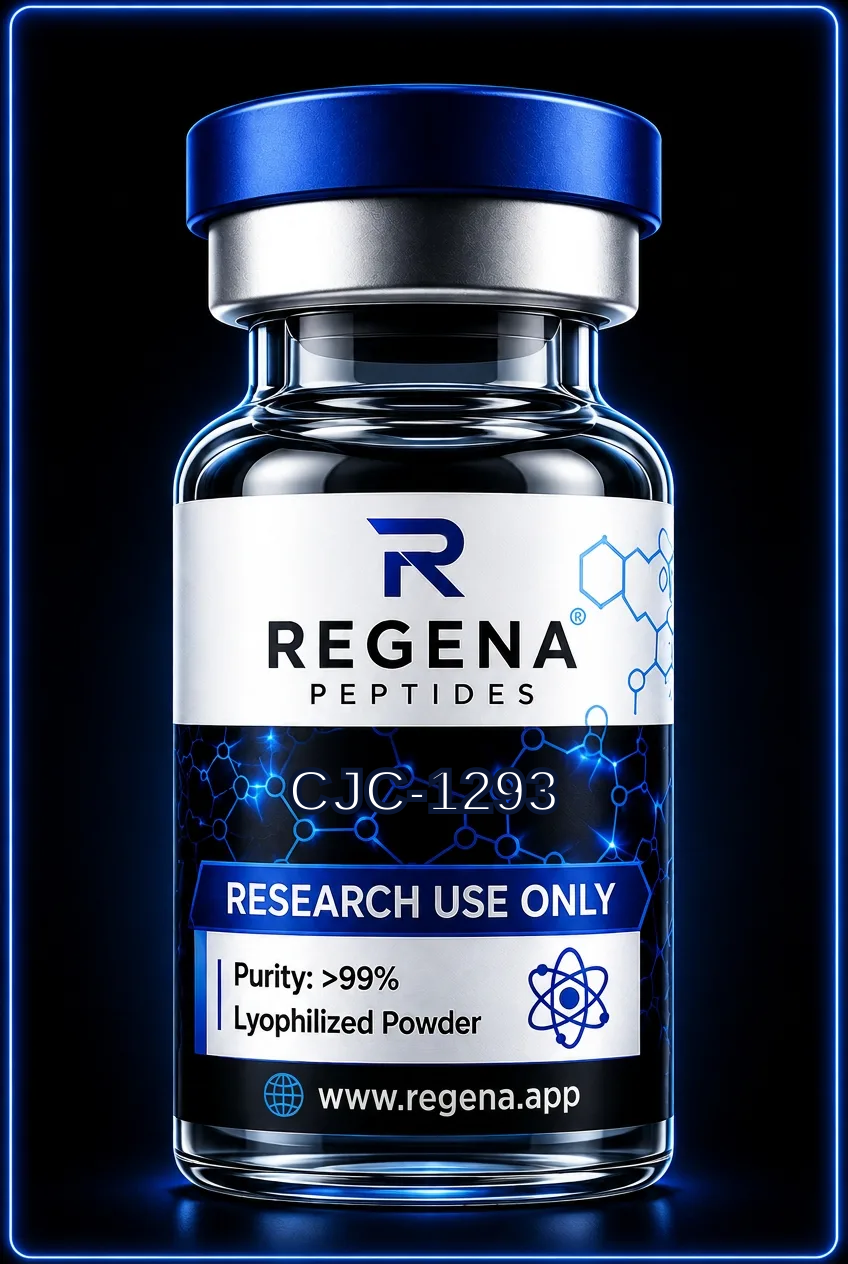
Growth Hormone · Modified peptide hormone analogue
CJC-1293
Also known as Modified GRF (1-29)
CJC-1293 is a modified 29-amino acid GHRH analogue with increased stability, used in research to study GHRH receptor signalling pathways.
- Length
- 29 amino acids
- Half-life
- Approx. 30 minutes
- Mechanism
- Acts as an analogue of Growth Hormone-Releasing Hormone (GHRH), binding to the GHRH receptor on pituitary somatotrophs to stimulate synthesis and pulsatile release of growth hormone.
- Studied in
- Utilised in neuroendocrinology and metabolic research to study the effects of sustained GHRH receptor activation on pituitary function and downstream targets.
About CJC-1293
CJC-1293 is a synthetic analogue of the first 29 amino acids of human GHRH, a sequence also known as sermorelin. It incorporates four amino acid substitutions that confer significant resistance to dipeptidyl peptidase-IV (DPP-IV) degradation. This modification results in a substantially longer plasma half-life compared to the native GHRH(1-29) fragment.
The enhanced stability makes CJC-1293 a useful tool for investigating the physiological consequences of prolonged GHRH receptor stimulation. Researchers use it in both cell-based assays and animal models to examine GH axis dynamics. Unlike compounds acting on the ghrelin receptor, it works exclusively through the GHRH receptor pathway, allowing for specific interrogation of this system.
Laboratory notes
- This peptide is a modified version of GHRH(1-29), not to be confused with analogues containing a Drug Affinity Complex (DAC) for extended half-life.
- Reconstituted solutions are pH-sensitive and should be prepared with bacteriostatic water or a suitable buffer as specified by the supplier.
- When designing experiments, the approximately 30-minute half-life should be considered when timing media changes in cell culture.
Storage and reconstitution basics: storage guide.
Questions about CJC-1293
What is the primary modification in CJC-1293?
CJC-1293 features four amino acid substitutions in the GHRH(1-29) sequence, which protect it from rapid enzymatic breakdown, primarily by DPP-IV.
Does CJC-1293 act on the ghrelin receptor?
No, its mechanism of action is specific to the GHRH receptor (GHRHR) located on pituitary cells.
How does CJC-1293 differ from sermorelin?
Sermorelin is the unmodified GHRH(1-29) sequence with a very short half-life. CJC-1293 is a modified version of that sequence engineered for greater stability.
Is CJC-1293 for human use?
No. It is supplied strictly for in-vitro laboratory research and is not for human or animal consumption.
Related research peptides
All products are sold for laboratory research use only. Not for human consumption, not a medicine, not for diagnosing, treating or preventing any condition.