
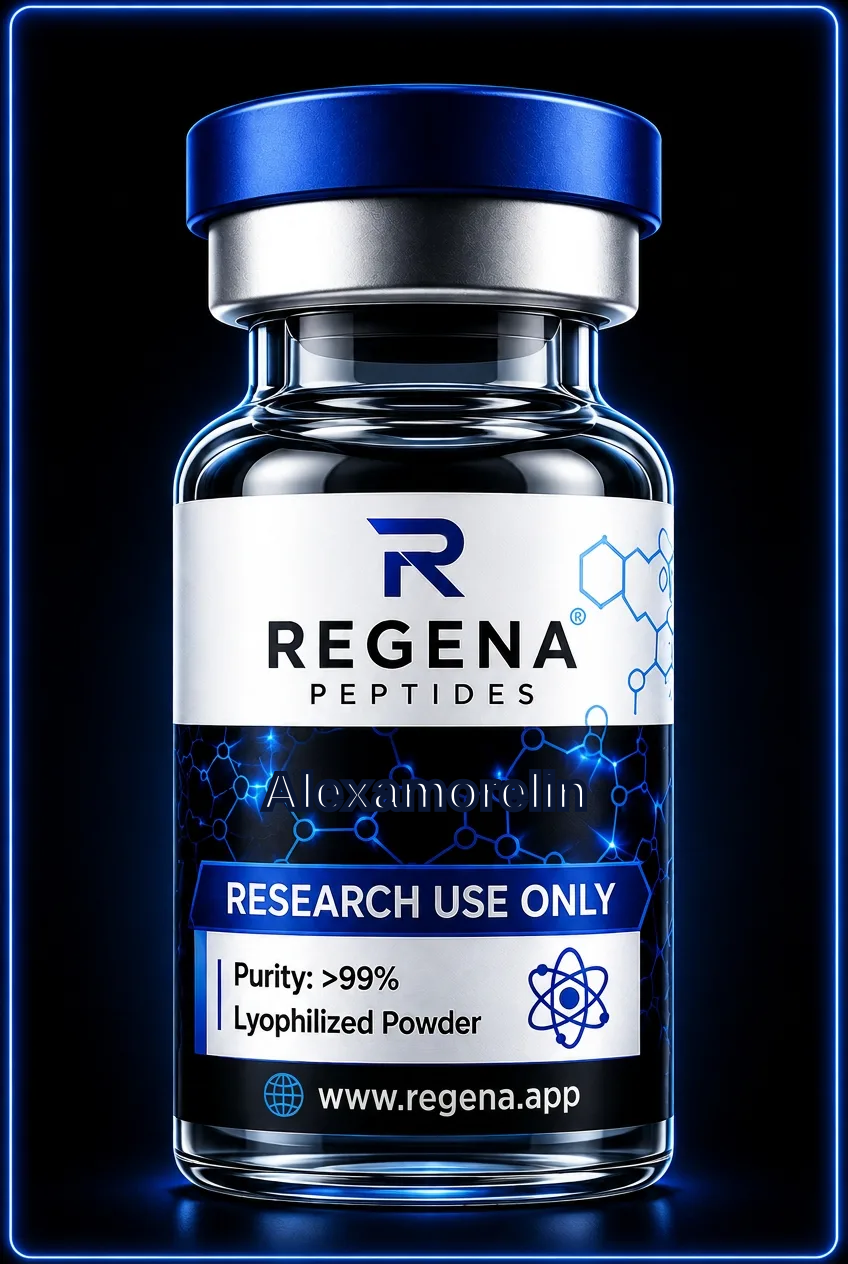
Growth Hormone · Synthetic hexapeptide
Alexamorelin
Also known as GHRP-7
Alexamorelin is a synthetic hexapeptide agonist of the ghrelin receptor, used in lab research to study growth hormone secretagogue pathways.
- Length
- 6 amino acids
- Half-life
- Not well characterised
- Mechanism
- Acts as a selective agonist of the ghrelin/growth hormone secretagogue receptor (GHS-R1a), stimulating pulsatile growth hormone release from the pituitary gland.
- Studied in
- Investigated in laboratory models for its effects on growth hormone secretion and potential downstream physiological processes.
About Alexamorelin
Alexamorelin is a synthetic peptide mimetic belonging to the growth hormone-releasing peptide (GHRP) family. Its structure, Ala-His-D-2-Nal-Ala-Trp-D-Phe-Lys-NH2, enables it to function as a potent agonist at the growth hormone secretagogue receptor (GHS-R1a). Unlike endogenous growth hormone-releasing hormone (GHRH), it activates a distinct intracellular signalling pathway.
Due to its specific action on the GHS-R1a, alexamorelin serves as a valuable tool in endocrinology research. Cell culture and animal models utilize this compound to explore the mechanisms of pituitary hormone secretion. Its activity helps differentiate the effects of GHS-R1a activation from those of the GHRH receptor pathway.
Laboratory notes
- Reconstituted alexamorelin solutions should be stored at 2-8°C and are typically stable for a limited duration; check supplier data.
- Due to its peptide nature, repeated freeze-thaw cycles of the solution should be avoided to maintain structural integrity.
- In vitro assays should use appropriate controls, such as a scrambled peptide sequence, to ensure observed effects are specific to alexamorelin's structure.
Storage and reconstitution basics: storage guide.
Questions about Alexamorelin
What is the primary receptor for alexamorelin?
Alexamorelin is a high-affinity agonist for the growth hormone secretagogue receptor, also known as GHS-R1a or the ghrelin receptor.
Is alexamorelin an analogue of GHRH?
No, it is a synthetic ghrelin mimetic and acts on a different receptor (GHS-R1a) than GHRH, which acts on the GHRH receptor.
Why are D-amino acids present in its structure?
The inclusion of D-amino acids increases the peptide's resistance to enzymatic degradation, enhancing its stability for research applications.
Is Alexamorelin for human use?
No. It is supplied strictly for in-vitro laboratory research and is not for human or animal consumption.
Related research peptides
All products are sold for laboratory research use only. Not for human consumption, not a medicine, not for diagnosing, treating or preventing any condition.