
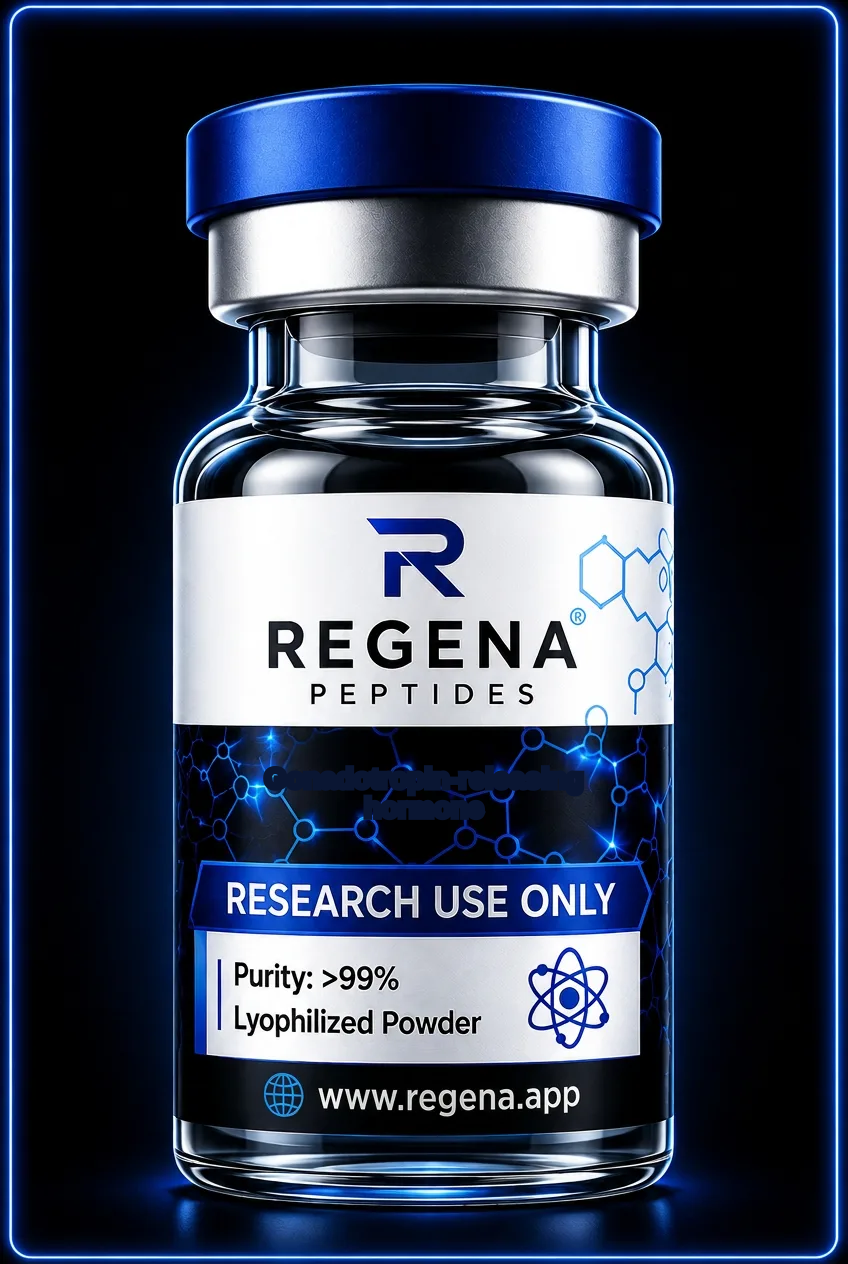
Hormone · Neuropeptide hormone
Gonadotropin-releasing hormone (GnRH)
Also known as Luteinizing-hormone-releasing hormone (LHRH)
A decapeptide hormone that stimulates pituitary release of LH and FSH, used in labs to probe the reproductive endocrine axis.
- Length
- 10 amino acids
- Half-life
- 2-4 minutes (plasma)
- Mechanism
- Binds to the gonadotropin-releasing hormone receptor (GnRHR), a G-protein coupled receptor in the anterior pituitary, to stimulate LH and FSH synthesis and secretion.
- Studied in
- Used in cell culture and animal models to study the regulation of the hypothalamic-pituitary-gonadal axis and reproductive physiology.
About Gonadotropin-releasing hormone (GnRH)
Gonadotropin-releasing hormone (GnRH) is a decapeptide synthesised and released from neurons in the hypothalamus. It is a key regulator of the reproductive endocrine system. The native sequence has modified termini—a pyroglutamyl group at the N-terminus and an amide at the C-terminus—which protect it from degradation by exopeptidases.
GnRH acts by binding to its specific receptor, GnRHR, on gonadotropic cells of the anterior pituitary gland. This interaction triggers a signaling cascade that results in the synthesis and pulsatile release of luteinizing hormone (LH) and follicle-stimulating hormone (FSH). As a reference compound with a clinical history, it is a fundamental tool for in vitro and in vivo studies of reproductive endocrinology.
Laboratory notes
- Due to its short half-life, continuous infusion or pulsatile administration is often required in experimental models to mimic physiological release patterns.
- Synthetic analogues with amino acid substitutions are frequently used in research for their increased stability and altered receptor binding kinetics (agonist vs. antagonist).
- Accurate quantification in biological samples requires sensitive techniques like radioimmunoassay (RIA) or ELISA.
Storage and reconstitution basics: storage guide.
Questions about Gonadotropin-releasing hormone (GnRH)
What is the primary function of GnRH in physiological systems?
It is the principal hormone that controls the release of gonadotropins (LH and FSH) from the anterior pituitary.
Why are its ends modified?
The N-terminal pyroglutamate and C-terminal amide make the peptide more resistant to enzymatic degradation, increasing its stability.
How is GnRH typically released in vivo?
It is released in a pulsatile manner from the hypothalamus, and this pattern is critical for its proper physiological effect on the pituitary.
Is Gonadotropin-releasing hormone (GnRH) for human use?
No. It is supplied strictly for in-vitro laboratory research and is not for human or animal consumption.
Related research peptides
All products are sold for laboratory research use only. Not for human consumption, not a medicine, not for diagnosing, treating or preventing any condition.