
Antimicrobial · Frog skin antimicrobial peptide
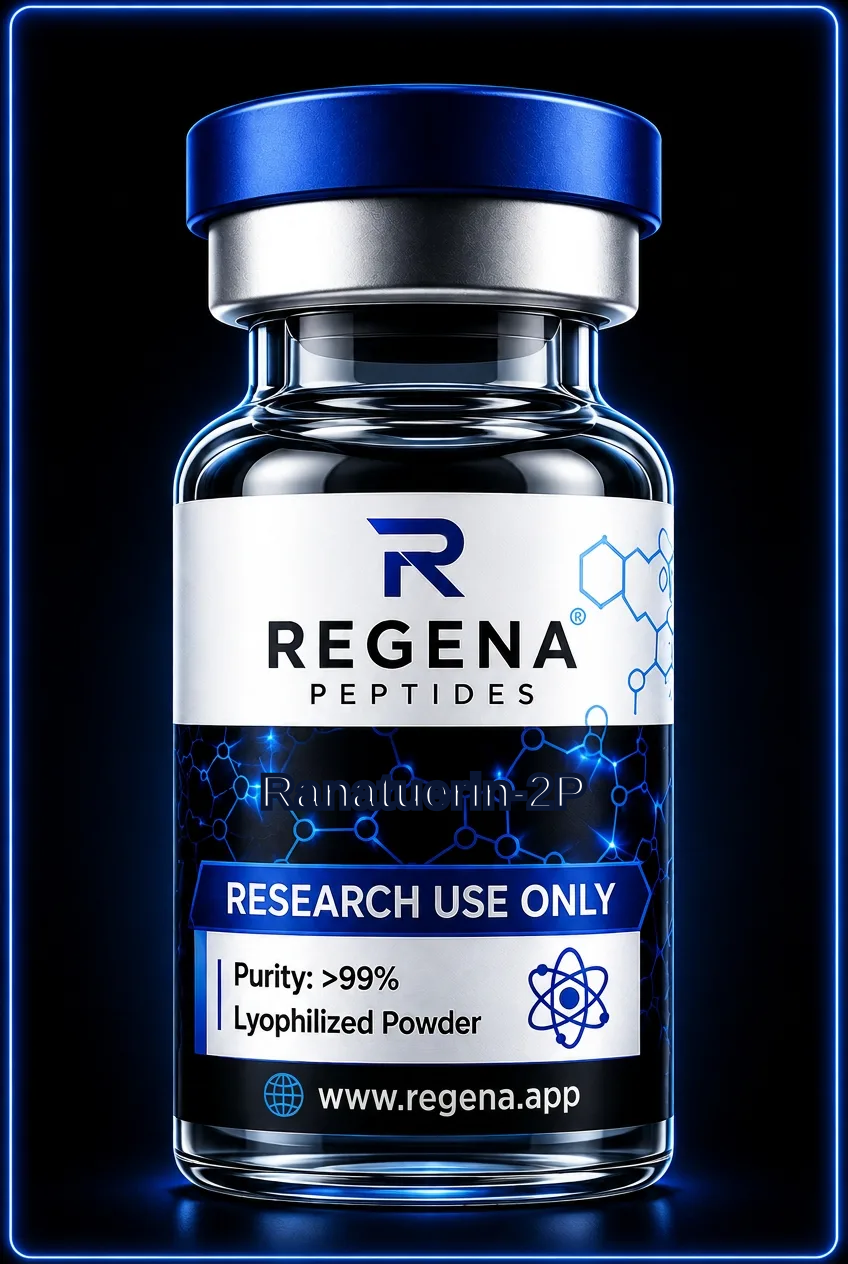
Ranatuerin-2P
A 25-amino-acid peptide from pickerel frog skin, Ranatuerin-2P is studied for its broad-spectrum, membrane-disrupting antimicrobial effects.
- Length
- 25 amino acids
- Half-life
- Not well characterised
- Mechanism
- It permeabilizes microbial membranes by forming an alpha-helical structure that interacts with and disrupts the lipid bilayer.
- Studied in
- It is investigated in vitro for its broad-spectrum antimicrobial activity against bacteria and fungi and for its structure-activity relationships.
About Ranatuerin-2P
Ranatuerin-2P is an antimicrobial peptide isolated from the skin of the pickerel frog, Lithobates palustris. It belongs to the ranatuerin-2 family, which are common components of the innate immune system in North American frogs. The peptide is 25 amino acids long and features a C-terminal amidation, which enhances its stability and activity.
Like many frog skin AMPs, Ranatuerin-2P acts by disrupting the integrity of microbial cell membranes. Upon contact with a target cell, it folds into an amphipathic α-helix, allowing it to insert into the membrane and cause permeabilization. Its broad activity spectrum against both Gram-positive and Gram-negative bacteria, as well as certain fungi, makes it a subject of interest in comparative studies of antimicrobial peptide function.
Laboratory notes
- The C-terminal amide group is crucial for its biological activity; verify this modification is present in the synthetic product.
- Reconstitute in sterile water or a weak acidic buffer. Store stock solutions frozen.
- Use low-protein-binding labware to prevent loss of peptide due to surface adsorption.
Storage and reconstitution basics: storage guide.
Questions about Ranatuerin-2P
What is the significance of the 'P' in Ranatuerin-2P?
The 'P' denotes its origin from the frog species Lithobates palustris (formerly Rana palustris).
Does it have a disulfide bridge?
No, Ranatuerin-2P is a linear peptide. It relies on its α-helical secondary structure for activity, not on covalent cross-links.
How does its activity compare to other frog AMPs?
It is structurally related to peptides like esculentins and brevinins but lacks the 'Rana-box' disulfide ring, making it a useful comparison for studies on the role of such structures.
Is Ranatuerin-2P for human use?
No. It is supplied strictly for in-vitro laboratory research and is not for human or animal consumption.
Related research peptides
All products are sold for laboratory research use only. Not for human consumption, not a medicine, not for diagnosing, treating or preventing any condition.