
Cardiovascular · Peptide fragment receptor antagonist
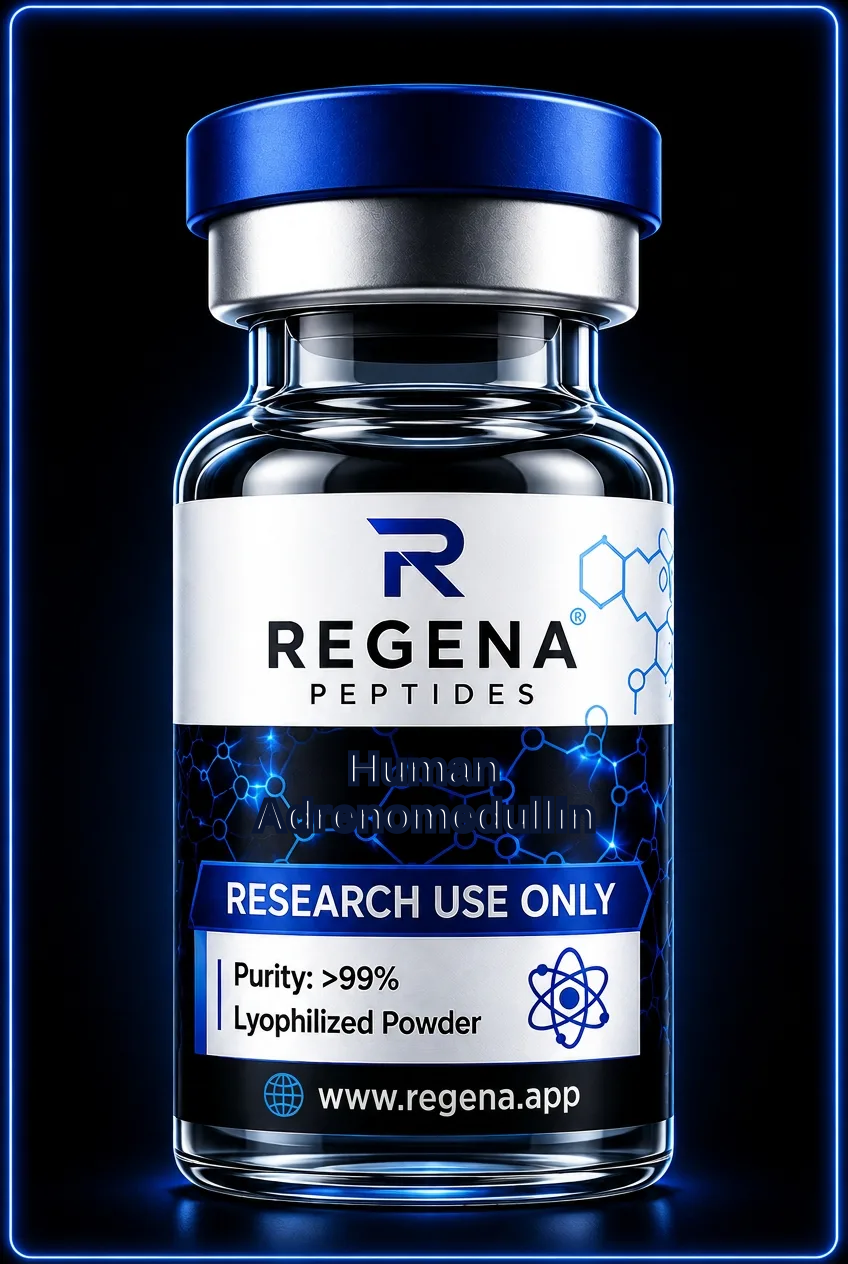
Human Adrenomedullin (13-52)
Also known as AM(13-52)
Adrenomedullin (13-52) is a 40-amino-acid antagonist of the adrenomedullin receptor, used in lab research to block AM signaling and study its functions.
- Length
- 40 amino acids
- Half-life
- Not well characterised
- Mechanism
- It acts as a competitive antagonist at the adrenomedullin receptor complex (CALCRL/RAMP2 or RAMP3), blocking the effects of endogenous adrenomedullin.
- Studied in
- This peptide is used as a pharmacological tool in vitro and in ex vivo models to probe the physiological roles of the adrenomedullin system.
About Human Adrenomedullin (13-52)
Human Adrenomedullin (13-52) is a C-terminal fragment of the full-length, 52-amino-acid adrenomedullin (AM) peptide. While the full-length peptide is a potent vasodilator, this truncated version lacks the N-terminal ring structure necessary for receptor activation. Instead, it functions as a widely used antagonist in laboratory research.
The peptide acts by competitively binding to the adrenomedullin receptor, a complex formed by the calcitonin receptor-like receptor (CALCRL) and either RAMP2 or RAMP3 co-receptors. By occupying the binding site without triggering a conformational change for activation, it effectively blocks the signaling cascade normally initiated by full-length AM. This makes it an indispensable tool for elucidating the functions of the AM system in experimental models of vascular tone, fluid homeostasis, and cell proliferation.
Laboratory notes
- For antagonist studies, pre-incubating cells or tissues with AM(13-52) before adding the agonist (full-length AM) is a standard procedure.
- The peptide contains a disulfide bridge; avoid strongly reducing conditions that could disrupt its structure.
- Solubility in aqueous buffers can be limited; initial reconstitution in a small volume of weak acid (e.g., 0.1% acetic acid) may be necessary.
Storage and reconstitution basics: storage guide.
Questions about Human Adrenomedullin (13-52)
Is this peptide an agonist or antagonist?
It is a competitive antagonist of the adrenomedullin receptor.
Why is the N-terminus (residues 1-12) missing?
The full peptide contains an intramolecular disulfide bridge forming a ring structure. Removing the N-terminal part of the sequence eliminates agonist activity and confers antagonist properties.
What is a RAMP?
RAMP stands for Receptor Activity-Modifying Protein. These are single-pass transmembrane proteins that associate with GPCRs like CALCRL to determine their ligand specificity, in this case for adrenomedullin.
Is Human Adrenomedullin (13-52) for human use?
No. It is supplied strictly for in-vitro laboratory research and is not for human or animal consumption.
Related research peptides
All products are sold for laboratory research use only. Not for human consumption, not a medicine, not for diagnosing, treating or preventing any condition.