
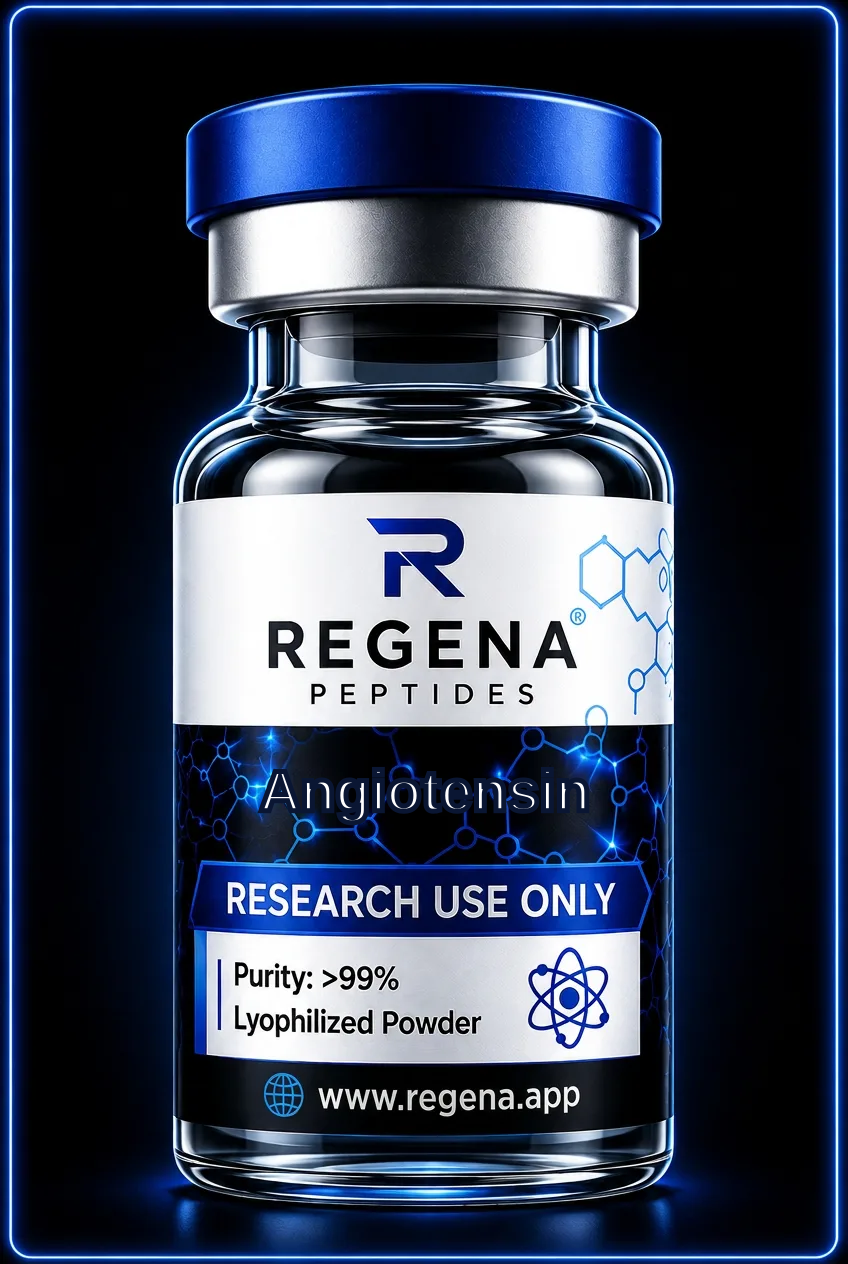
Cardiovascular · Angiotensin Peptide
Angiotensin (1-12)
Also known as Ang(1-12)
A 12-amino acid angiotensin precursor used in research to explore local, non-classical pathways of Angiotensin II synthesis in cardiovascular tissues.
- Length
- 12 amino acids
- Half-life
- Not well characterised
- Mechanism
- Angiotensin (1-12) is a precursor peptide that can be processed by enzymes like chymase into Angiotensin II, a potent vasoconstrictor and agonist of AT1 receptors.
- Studied in
- Research models use Ang(1-12) to investigate alternative, non-renin-dependent pathways for the generation of Angiotensin II within local tissues like the heart and kidney.
About Angiotensin (1-12)
Angiotensin (1-12) is a dodecapeptide that represents an N-terminally extended form of Angiotensin I. It was identified as a naturally occurring substrate within the renin-angiotensin system (RAS). Unlike Angiotensinogen, which requires renin for its initial cleavage, Ang(1-12) can be directly converted into the octapeptide Angiotensin II.
This conversion is primarily mediated by the enzyme chymase, bypassing the classical ACE-dependent pathway and providing a mechanism for local Angiotensin II generation, particularly in cardiac and renal tissues. In cardiovascular research, Ang(1-12) is a valuable substrate for studying these alternative, renin-independent RAS pathways. Its use in ex vivo tissue preparations and cell culture systems helps elucidate the contribution of local Ang II production to tissue-specific physiological and pathophysiological processes.
Laboratory notes
- Ang(1-12) is a substrate for multiple enzymes, including chymase and ACE; its metabolic fate in experimental systems can be complex.
- For studies investigating specific conversion pathways, use of selective enzyme inhibitors (e.g., chymostatin for chymase) is recommended.
- As with other angiotensins, use low-binding tubes and careful pipetting to prevent loss of material due to adsorption.
Storage and reconstitution basics: storage guide.
Questions about Angiotensin (1-12)
How is Angiotensin (1-12) related to Angiotensin II?
Ang(1-12) is a precursor peptide that can be converted directly to Angiotensin II by the enzyme chymase, representing an alternative synthesis pathway.
Does Ang(1-12) have its own receptor?
Current research indicates Ang(1-12) primarily acts as a substrate for Angiotensin II generation rather than possessing significant intrinsic activity at a dedicated receptor.
What is the main research application for Ang(1-12)?
It is used to investigate local, tissue-specific renin-angiotensin systems, particularly pathways that do not rely on renin or ACE for Angiotensin II production.
Is Angiotensin (1-12) for human use?
No. It is supplied strictly for in-vitro laboratory research and is not for human or animal consumption.
Related research peptides
All products are sold for laboratory research use only. Not for human consumption, not a medicine, not for diagnosing, treating or preventing any condition.