
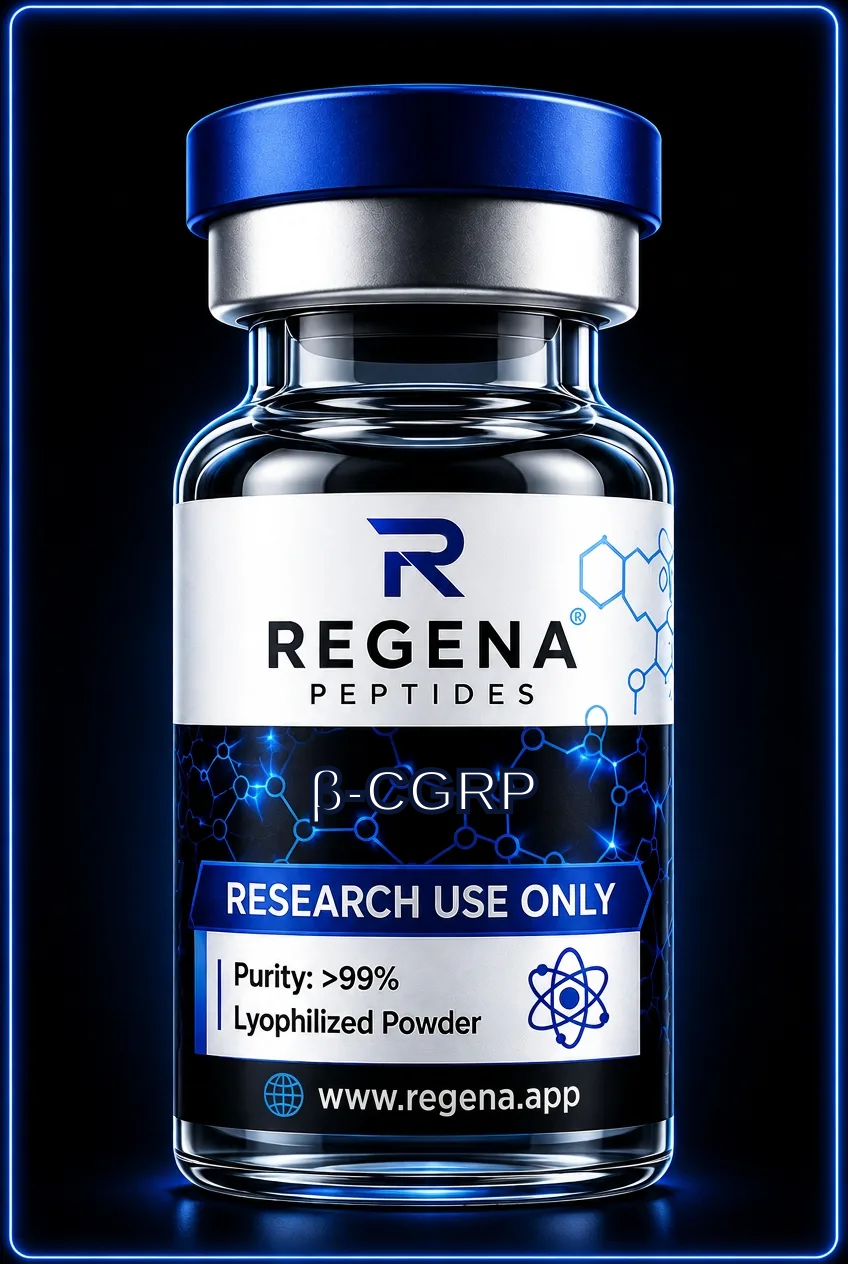
Cardiovascular · Neuropeptide
β-CGRP
Also known as Calcitonin gene-related peptide beta
β-CGRP is a 37-amino-acid neuropeptide studied for its potent vasodilatory effects and involvement in sensory neurotransmission pathways.
- Length
- 37 amino acids
- Half-life
- Approximately 7 minutes in human plasma (in vitro)
- Mechanism
- Binds to the calcitonin receptor-like receptor (CLR) when co-expressed with receptor activity-modifying protein 1 (RAMP1).
- Studied in
- Investigated in laboratory models for its role in vasodilation, nociception, and neurogenic inflammation.
About β-CGRP
β-CGRP is a 37-amino-acid peptide belonging to the calcitonin family of peptides. It shares significant sequence homology with α-CGRP, differing by only three amino acids in humans. This peptide is primarily expressed in the enteric nervous system, distinguishing it from the more centrally located α-CGRP.
Its biological activity is mediated through a heterodimeric G protein-coupled receptor complex composed of the calcitonin receptor-like receptor (CLR) and RAMP1. Activation of this receptor typically leads to an increase in intracellular cyclic adenosine monophosphate (cAMP), resulting in potent vasodilation in various ex vivo vascular bed preparations.
Laboratory notes
- β-CGRP is prone to oxidation at its methionine residue; store solutions under inert gas if possible for long-term stability.
- Peptide solutions should be prepared in buffers containing a non-ionic detergent to prevent adsorption to labware.
- In cell culture, serum can contain peptidases that degrade CGRP, which may affect experimental reproducibility.
Storage and reconstitution basics: storage guide.
Questions about β-CGRP
What is the structural difference between α-CGRP and β-CGRP?
In humans, they differ by three amino acid residues. This leads to distinct expression patterns but similar receptor binding profiles and biological activities in most assays.
What is the primary receptor for β-CGRP?
β-CGRP acts on the CGRP receptor, a complex of the calcitonin receptor-like receptor (CLR) and receptor activity-modifying protein 1 (RAMP1).
How should lyophilised β-CGRP be handled?
Reconstitute using sterile, pyrogen-free water or an appropriate buffer, gently vortexing to ensure complete dissolution. Prepare aliquots to avoid repeated freeze-thaw cycles.
Is β-CGRP for human use?
No. It is supplied strictly for in-vitro laboratory research and is not for human or animal consumption.
Related research peptides
All products are sold for laboratory research use only. Not for human consumption, not a medicine, not for diagnosing, treating or preventing any condition.