
Antimicrobial · Cysteine-rich peptide, Defensin
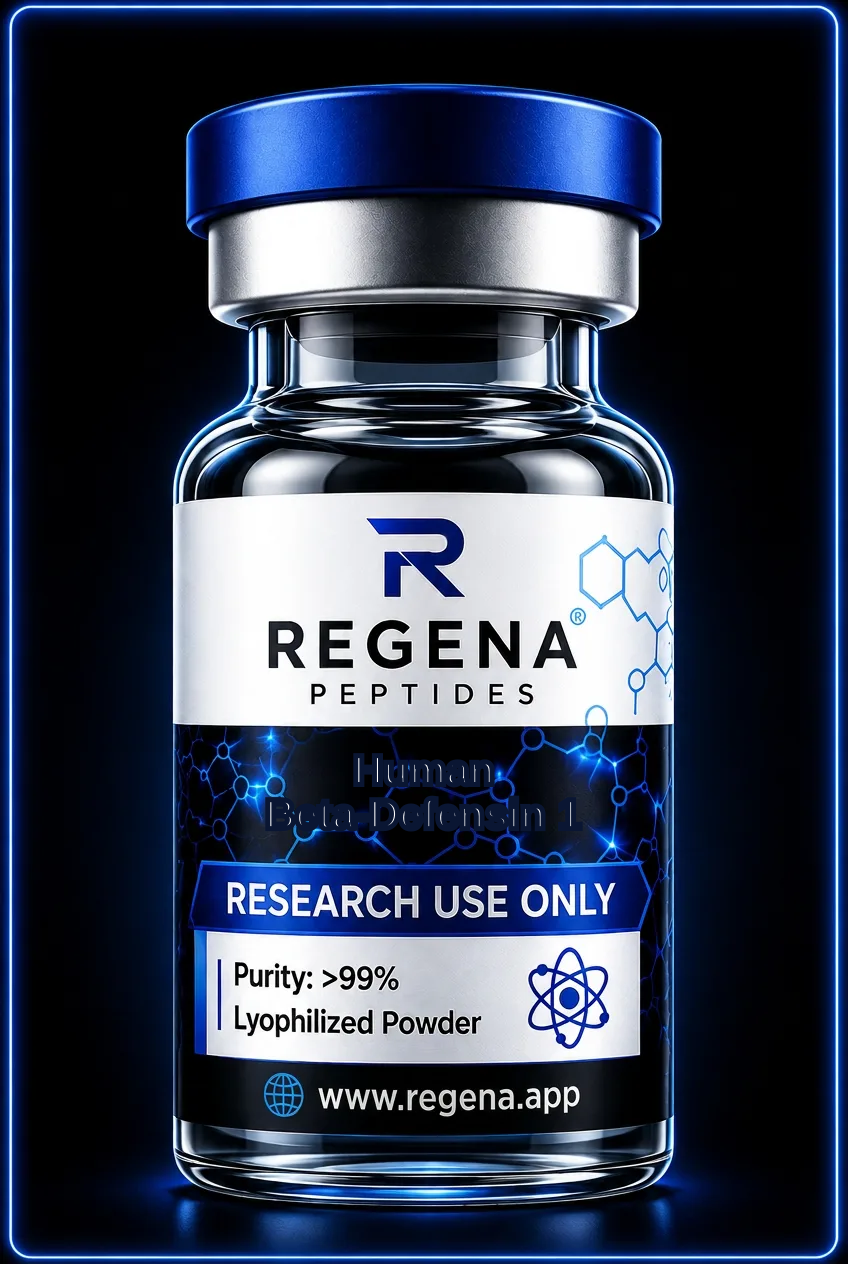
Human Beta-Defensin 1
Also known as HBD-1, DEFB1
A constitutively expressed human defensin studied for its antimicrobial activity and role in innate immunity at mucosal surfaces.
- Length
- 36 amino acids
- Half-life
- Not well characterised
- Mechanism
- It is a cationic peptide that interacts with and disrupts the integrity of negatively charged microbial membranes.
- Studied in
- In vitro studies investigate its antimicrobial spectrum against various bacteria and fungi, and its role in epithelial barrier models.
About Human Beta-Defensin 1
Human Beta-Defensin 1 (HBD-1) is an endogenous peptide belonging to the defensin family of host defense peptides. Characterized by a specific pattern of six cysteine residues that form three intramolecular disulfide bonds, this structure is critical for its stability and function. Unlike other defensins, HBD-1 is constitutively expressed by epithelial cells in various tissues.
Laboratory investigations focus on its function within the innate immune system. Its antimicrobial properties are evaluated in vitro using minimum inhibitory concentration (MIC) assays against a broad range of microbes. Additionally, its role as a signaling molecule and its contribution to the chemical barrier of epithelial layers are explored in cell culture models.
Laboratory notes
- The peptide's three disulfide bonds are crucial for its structure and activity; avoid harsh reducing conditions during handling.
- Antimicrobial activity is salt-sensitive; assays should be conducted in low-salt buffers to observe maximal effect.
- For proper folding and activity, lyophilised synthetic HBD-1 may require an oxidative folding protocol in a redox buffer system if supplied in a reduced form.
Storage and reconstitution basics: storage guide.
Questions about Human Beta-Defensin 1
What does 'constitutively expressed' mean?
It means the peptide is produced by cells at a relatively constant level, regardless of the presence of an active infection or other external stimuli, forming part of the baseline defense.
How do defensins kill microbes?
The primary mechanism involves their positive charge attracting them to negatively charged microbial membranes. They then insert into and disrupt the membrane, causing leakage of cellular contents and cell death.
Is HBD-1 active immediately after synthesis?
HBD-1 is often expressed as a propeptide that requires proteolytic cleavage to become fully active. Synthetic versions provided for research are typically based on the mature, active form.
Is Human Beta-Defensin 1 for human use?
No. It is supplied strictly for in-vitro laboratory research and is not for human or animal consumption.
Related research peptides
All products are sold for laboratory research use only. Not for human consumption, not a medicine, not for diagnosing, treating or preventing any condition.