
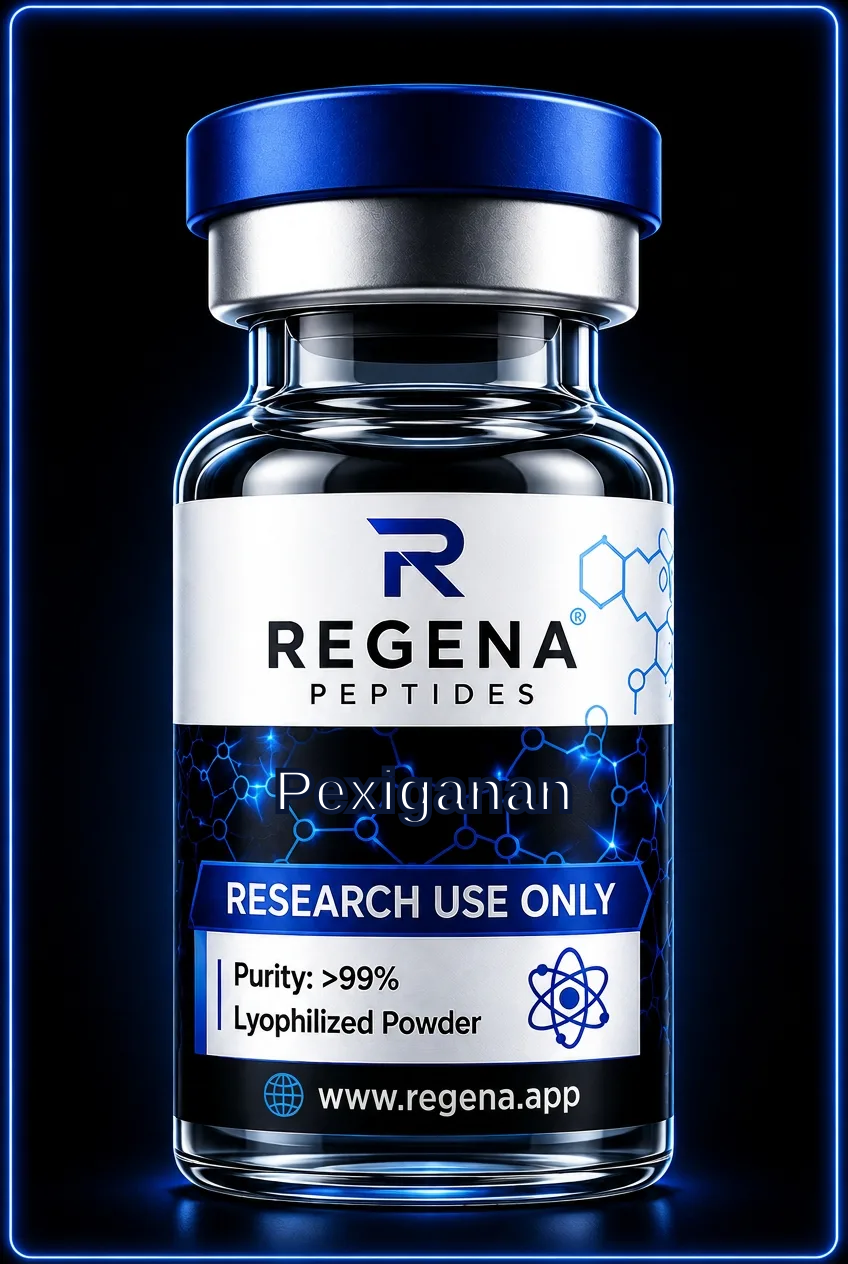
Antimicrobial · Synthetic antimicrobial peptide
Pexiganan
Also known as MSI-78
A 22-amino-acid synthetic analogue of magainin II, used as a reference compound in lab studies of membrane-permeabilising antimicrobials.
- Length
- 22 amino acids
- Half-life
- Not well characterised
- Mechanism
- Forms amphipathic alpha-helices that permeabilise bacterial cell membranes, leading to dissipation of membrane potential and cell death.
- Studied in
- Used as a reference compound in studies of broad-spectrum antimicrobial activity, particularly in models of complex microbial environments.
About Pexiganan
Pexiganan is a synthetic, 22-amino-acid peptide, designed as an analogue of magainin II, a peptide originally found in the skin of the African clawed frog. It was developed to provide a compound for research into broad-spectrum antimicrobial activity. Its structure is engineered to form a stable amphipathic alpha-helix in the presence of membranes.
The peptide functions by electrostatically binding to negatively charged bacterial membranes and inserting into the lipid bilayer. This process leads to the formation of pores or channels, disrupting the membrane's barrier function and causing leakage of intracellular contents. It is a well-established reference compound with a clinical history, used in various in vitro and laboratory models to assess antimicrobial efficacy.
Laboratory notes
- As a synthetic peptide with a defined sequence, it provides high batch-to-batch consistency for reproducible experiments.
- In vitro activity is often tested in low-salt buffers, as high ionic strength can inhibit its binding to bacterial membranes.
- Pexiganan solutions should be stored frozen and protected from proteases if used in complex biological media.
Storage and reconstitution basics: storage guide.
Questions about Pexiganan
Is Pexiganan a natural peptide?
No, it is a synthetic peptide, an analogue of the natural peptide magainin II.
What is the primary mechanism studied for Pexiganan?
Its main mechanism of action is the disruption of bacterial cell membranes through the formation of pores.
Why is it used as a reference compound?
Its well-defined structure and mechanism make it a useful positive control in assays for new antimicrobial agents.
Is Pexiganan for human use?
No. It is supplied strictly for in-vitro laboratory research and is not for human or animal consumption.
Related research peptides
All products are sold for laboratory research use only. Not for human consumption, not a medicine, not for diagnosing, treating or preventing any condition.