
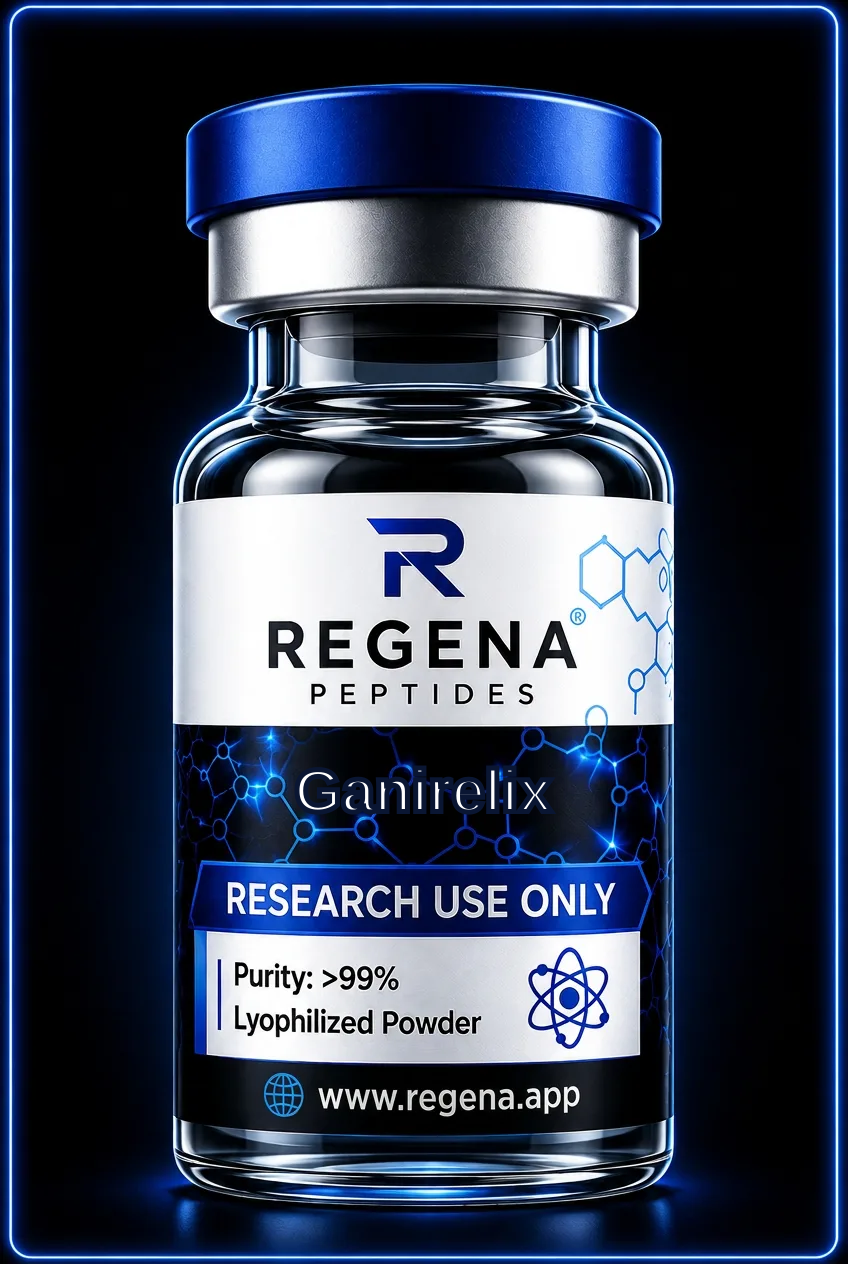
Hormone · Peptide Antagonist
Ganirelix
Also known as Ganirelix Acetate
A synthetic decapeptide and GnRH receptor antagonist used in reproductive biology research for gonadotropin suppression. A reference compound.
- Length
- 10 amino acids
- Half-life
- Approximately 13 hours
- Mechanism
- It functions as a competitive antagonist of the gonadotropin-releasing hormone (GnRH) receptor.
- Studied in
- In laboratory settings, it is used to study the rapid suppression of gonadotropin release and its effects on the hypothalamic-pituitary-gonadal axis.
About Ganirelix
Ganirelix is a synthetic decapeptide analog of GnRH. Similar to Cetrorelix, it incorporates several non-proteinogenic amino acids in its structure, which enhances its metabolic stability and antagonistic properties. It is a reference compound with a clinical history.
By competitively blocking GnRH receptors in the anterior pituitary, Ganirelix prevents the release of luteinizing hormone (LH) and follicle-stimulating hormone (FSH). This immediate suppressive effect makes it a standard tool in animal models of reproductive physiology to control the timing of gonadotropin-dependent events for experimental purposes.
Laboratory notes
- Like other GnRH analogs, it is often supplied as an acetate salt, which should be accounted for in concentration calculations.
- Its chemical structure and mechanism are similar to Cetrorelix, but with differences in potency and pharmacokinetic profile in some models.
- Solutions should be prepared fresh for use in cell culture or in vivo studies to ensure maximum activity.
Storage and reconstitution basics: storage guide.
Questions about Ganirelix
What is the difference between Ganirelix and a GnRH agonist?
Ganirelix is a GnRH antagonist, causing immediate suppression of LH and FSH. A GnRH agonist initially stimulates their release before receptor downregulation occurs.
What is its molecular target?
It targets the GnRH receptor on gonadotrope cells within the anterior pituitary gland.
Why does Ganirelix contain modified amino acids?
The substitutions with D-amino acids and other modifications increase its resistance to enzymatic degradation and enhance its binding affinity to the GnRH receptor.
Is Ganirelix for human use?
No. It is supplied strictly for in-vitro laboratory research and is not for human or animal consumption.
Related research peptides
All products are sold for laboratory research use only. Not for human consumption, not a medicine, not for diagnosing, treating or preventing any condition.