
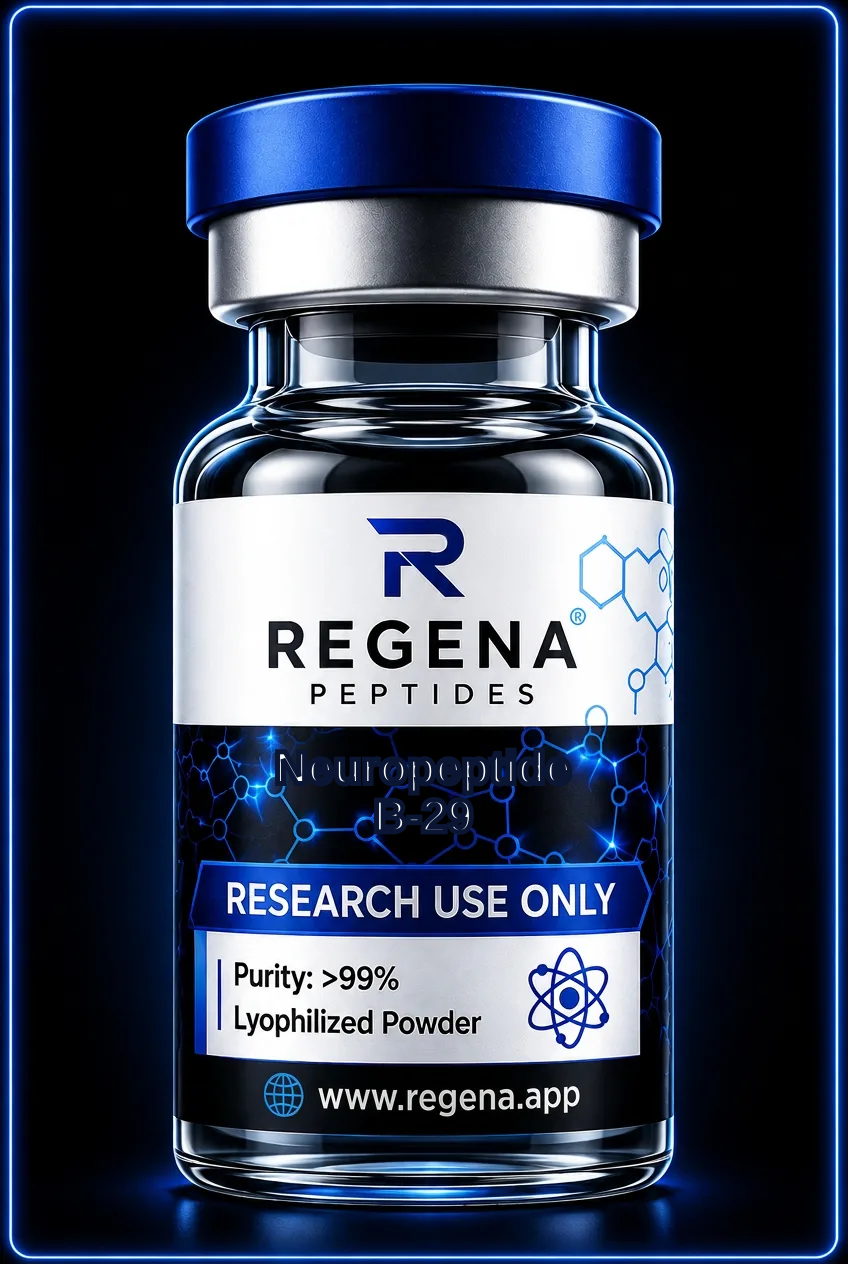
Other · Neuropeptide B/W receptor agonist
Neuropeptide B-29
Also known as NPB-29; NPB29
A 29-residue NPB/W receptor ligand whose native N-terminal tryptophan bromination is a key material-identity consideration.
- Length
- 29 amino acids
- Half-life
- Not well characterised
- Mechanism
- Neuropeptide B-29 activates NPBWR1 (GPR7) and NPBWR2 (GPR8), receptors that principally couple to Gi/o proteins. Activation can inhibit stimulated adenylyl cyclase activity, with additional signalling readouts depending on the expression system.
- Studied in
- Receptor-expressing cell lines, neuronal preparations and rodent neuroendocrine models examine NPB-29 signalling, precursor processing and the contribution of N-terminal bromination.
About Neuropeptide B-29
Neuropeptide B-29 is a 29-residue product of the NPB precursor and belongs to the ligand family discovered during efforts to identify endogenous activators of GPR7 and GPR8. These receptors are now termed NPBWR1 and NPBWR2. A distinctive feature of naturally isolated neuropeptide B is bromination of its N-terminal tryptophan. Synthetic research materials may instead contain unmodified tryptophan, so the peptide name alone does not establish whether this modification is present.
Both NPB-29 and the shorter NPB-23 form activate neuropeptide B/W receptors, although receptor preference and measured potency depend on the assay. Gi/o-dependent suppression of stimulated cyclic AMP is a common recombinant-cell readout. Neuronal and animal studies also investigate the distribution and function of this signalling system. Species selection matters: standard mouse and rat models lack a direct NPBWR2 orthologue and therefore cannot reproduce the complete two-receptor repertoire found in humans.
Laboratory notes
- Check whether the N-terminal tryptophan is brominated; distinguish brominated and non-brominated materials in all assay records.
- Confirm the 29-residue identity rather than relying on a generic NPB label, which may also refer to NPB-23.
- Use receptor-defined cells and appropriate Gi/o controls when interpreting cyclic AMP responses; endogenous receptor expression can confound selectivity measurements.
Storage and reconstitution basics: storage guide.
Questions about Neuropeptide B-29
Is every synthetic NPB-29 preparation brominated?
No. Bromination must be explicitly documented in the sequence specification and analytical data; many synthetic preparations use unmodified tryptophan.
What are GPR7 and GPR8 called now?
GPR7 is NPBWR1 and GPR8 is NPBWR2. Both recognise neuropeptides B and W.
Can mouse experiments assess both receptor subtypes?
Not through the native receptor repertoire. Mice lack a direct NPBWR2 orthologue, so that subtype requires an appropriate recombinant or alternative species model.
Is Neuropeptide B-29 for human use?
No. It is supplied strictly for in-vitro laboratory research and is not for human or animal consumption.
Related research peptides
All products are sold for laboratory research use only. Not for human consumption, not a medicine, not for diagnosing, treating or preventing any condition.