
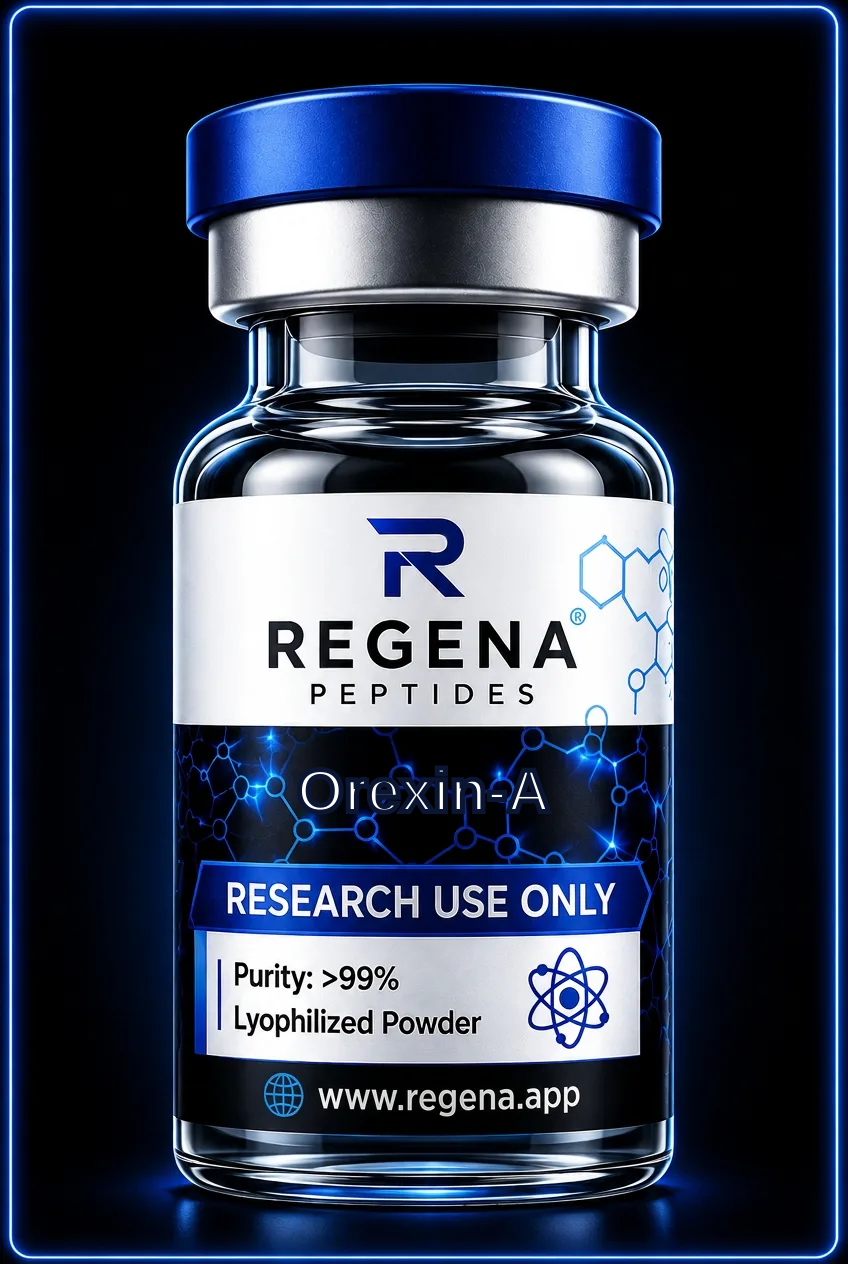
Cognitive · Neuropeptide
Orexin-A
Also known as Hypocretin-1
A 33-amino-acid neuropeptide, also known as Hypocretin-1, that regulates wakefulness and appetite by activating both orexin receptors.
- Length
- 33 amino acids
- Half-life
- ~3-6 hours in human plasma (literature estimates)
- Mechanism
- A hypothalamic neuropeptide that acts as an agonist for both the orexin receptor 1 (OX1R) and orexin receptor 2 (OX2R) with a slight preference for OX1R.
- Studied in
- Utilised in laboratory settings to investigate the regulation of wakefulness, appetite, reward-seeking behavior, and energy homeostasis.
About Orexin-A
Orexin-A, also known as Hypocretin-1, is a 33-amino-acid neuropeptide produced primarily by neurons in the lateral hypothalamus. Its structure contains two intramolecular disulfide bonds, which contribute to its stability. Orexin-A and the related peptide Orexin-B are derived from the same precursor protein, prepro-orexin.
The orexin system is a critical regulator of the sleep-wake cycle, and research models often use Orexin-A to study arousal mechanisms. It binds to both G protein-coupled orexin receptors, OX1R and OX2R, with a slightly higher affinity for OX1R. Beyond sleep, Orexin-A is studied for its role in feeding behavior, reward pathways, and the coordination of autonomic functions.
Laboratory notes
- Contains two disulfide bonds, which are crucial for its structure and biological activity.
- Orexin-A has a higher affinity for the OX1 receptor, whereas Orexin-B shows equal affinity for both OX1 and OX2 receptors.
- Due to its hydrophobic nature, careful selection of solvents is required for reconstitution; consult literature for appropriate protocols.
Storage and reconstitution basics: storage guide.
Questions about Orexin-A
What is the difference between Orexin-A and Hypocretin-1?
They are two names for the same 33-amino-acid neuropeptide. The 'Orexin' name was based on its role in appetite, while 'Hypocretin' was based on its hypothalamic origin and structural similarity to secretin.
Which receptors does Orexin-A bind to?
Orexin-A is an agonist for both the OX1 and OX2 receptors, with a somewhat higher affinity for the OX1 receptor.
Why is Orexin-A stable?
Its structure is stabilised by two internal disulfide bonds, which differentiates it from the linear Orexin-B peptide.
Is Orexin-A for human use?
No. It is supplied strictly for in-vitro laboratory research and is not for human or animal consumption.
Related research peptides
All products are sold for laboratory research use only. Not for human consumption, not a medicine, not for diagnosing, treating or preventing any condition.